Michigan vs. Wisconsin hunting land comes down to three numbers once you get past the marketing: price per acre, chronic wasting disease exposure, and what you have to give up to qualify for a break on property taxes. On all three, Michigan comes out ahead for most out-of-state buyers in 2026. Hunting ground in Michigan’s Upper Peninsula and northern Lower Peninsula still runs $2,000 to $4,000 per acre, while Wisconsin’s Driftless Area — the region most Michigan-curious buyers are cross-shopping — now carries some of the highest recreational land prices in the Midwest, with prime cropland in those same counties running $12,500 to $16,000 an acre. Michigan Whitetail Properties has sold hunting and recreational land across all 83 Michigan counties since 1995, and we field calls every month from hunters who started their search in Wisconsin and ended up buying here instead.
Here’s a conversation we have more often than you’d think. A hunter from Illinois or Minnesota spends a summer weekend driving the Driftless — Vernon County, Buffalo County, the bluff country every hunting Instagram account makes look like a food-plot commercial. They love the ground. Then they see the asking price on 80 acres with a decent stand of oaks, and they call us instead.
We get it. Wisconsin has good deer. Nobody’s arguing that. But good deer on land you’re bidding against every other buyer within 200 miles of Chicago for, sitting in a county where more than half the herd could be carrying a fatal neurological disease, taxed under a program that might require you to let strangers hunt your own 80 acres — that’s a different proposition than what you’re looking at in Oscoda County or the Thumb. So let’s walk through the actual numbers instead of the marketing photos.
Michigan vs. Wisconsin Hunting Land at a Glance
Before getting into the why, here’s the side-by-side most of our out-of-state buyers ask for first. These figures come from 2026 land market reporting, Michigan Whitetail Properties’ own transaction history, and current Wisconsin and Michigan DNR data — treat them as a starting point for your own research, not a substitute for current listing prices in the specific county you’re targeting.
| Factor | Michigan | Wisconsin |
|---|---|---|
| Hunting land, UP/northern region | $2,000–$4,000/acre | Driftless recreational ground frequently exceeds $8,000/acre |
| Southern/ag-adjacent hunting land | $5,000–$12,000+/acre | Prime Driftless cropland: $12,500–$16,000+/acre |
| Statewide farm real estate average | Varies sharply by region | $6,700/acre, up 4.4% in 2026 |
| CWD-positive counties | Fewer than 20 of 83 | 55 of 72 (76%) |
| Peak CWD prevalence in hotspot counties | Low single digits in affected zones | Up to 50% of adult bucks (Richland, Sauk, Iowa counties) |
| Forest property tax program | Qualified Forest Program — no public access required | Managed Forest Law — public access required for the lowest rate |
| Forest tax rate | Set by parcel, no access trade-off | ~$2/acre (Open, public access) vs. ~$10/acre (Closed, private) |
| Nonresident deer license | Base $151 + deer license $200 (~$351 total) | Gun, archery, or crossbow deer license: $200 flat |
What Your Money Actually Buys: Price Per Acre in Both States
![]() Up North and the UP: Michigan’s Affordable Entry Point
Up North and the UP: Michigan’s Affordable Entry Point
 Up North and the UP: Michigan’s Affordable Entry Point
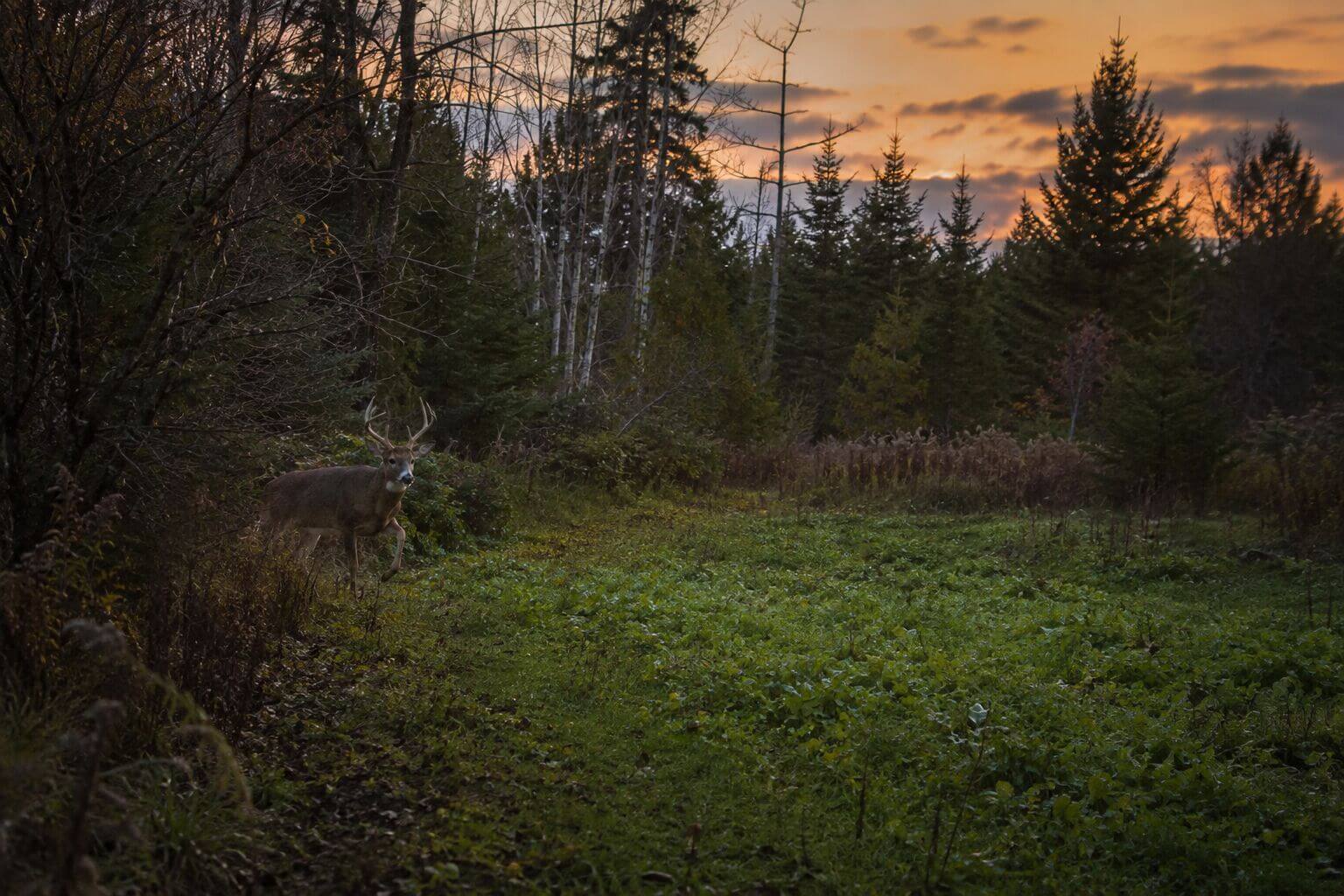
Forty acres in Oscoda County, Montmorency County, or the eastern UP still trades in the $2,000-to-$4,000-per-acre range — a number that’s held up better than most Midwest recreational markets over the past few years. That buys real ground: hardwood ridges, cedar swamp, state forest adjacency, and enough acreage to actually manage instead of just occupy. We cover the county-by-county breakdown in detail in our 2026 Michigan land prices report, but the short version is this: an out-of-state buyer with a $150,000-to-$200,000 budget can still land 40 to 80 acres of legitimate hunting ground in northern Michigan. That same budget in the Driftless gets you a much smaller parcel, if it gets you one at all.
Southern Michigan vs. Wisconsin’s Driftless
Southern Michigan counties — Hillsdale, Jackson, Allegan — run higher, typically $5,000 to $12,000-plus per acre for ag-adjacent hunting ground with strong soil and established food plots. That’s real money. But it’s still priced under Wisconsin’s Driftless region, where prime cropland now runs $12,500 to $16,000 per acre according to 2026 land specialist reporting, and the broader statewide Wisconsin farm real estate average sits at $6,700 per acre, up 4.4% this year alone, per the USDA’s 2026 Land Values Summary. Cass County, Michigan — one of our stronger southern markets — averaged $10,828 per acre in 2025. That’s competitive with, not chasing, what buyers are paying in Wisconsin’s most sought-after hunting counties.
The pattern holds across the board: Michigan gives you more entry points at more price levels. Wisconsin gives you one very good region that’s gotten expensive enough to price out a lot of the buyers who made it famous in the first place.
The CWD Gap That Changes Everything About Where You Buy
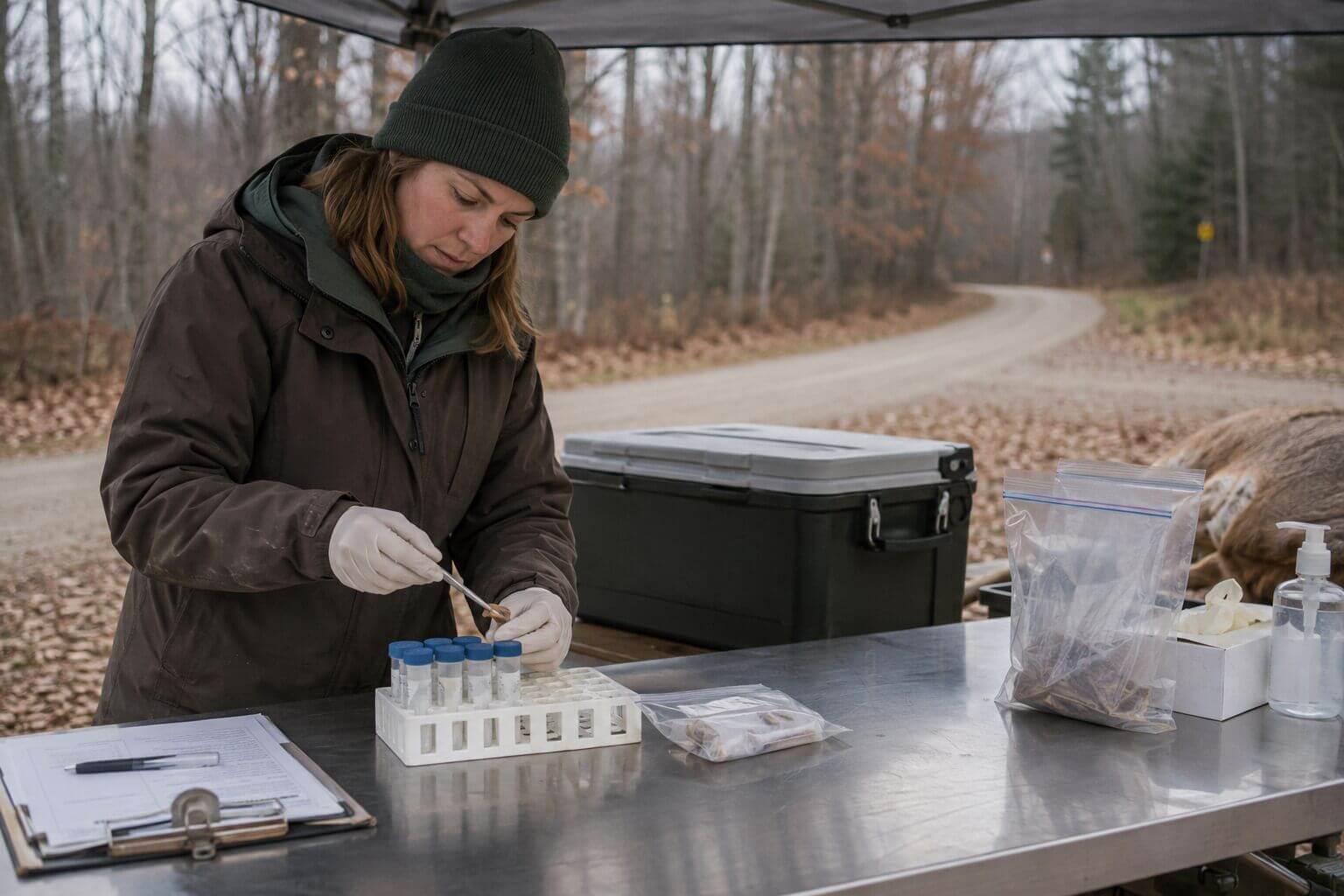 This is the number that should carry more weight in your decision than it usually does. Chronic wasting disease has been confirmed in 55 of Wisconsin’s 72 counties — 76% of the state — according to Wisconsin DNR surveillance data. Statewide 2024 sampling found the disease in 10.2% of tested deer, and in the hardest-hit counties — Richland, Sauk, and Iowa, all inside or bordering the Driftless — prevalence in adult bucks has reached as high as 50%.
That’s not a rounding error. That’s most of the state, and it’s concentrated in exactly the region most out-of-state buyers are looking at.
Michigan’s CWD footprint is real, but it’s a different scale entirely. The disease has been confirmed in fewer than 20 of Michigan’s 83 counties since it first showed up in free-ranging deer in 2015, with recent additions like Gladwin, Mecosta, and Osceola counties tracked closely by the Michigan DNR. It matters for more than herd health. CWD-positive counties in both states carry carcass movement restrictions, mandatory testing in some units, and feeding or baiting rules layered on top of whatever else is already in place. Buy land in a county where CWD is entrenched at Wisconsin’s level, and you’re not just managing deer — you’re managing a regulatory zone for as long as you own the property.
Qualified Forest Program vs. Managed Forest Law: Michigan Doesn’t Make You Share Your Woods
 Both states offer meaningful property tax relief for enrolled forest land, and both are worth understanding before you buy. But they work very differently, and the difference matters if privacy is part of why you’re buying hunting land in the first place.
Michigan’s Qualified Forest Program reduces the local school operating tax on qualifying forest acreage, and enrollment doesn’t require you to open your land to public hunting or recreation at any point. We’ve covered the mechanics in depth in Michigan Land Tax Breaks 101, including how it stacks against PA 116 and the Commercial Forest Act.
Wisconsin’s equivalent, the Managed Forest Law, splits into two tiers, and the split is the whole story:
- MFL-Open enrollment runs roughly $2 per acre in property tax, but it legally requires you to allow public access for hunting, fishing, hiking, and cross-country skiing without additional permission from you.
- MFL-Closed enrollment lets you keep the land private, but the tax rate jumps to roughly $10 per acre — five times the Open rate — according to Wisconsin DNR and forestry program data.
- Municipalities also cap how much Closed acreage they’ll allow, so depending on where you buy, you may not have full control over which designation you’re even permitted to choose.
Run the math on a 200-acre parcel and that’s the difference between $400 a year and $2,000 a year — or between full privacy and a legal obligation to share your own hunting ground with anyone who shows up.
License Costs, Access, and the Numbers That Don’t Favor Michigan
We’re not going to pretend every number favors Michigan, because that’s not how this works and you’d catch it anyway. A Wisconsin nonresident gun, archery, or crossbow deer license runs a flat $200. Michigan’s nonresident system costs more up front — a $151 base license plus a $200 deer license, roughly $351 total for a single tag, or $551 if you want the combo license with an antlerless permit included.
That’s a real difference, and if you’re weighing an annual out-of-state hunting trip, it’s worth factoring in. But it’s the wrong number to anchor a land purchase on. A $150-to-$200 gap in an annual license fee is noise against a 20- or 30-year hold on 40, 80, or 200 acres, where price per acre, tax program structure, and disease risk compound every single year you own the ground. Buy the land for the right reasons, and the license fee is just a line item.
Why Out-of-State Buyers Keep Choosing Michigan
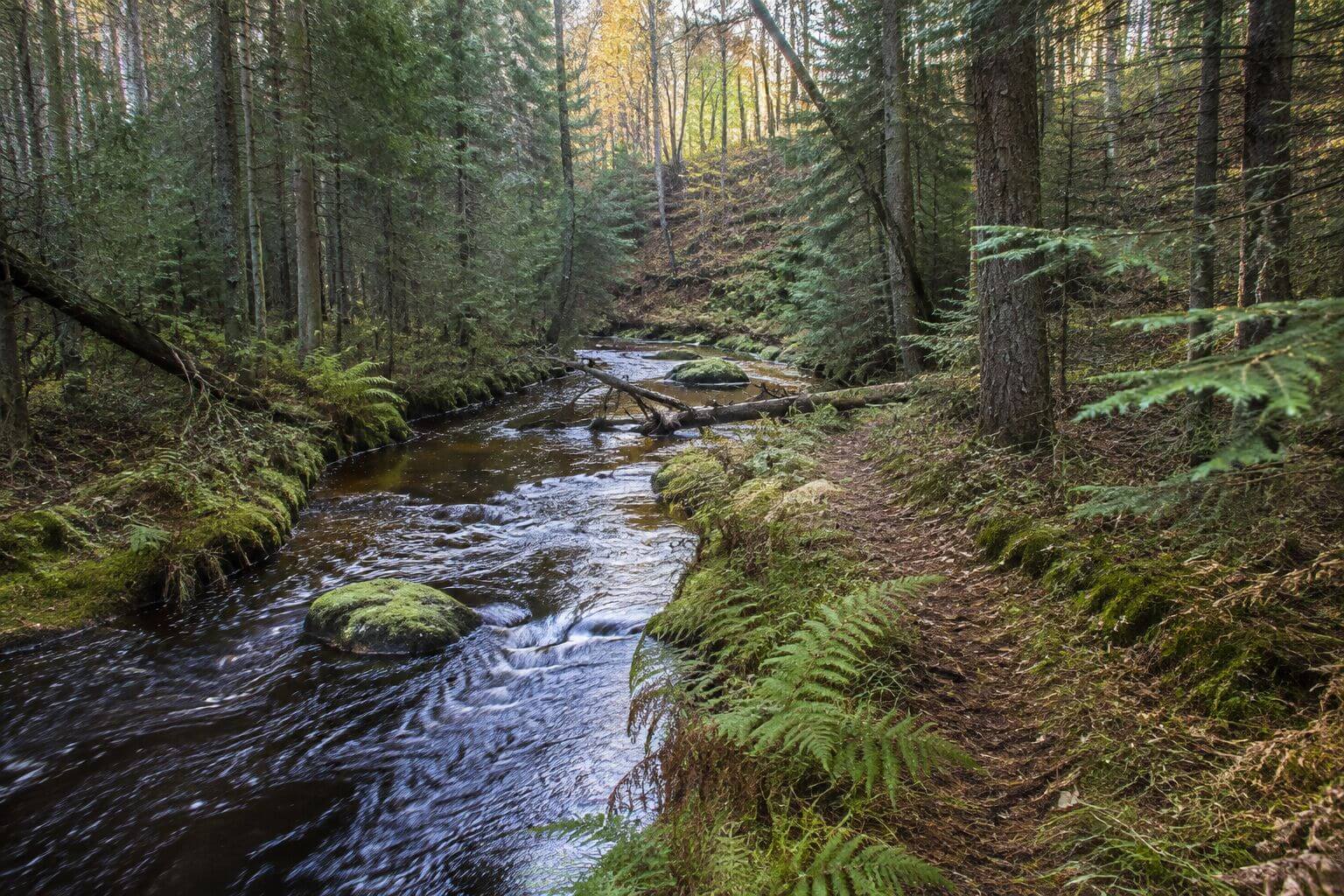 Add it up and the pattern is consistent, not cherry-picked. Michigan gives buyers more affordable entry points, a property tax program that doesn’t come with strings attached, and a CWD picture that’s a fraction of what Wisconsin hunters are now managing across three-quarters of their state. Michigan also touches four of the five Great Lakes, which means the same 80 acres that hold deer in October can put you on walleye water or a trout stream the rest of the year — a four-season draw the Driftless simply can’t match acre for acre.
None of this is financial or tax advice — run your own numbers with a CPA familiar with agricultural and forest-tax classifications in whichever state you’re buying in. But the directional picture holds up on its own. Michigan Whitetail Properties has been walking Michigan ground and closing deals with out-of-state buyers since 1995, and the calls we get from hunters who cross-shopped Wisconsin first follow the same arc almost every time: they liked the bluff country, then they saw what the same money buys here.