Michigan land is taking longer to sell while asking prices hold near their highs. Across the past several weeks of market tracking, Michigan land listings have sat on the market for roughly 71 to 79 days (Land.com’s Michigan median was 79 days as of Oct. 2, 2026) — noticeably longer than a fast-moving market — while the median asking price has held steady in the $12,900 to $13,000 per acre range. Rising or elevated time-on-market paired with a stable-to-firm asking price usually means one thing: sellers are pricing ahead of what buyers are actually willing to pay right now. For a Michigan landowner planning to list, correct pricing matters more today than it did ninety days ago.
A note on precision: the exact day count moves depending on when and how it’s measured — more on that in the honest caveat below. The direction and the range are what’s reliable here, not a single decimal-precise number.
The Days-on-Market Picture, in Real Numbers
 Here’s what multiple reads of Michigan’s largest land-listing marketplace have actually shown over the past month: 73 days on one clean read, an unreliable stretch where the source was intermittently bot-blocked and returned inconsistent figures of 75 to 77 days, 78 days on the next clean read, 71 days on the read after that, and 79 days on our most recent check, on Oct. 2, 2026. Median list price, by contrast, has barely moved — $360,000 median list price and roughly $12,900 to $13,000 per acre across every single read, clean or not.
That’s the real finding, and it’s more useful than a single tidy number would be: the price sellers are asking for Michigan land hasn’t softened at all, but the time it takes to actually get an accepted offer has stretched into the mid-to-high 70s in days, up from where this market ran earlier in the year. A 7 to 8% increase in typical time-on-market, even measured conservatively, is the kind of shift that shows up in negotiating leverage before it shows up in headlines.
Why Rising Prices and Slower Sales Together Is Unusual
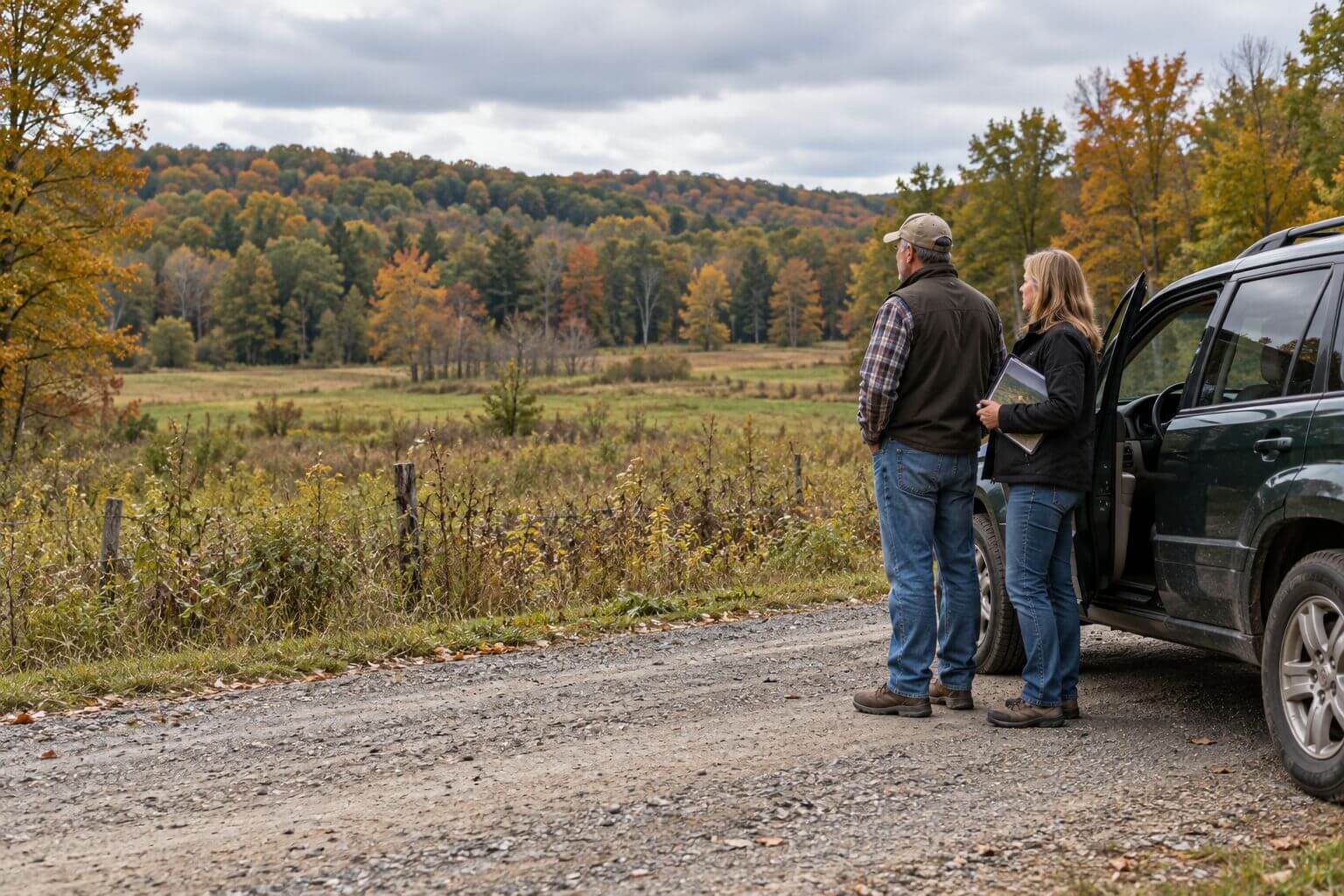 In a normal market, these two numbers move in opposite directions. Prices rise because buyers are competing for scarce inventory and it’s selling fast; prices soften because buyers are hesitant and sellers have to compete for attention. Seeing asking prices hold firm while time-on-market stretches out is the signature of a market where sellers haven’t yet adjusted their expectations to match what buyers are actually willing to pay.
The mechanism is simple. A seller lists at last year’s number, or at what a neighbor’s parcel is asking. Buyers, seeing more inventory and less urgency, take their time, negotiate harder, and walk away from anything that feels overpriced. The listing sits. Eventually it sells — often below the original ask, after a price reduction — or it doesn’t sell and gets pulled. Either way, the gap between what’s asked and what actually clears widens, and that gap is exactly what a rising days-on-market number is measuring.
Broader land-economics data backs this up. The Federal Reserve Bank of Chicago’s most recent farmland value survey — covering the Seventh Federal Reserve District, which includes Michigan — found farmland values flat to softening in real terms, with 56% of surveyed agricultural lenders calling farmland overvalued and just 1% calling it undervalued, according to Michigan Farm Bureau’s coverage of the same data. That’s a lender’s-eye view of the exact same divergence this article is describing from the listing side: the market increasingly thinks current asking prices are ahead of where they should be.
Why Michigan’s Three Land Prices All Disagree
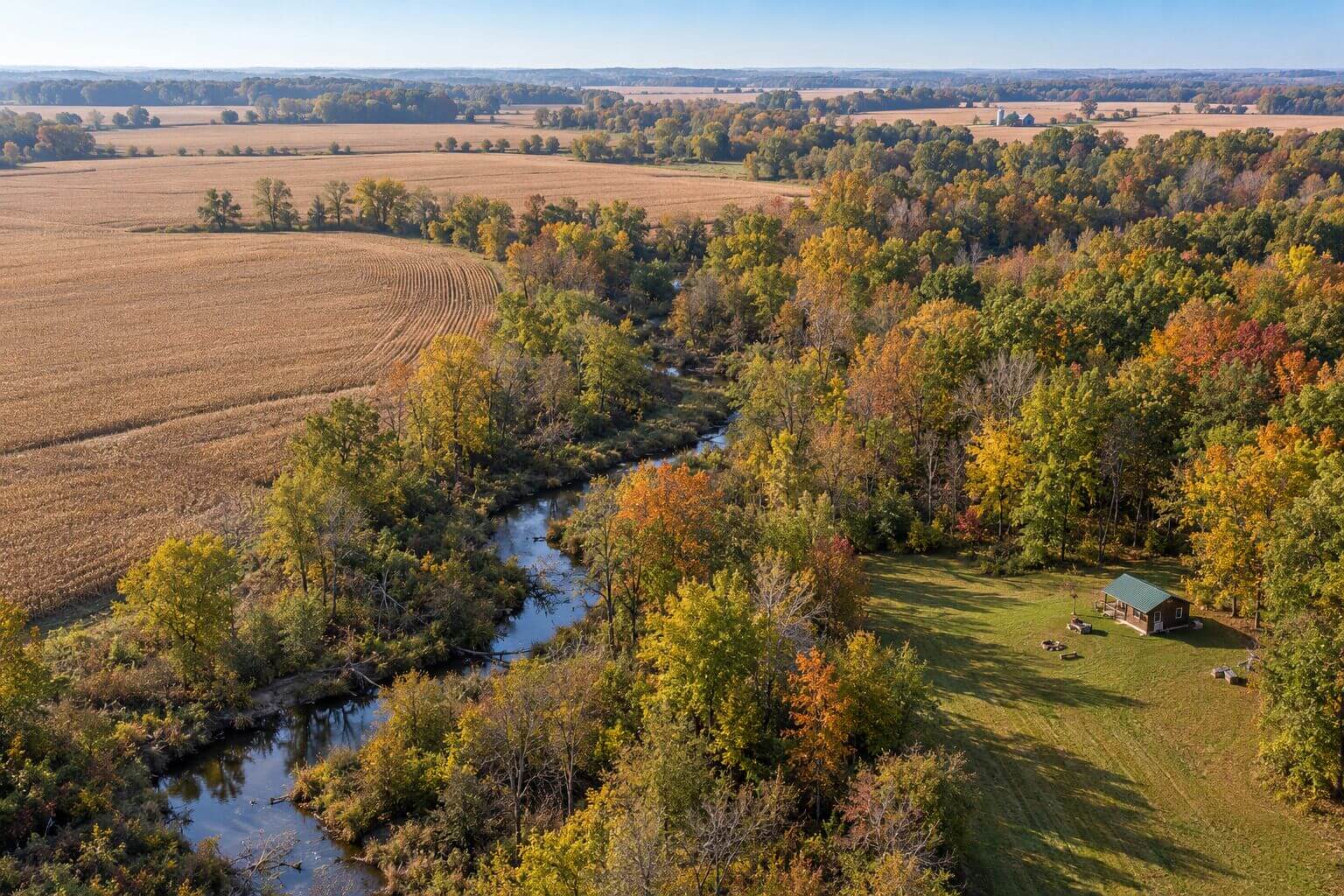 If you’ve shopped for Michigan land comparables recently, you’ve probably noticed the numbers don’t agree with each other, and that’s not a mistake on anyone’s part — they’re measuring different things.
USDA NASS reports Michigan farm real estate at roughly $7,000 per acre — a verified, government-sourced statewide average weighted heavily toward large agricultural tracts, and the most reliable benchmark for true closed-transaction value. Land.com’s marketplace data shows a median asking price around $12,900 to $13,000 per acre — what sellers are currently asking across the marketplace, skewed upward by smaller, higher-value recreational and hunting parcels that dominate listing volume even though they don’t dominate total acreage. Hunting-specific listings tend to land closer to $7,500 per acre, nearer the agricultural benchmark than the marketplace-wide asking figure.
For a hunting-land seller, the honest answer is that none of these three numbers alone tells you what your property will actually sell for. A real comparable analysis — actual closed sales on similar ground in your county — beats all three statewide figures, every time. Our own county-by-county land prices breakdown is a better starting point than any statewide average, whichever one you’ve seen quoted.
What Sellers Should Do Differently Right Now
 Price to the comparable, not to the ask. In a market where time-on-market is stretching, pricing off what other sellers are hoping for rather than what’s actually closing is the fastest way to become one of the listings padding that days-on-market number.
Expect a longer window, and plan around it. If your timeline depends on closing in 60 days, this market is telling you to build in more cushion than that. This pattern isn’t unique to any one region of the state — it shows up whether you’re pricing ground in Calhoun County or Branch County, which is exactly why a county-specific comparable matters more than a statewide headline number right now.
Prepare documentation before you list, not during. Trail camera history, habitat work, forest-program status — in a market where buyers are taking their time and comparing options, a well-documented listing is the one that doesn’t need a price cut to move. For pricing, preparation, and the cash-offer comparison, see what sellers actually net when they sell Michigan hunting land.
In a slowing market, the correctly priced listing sells, and the optimistically priced one just spends a few extra months teaching the market that the price was wrong. For the fuller picture beyond days-on-market alone — cash rent trends, timber and waterfront demand, how buyers are underwriting land right now — see our 2026 Michigan land and farm real estate trends report.
One more thing worth doing: talk to a land specialist before you set a number, not after a price cut becomes necessary. A residential agent working from a statewide or countywide average has no way to see the gap between what’s asking and what’s actually closing on comparable hunting ground. A land specialist working active listings in your county sees offers get made, rejected, and accepted in something closer to real time — which is exactly the information a slower market makes more valuable, not less.
What Buyers Should Do With This Information
 If you’re on the buying side, elevated days-on-market is real negotiating leverage — but it isn’t evenly distributed. It’s strongest on listings that have already sat for a while, priced at or above the marketplace-wide asking figures rather than a real comparable. It’s weakest on well-documented, well-managed properties priced sensibly from the start, which are still moving closer to typical timelines because motivated, prepared buyers still recognize genuine value when they see it.
Patience is the actual advantage right now. A buyer willing to wait out a seller who’s still anchored to last year’s price, rather than chasing the first listing that looks interesting, is in a stronger position today than they were a few months ago.
The properties sitting longest tend to share a pattern: priced off a marketplace-wide asking figure rather than a real county comparable, thin on documentation, or both. Properties that move closer to a typical timeline tend to share the opposite pattern — a real harvest and habitat history, a clean access story, and a number that was set by looking at what actually closed nearby rather than what a neighbor is hoping for.
The Honest Caveat
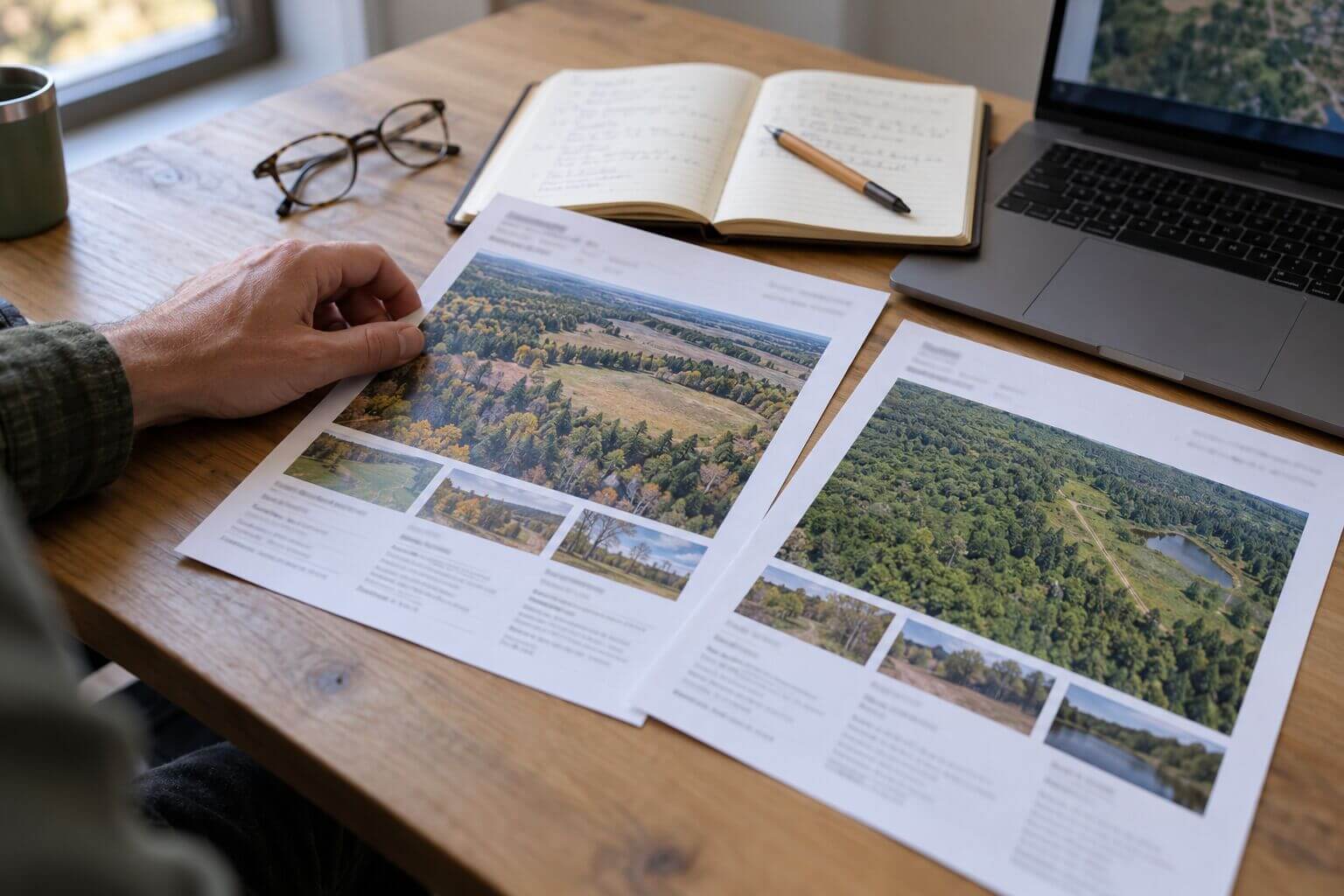 This is worth saying plainly, because it’s exactly the kind of thing a marketplace listing page never will: the underlying data behind days-on-market figures is genuinely harder to pin down than a single headline number suggests. Over the past month of tracking this specific metric, the same source has returned readings from 71 to 79 days depending on the exact day it was checked, and was intermittently unreachable behind a bot-detection wall during at least one of those checks, producing internally inconsistent numbers on the same day. Listing data also isn’t sales data — it measures how long a property stays active on a marketplace, not the final negotiated timeline to closing, and marketplace inventory mix shifts week to week in ways that can move the median without the underlying market actually changing.
None of that erases the signal. A range of 71 to 79 days, consistently on the higher end of what this market has shown earlier in the year, paired with firm asking prices, is a real and repeatable pattern across a month of independent checks — not a one-time fluke. But it’s a signal, not a confirmed multi-month trend, and treating it as more precise than it is would be a disservice to anyone using it to make a real pricing decision. If this range holds or extends over the next two to three months, that’s the point it becomes a confirmed shift rather than a current read. For now, price to the range, not to the decimal.
If you want to know what’s actually moving — and what isn’t — in your specific county, see what’s happening near you rather than relying on a statewide number alone.
Additional Resources
For readers who want the primary sources behind this article:
- USDA NASS — Land Values 2026 Summary — the federal benchmark for closed-transaction farm real estate values.
- Federal Reserve Bank of Chicago — AgLetter, August 2026 — the Seventh District farmland value survey (covering Michigan) showing flat-to-softening values and lender skepticism about current pricing.
- Michigan Farm News — Midwest Farmland Values Report — Michigan Farm Bureau’s coverage of the same Federal Reserve data, with additional context on lender sentiment.
Recent tracking shows a range of roughly 71 to 79 days on the market (Land.com’s Michigan median was 79 days as of Oct. 2, 2026), depending on the week and the exact data source checked — longer than earlier in the year, though the precise number moves week to week.