Deciding to sell land you’ve owned — maybe land you inherited, maybe ground you’ve hunted for twenty years — isn’t a transaction that starts with numbers. It starts somewhere else. But the numbers still matter, so here they are, plainly.
Selling hunting land in Michigan typically takes 90 to 180 days through a land brokerage, and typically nets 25 to 40% more than a cash-buyer offer on the same parcel. Michigan farm real estate averaged $7,000 per acre in 2026, up 2.9% year over year (USDA NASS), while managed hunting properties — food plots, documented buck history, forest-program enrollment — command 15 to 30% premiums over unmanaged ground. The three factors that move a Michigan land sale price most are county, access, and documented habitat management, in that order.
At Michigan Whitetail Properties, we’ve walked hundreds of Michigan landowners through this exact decision since 1995. This is what we tell them.
What Michigan Hunting Land Is Actually Worth Right Now
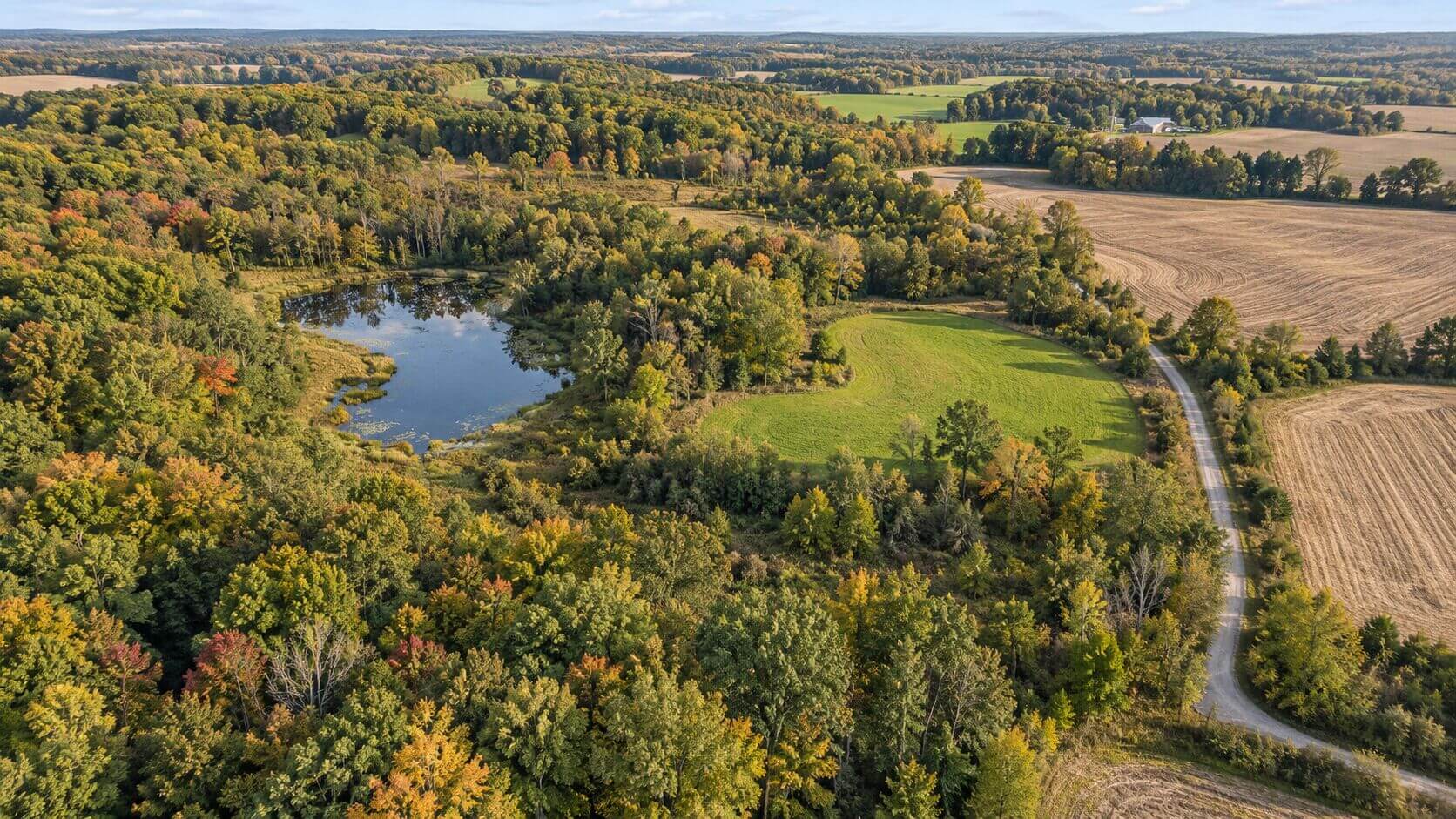 Michigan farm real estate averaged $7,000 per acre in 2026, according to the USDA’s National Agricultural Statistics Service — up 2.9% from the year before. That’s the most reliable statewide benchmark available, and it’s worth sitting with for a moment, because it’s genuinely a different number than what you’ll see on the listing portals.
[STAT] Three numbers, three different meanings. USDA NASS farm real estate: $7,000/acre — the verified statewide average. Marketplace median asking price: ~$12,952/acre — what sellers are hoping for, not what parcels close at. Hunting-specific listings: ~$7,535/acre — closer to what recreational buyers actually pay.
Marketplace asking prices skew high because they’re aspirational by nature — a seller’s opening number, not a closing number. The gap between what’s asked and what clears is exactly why working from a real comparable analysis matters more than pattern-matching against whatever’s currently listed nearby.
Managed properties sit above all of these baselines. Documented food plots, a multi-year buck-harvest history, and enrollment in Michigan’s forest tax programs together add a 15 to 30% premium over comparable unmanaged ground, based on our own transaction experience across the state.
Cash Buyer vs. Brokerage: The Net-Proceeds Math
This is the comparison that actually matters, and it rarely gets shown honestly. Here’s what it looks like on a representative $200,000 parcel.
| Cash Buyer | Land Brokerage | |
|---|---|---|
| Typical time to close | 2–4 weeks | 90–180 days |
| Typical offer | 60–70% of market value | At or near full market value |
| Commission | None | ~7% |
| Estimated net proceeds | ~$130,000 | ~$186,000 |
[QUOTE] $56,000 is the price of four to six months. That’s not a judgment — for some sellers, the speed is worth exactly that much. For most, it isn’t.
The cash buyer’s pitch is real: no showings, no financing contingencies, no uncertainty. What it costs is real too, and it’s larger than most sellers expect until they see it written down next to the alternative.
That gap widens or narrows depending on the property. A well-documented, actively managed parcel with a real buck history tends to sell closer to full market value through a brokerage — widening the gap in the seller’s favor. A rougher, harder-to-access parcel narrows it, because it’s the kind of ground a cash buyer is genuinely built to move quickly and a hunting-specific buyer pool is smaller for. Neither number above is a promise. Both are a realistic starting point for the conversation.
How to Price Michigan Hunting Land
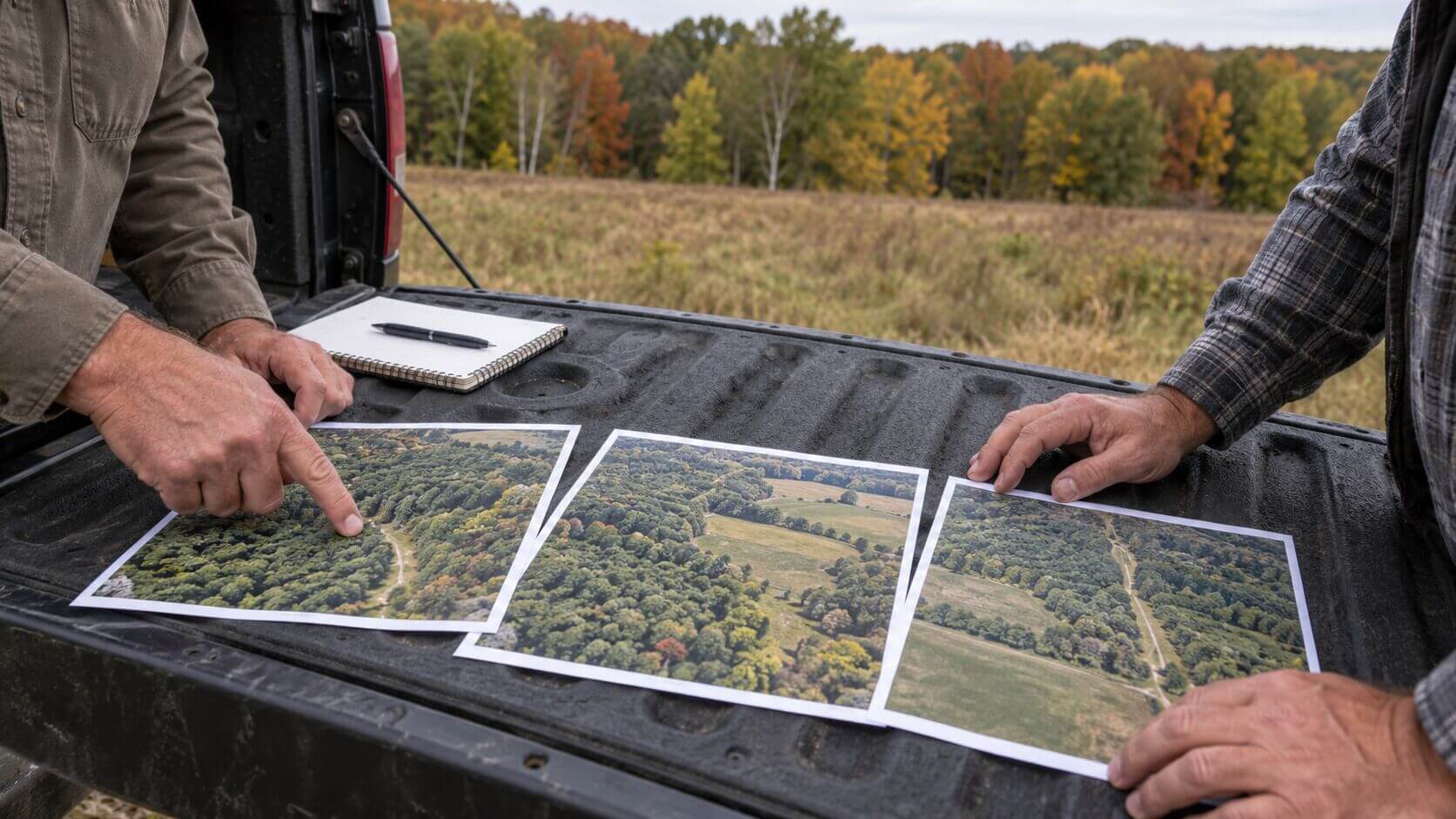 Real pricing starts with comparable sales — actual closed transactions on similar ground in your county, not statewide averages and not what a neighbor’s listing is asking. County-level benchmarks beat statewide figures every time, because a hunting parcel in Hillsdale County and one in the Upper Peninsula are answering completely different demand.
Southern Lower Peninsula counties near population centers — Hillsdale among them — typically command a premium tied to proximity and the newly expanded firearm access described in our regulation changes guide. Northern and Upper Peninsula parcels compete more on acreage and price per acre than on drive-time convenience. Knowing which market your property is actually competing in — not which one you wish it were competing in — is step one of a realistic valuation.
From there, four factors do most of the work: the managed-property premium described above, standing timber value, water frontage, and road access — a landlocked or easement-dependent parcel prices meaningfully lower than one with its own frontage. If the ground has tillable acreage under lease, that income stream adds to value too.
The single most common pricing mistake we see: sellers price for the money they put into the property, not for what the market will actually pay. A $40,000 pole barn or a beautifully maintained trail system doesn’t return dollar-for-dollar at sale. Buyers pay for what the land does for them, not for what it cost the seller to build.
There’s a simpler way to think about it. A buyer is purchasing three things: the deer, the access, and the story the property tells about next season. Improvements that make those three things more obvious — a mowed shooting lane, a documented stand history, a maintained two-track — earn their keep. Improvements that just made the property nicer to own don’t move the price the way sellers hope.
The Seven-Step Michigan Selling Process
- Valuation (roughly 1 week) — a real comparable analysis, county-specific, not a national algorithm
- Preparation (2–4 weeks) — documentation and cleanup, covered in detail below
- Listing — priced to the comparable data, not to hope
- Hunter-specific marketing (ongoing) — reaching buyers who actually want this kind of ground, not general real estate traffic
- Showings (typically 30–90 days in) — walking the property with qualified, motivated buyers rather than curious lookers
- Offer and negotiation — working from real comparables, not a first-number anchor
- Title and closing (30–45 days once an offer is accepted) — survey confirmation, title work, and closing paperwork
[TAKEAWAY] Step four is where land specialists and residential agents actually diverge. A residential agent markets a house to everyone. A land specialist markets hunting ground to hunters — the difference shows up directly in both the offer and the timeline.
What to Prepare Before You List
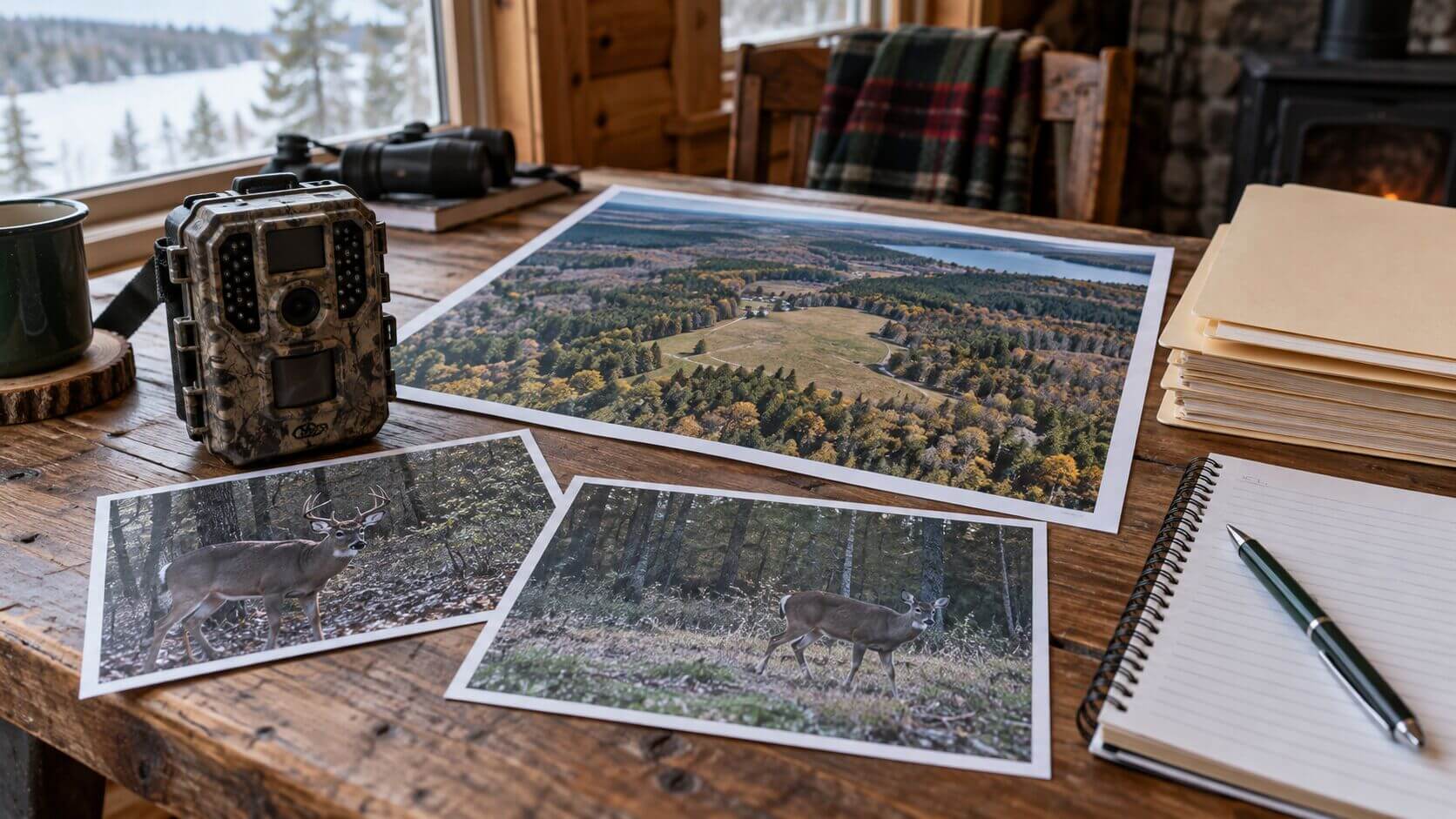 Preparation is the highest-return work a seller can do, and most of it costs time, not money.
Documentation carries the most weight. Trail camera history, harvest records, and any notes on habitat work you’ve done turn “trust us, it’s good ground” into evidence a buyer can actually evaluate.
Forest program status matters and needs to be verified before listing. If the property is enrolled in Michigan’s Qualified Forest Program or Commercial Forest Program, confirm exactly what transfers to a new owner and what doesn’t — buyers ask, and a seller who doesn’t know the answer loses credibility fast.
Boundary clarity and current imagery round it out. A recent survey or clearly marked boundary lines prevent disputes before they start, and summer-foliage drone imagery shows the property the way most buyers will actually picture using it.
Access road condition deserves its own line item. A seasonal two-track that’s fine for you in August but unreachable in mud season or deep snow is worth knowing about — and worth addressing — before a buyer discovers it during a showing instead of during your prep work.
On disclosure specifically: Michigan’s Seller Disclosure Act (Act 92 of 1993) applies to residential property of one to four dwelling units — most raw, unimproved hunting land falls outside that statute’s mandatory disclosure form. That doesn’t mean disclosure doesn’t matter. Sellers still carry ordinary legal exposure for knowingly concealing a material problem — a boundary dispute, an access easement, a wetland delineation — and being upfront about what you know protects you as much as it protects the buyer.
The Five Most Expensive Seller Mistakes
Overpricing for improvements. Pricing to recoup what you spent, not what the market supports, is the single fastest way to sit unsold.
Marketing to general buyers instead of hunters. A listing that doesn’t speak to hunting-specific value — access, cover, food, harvest history — gets seen by the wrong audience and undersells to the right one.
Using a residential agent. Land sales move differently than home sales. An agent without land-specific experience often misprices, undersells the habitat work, and doesn’t know where hunting buyers actually look.
Listing into the spring inventory surge. Everyone lists in spring. More competition means longer time on market and softer offers for a property that would have stood out at a different time of year.
Selling without documentation. No trail camera history, no harvest record, no forest-program clarity — every one of those gaps becomes a negotiating point in the buyer’s favor, not yours.
Each of these mistakes shares a common thread: they hand the buyer leverage the seller didn’t need to give up. None of them are difficult to avoid. All of them are easy to overlook when you’re emotionally ready to be done with the process.
When a Cash Offer Actually Is the Right Call
We’re not going to pretend a brokered sale is always the right answer, because it isn’t.
If the property has a clouded or fractured title — multiple heirs, unresolved ownership questions — a traditional sale can stall for months while a cash buyer’s simpler process moves forward. If you’re navigating an urgent probate situation with a court-driven timeline, speed can matter more than maximizing price. Unpaid back taxes approaching a deadline, a genuinely landlocked parcel with no resolvable access, or a real financial emergency — these are situations where the certainty and speed of a cash offer is worth what it costs.
If you recognize your situation in that list, take the cash offer. That’s not us talking ourselves out of a client — it’s the honest answer, and it’s the same answer we’d give a friend.
For everyone else, the math above holds. The difference is usually tens of thousands of dollars, and it’s worth knowing which situation you’re actually in before you decide.
If you’re ready to talk through where your property fits, download our Michigan land seller’s checklist — no pressure, just the questions worth answering before you list. And if you’d rather just talk it through, we’re at 517-437-2946.