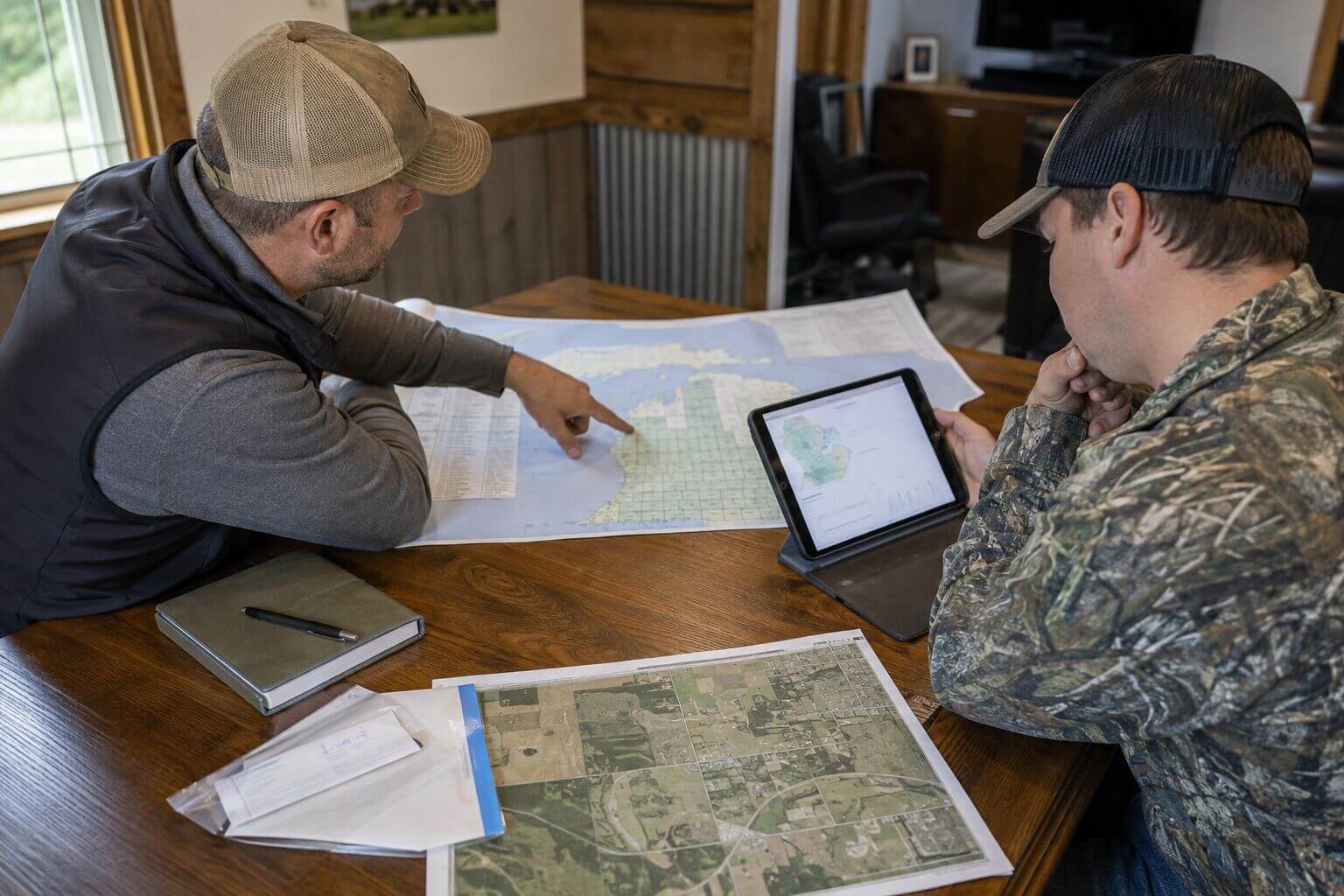
 Chronic wasting disease is a fatal, always-progressive neurological disease in deer, elk, and moose that has now been confirmed in 19 of Michigan’s 83 counties, according to Michigan DNR and Michigan Department of Agriculture and Rural Development (MDARD) data current through August 2026. Eighteen of those counties have a confirmed case in the wild deer herd, tracked and reported by the DNR. The nineteenth, Osceola County, involves a single detection in a farmed deer under MDARD’s separate regulatory authority — a distinction most CWD coverage glosses over, and one that actually matters if you’re trying to figure out what the disease means for a specific piece of ground. Michigan Whitetail Properties tracks CWD status county by county, alongside deer density, habitat quality, and tax program eligibility, because it’s one more data point buyers and sellers need before they put a number on Michigan hunting land.
Here’s the question we actually get asked, almost word for word, several times a year: “My county’s on the CWD list now — does that mean I should offer less?” It’s a fair question. Nobody wants to overpay for ground that’s about to become a regulatory headache, and nobody wants to sell a property everyone assumes is somehow tainted because a lab in East Lansing found one positive deer three townships over. The honest answer isn’t as simple as yes or no, and it’s not the same answer for every county on the list. So let’s look at where CWD actually stands in Michigan right now, what a positive detection changes on the ground, and what it should — and shouldn’t — do to the number you write on an offer.
Where Chronic Wasting Disease Stands in Michigan Right Now
CWD was first confirmed in Michigan’s free-ranging deer herd in 2015, in Ingham County. Eleven years later, the list has grown to 18 wild-deer counties, with Gladwin County becoming the most recent addition on February 12, 2026, after a hunter-harvested buck from Clement Township tested positive. The current wild-deer list, per the Michigan DNR, covers the following counties.
| County | Peninsula | Herd Type |
|---|---|---|
| Allegan | Lower | Wild |
| Clinton | Lower | Wild |
| Dickinson | Upper | Wild |
| Eaton | Lower | Wild |
| Genesee | Lower | Wild |
| Gladwin | Lower | Wild |
| Gratiot | Lower | Wild |
| Hillsdale | Lower | Wild |
| Ingham | Lower | Wild |
| Ionia | Lower | Wild |
| Isabella | Lower | Wild |
| Jackson | Lower | Wild |
| Kent | Lower | Wild |
| Mecosta | Lower | Wild |
| Midland | Lower | Wild |
| Montcalm | Lower | Wild |
| Ogemaw | Lower | Wild |
| Washtenaw | Lower | Wild |
| Osceola | Lower | Farmed (MDARD) |
Notice that Dickinson County is the lone outlier — the only Upper Peninsula county on the list, dating back to a single case discovered near Waucedah Township in 2018. Everything else, including Osceola’s farmed-deer case, sits in the Lower Peninsula. That’s not an accident. CWD spreads through prion-contaminated saliva, urine, and feces, and it moves fastest where deer density is high and animals congregate — exactly the profile of southern and central Michigan’s ag-adjacent whitetail country, not the UP’s lower-density timber ground.
Osceola County deserves its own sentence, because it gets lumped in with the wild-deer counties in casual conversation and it shouldn’t be. MDARD confirmed CWD in a seven-year-old farmed white-tailed deer there, a captive-cervid case regulated under Michigan’s farmed cervid program — not the DNR’s wild deer surveillance system. If you’re evaluating a property in Osceola County, that distinction is worth understanding before you assume the same rules apply that would apply in, say, Kent or Jackson County.
How a County Ends Up on the List
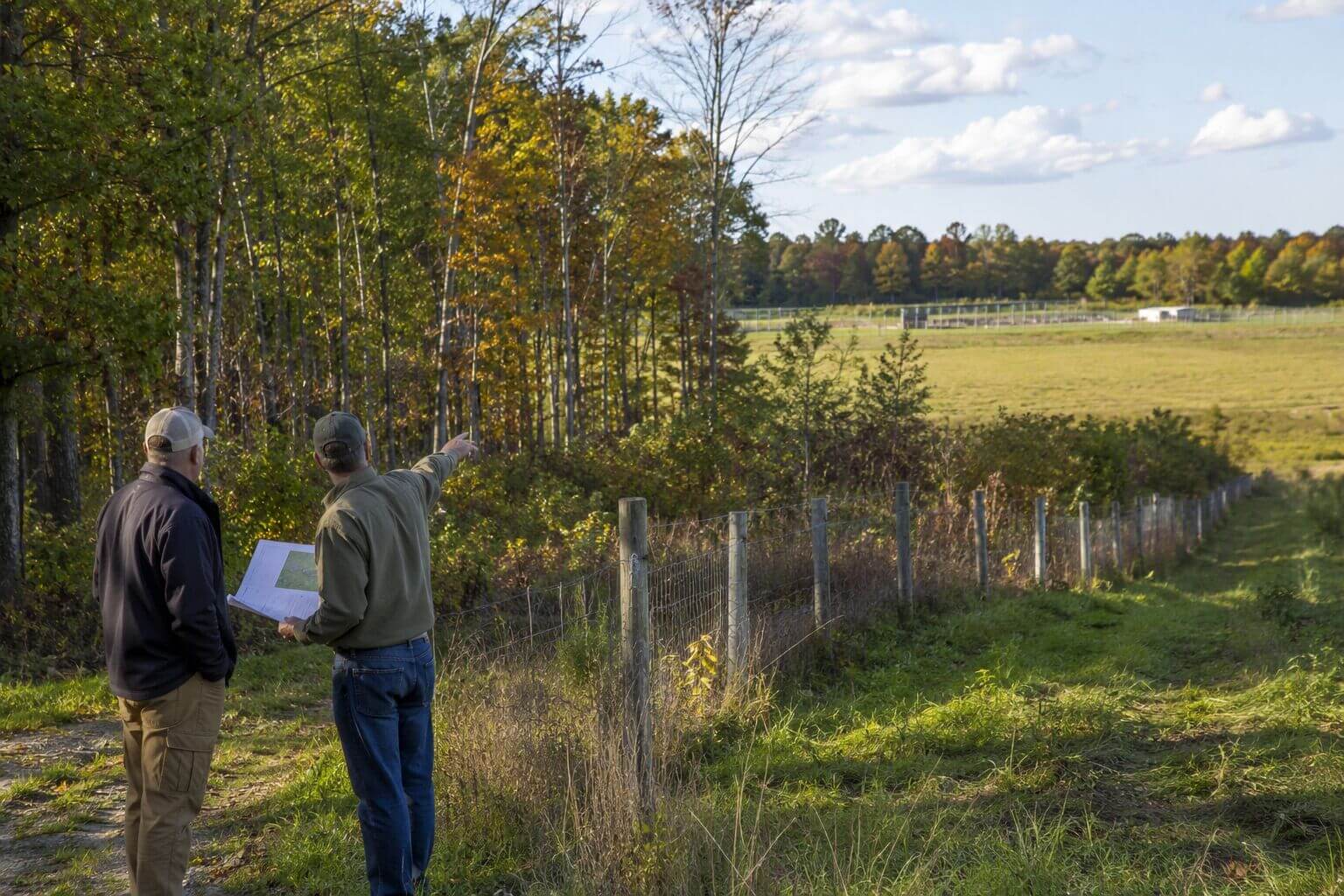 Michigan’s CWD detections haven’t been random. The DNR ran intensive surveillance in Mecosta County from 2017 to 2019 — more than 5,600 deer tested, zero positives — before eventually confirming the county’s first case years later in a buck harvested near Millbrook Township. Genesee County became the 16th positive county in September 2025, flagged after an emaciated 2.5-year-old doe was observed repeatedly drinking water, a classic clinical sign of late-stage CWD. Allegan followed as the 17th in November 2025, this time in a young doe. Then Gladwin, in February 2026.
That pattern — years of clean testing, then a single positive, then a county joins the list — is worth sitting with for a second. A county appearing on the CWD map doesn’t mean the disease arrived last week. It usually means the DNR’s surveillance finally caught what may have been present at low levels for a while.
Since 2021, the DNR has run a rotational surveillance model instead of testing every county every year. Different county groups get focused attention on a rotating basis, which is why some counties go a decade without incident and others turn up a case the moment testing intensifies. For the 2026 season, the DNR’s focused collection counties — where testing is free and prioritized through drop boxes and staffed sites — are Ionia, Kent, Mecosta, Montcalm, and Newaygo. Outside those five, any hunter statewide can still request a free self-sample lymph node kit and mail it to the Michigan State University Veterinary Diagnostic Laboratory at no cost.
What CWD-Positive Status Actually Changes for Hunters and Landowners
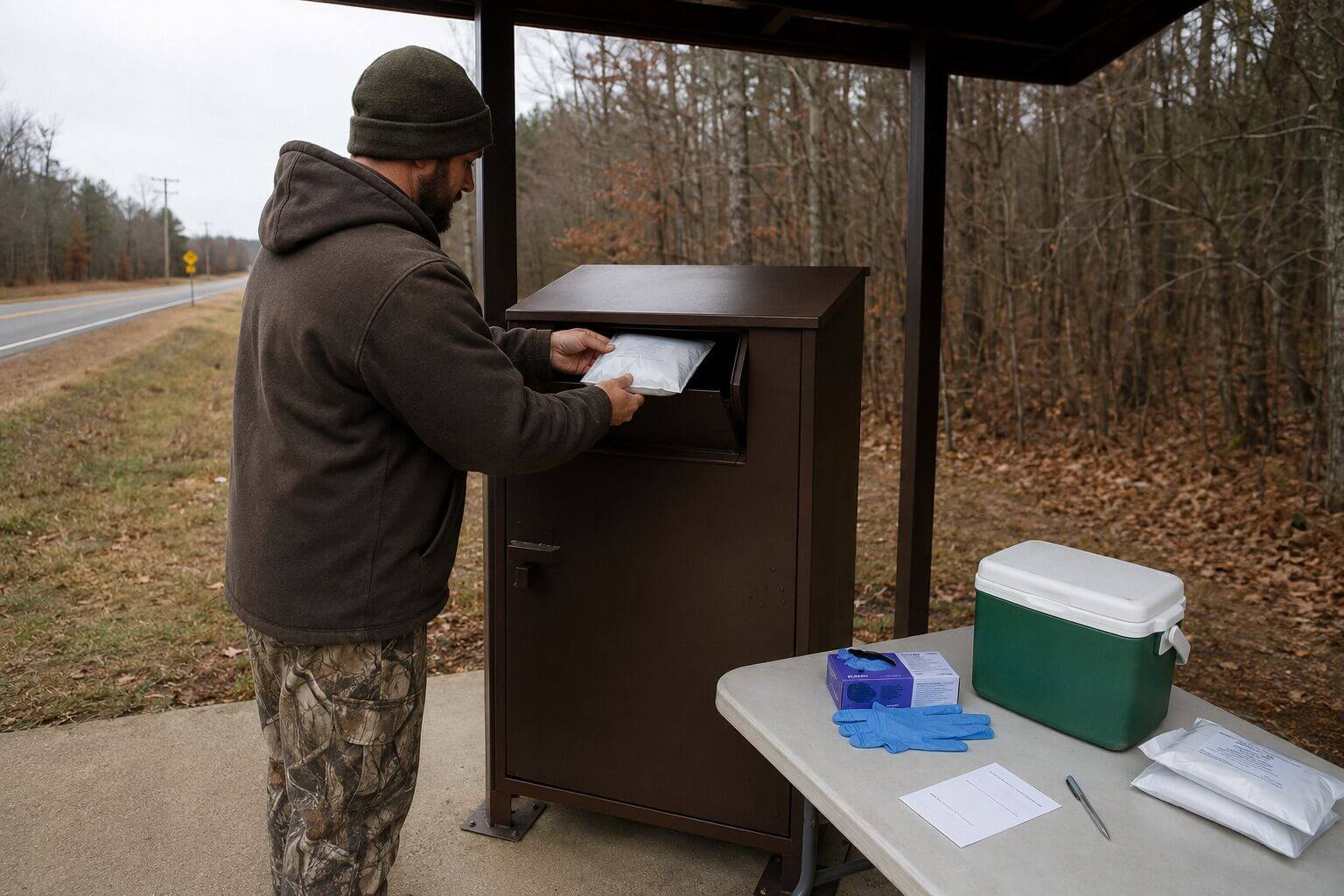 This is where the questions get practical. A county joining the CWD list doesn’t rezone the property, and it doesn’t trigger a blanket set of new rules that apply forever. What it changes tends to fall into three buckets.
Testing
Testing in a CWD county is straightforward and free, whether or not the county sits inside the current focused collection group. Drop your deer’s head at a DNR site, or use a mailed self-sample kit if you’re outside the priority counties, and results typically post within two to three weeks. None of that costs the landowner or the hunter anything beyond a trip to a drop box.
Carcass movement
Deer harvested in a CWD-positive county shouldn’t be transported long distances as a whole carcass. The standard guidance is to bone out the meat, remove the head and spine, and dispose of the remains through normal garbage service, a landfill, or burial at the harvest site rather than hauling a whole deer across county lines to a processor. It’s a minor inconvenience for most hunters and not something that affects a land purchase decision on its own.
Baiting and feeding — and why “it depends” is the honest answer
This is the part buyers most often get wrong, and it’s worth walking through with an actual example. When the DNR confirmed Michigan’s first Upper Peninsula case in Dickinson County in 2018, it didn’t just add the county to a list — it established a Core CWD Surveillance Area covering roughly 661 square miles across parts of Dickinson, Delta, and Menominee counties, with baiting and feeding restrictions layered on top of the UP’s normally more permissive rules. The DNR then tested nearly 2,100 deer in that zone over the following years. No additional positives turned up, and in June 2023, the Natural Resources Commission lifted the extra restrictions, restoring standard UP baiting rules — up to 2 gallons scattered over a 10-by-10-foot area, allowed September 15 through January 1.
That case study is the honest answer to “will baiting rules change if my county goes on the list”: maybe, for a while, in a defined area around the specific detection — and then maybe not, once follow-up testing comes back clean. Right now, there’s no separate CWD-specific baiting zone layered on top of Michigan’s existing framework. The Lower Peninsula’s standing baiting and feeding ban applies statewide regardless of a given county’s CWD status, and that ban is currently the subject of separate legislation working through Lansing — a different issue entirely from CWD, and one we cover in depth elsewhere. The takeaway for a buyer: don’t assume today’s baiting rule is locked in for the life of your ownership, but don’t assume a new restriction is coming either. It depends on what the DNR’s follow-up testing finds.
Does a CWD-Positive County Affect What You Should Pay for Hunting Land?
 Here’s the number that actually matters, and it’s one we haven’t seen move the needle the way people expect it to. In more than a decade of CWD detections across a growing list of Michigan counties, we haven’t seen buyers routinely discount offers because a county carries a confirmed case — and we haven’t seen sellers in those counties struggle to move well-managed ground at market price. Nineteen of Michigan’s 83 counties have had at least one detection since 2015, most with only a handful of confirmed animals against a herd numbering in the hundreds of thousands statewide. That’s a meaningfully different picture than what’s playing out in parts of the Midwest where CWD has become entrenched — we’ve covered the contrast in detail in our Michigan vs. Wisconsin hunting land comparison, where prevalence in some Wisconsin counties runs as high as half of adult bucks tested. Michigan simply isn’t there, in any county, and that gap is exactly why CWD status alone hasn’t become a Michigan land-value factor the way it has elsewhere.
What actually moves the price on a Michigan hunting property hasn’t changed: deer density and buck age structure, habitat quality — oak ridges, cedar swamp, creek bottoms, standing timber — road frontage and access, proximity to public land, and eligibility for the Qualified Forest Program or PA 116. A CWD-positive county with strong habitat and a healthy deer herd is still a strong buy. A weak property doesn’t get stronger because its county happens to be CWD-free. If you’re evaluating two comparable parcels and the only real difference is one sits in a county that’s tested positive, we’d tell you to weight that difference low — and put your attention on the things that actually determine whether the ground hunts well and holds its value.
That said, ignoring CWD status entirely isn’t the move either. Ask what surveillance has shown in that specific county — a single detection three years ago with clean testing since is a different situation than a county where multiple animals have turned up positive in consecutive seasons. Ask whether the county sits inside this year’s DNR focused collection group, which tells you how actively it’s being monitored. And build a habit of checking the DNR’s current CWD map before you finalize an offer, since the list changes as new detections are confirmed — it’s grown by three counties in the past twelve months alone.
What This Means If You’re Selling CWD-County Land
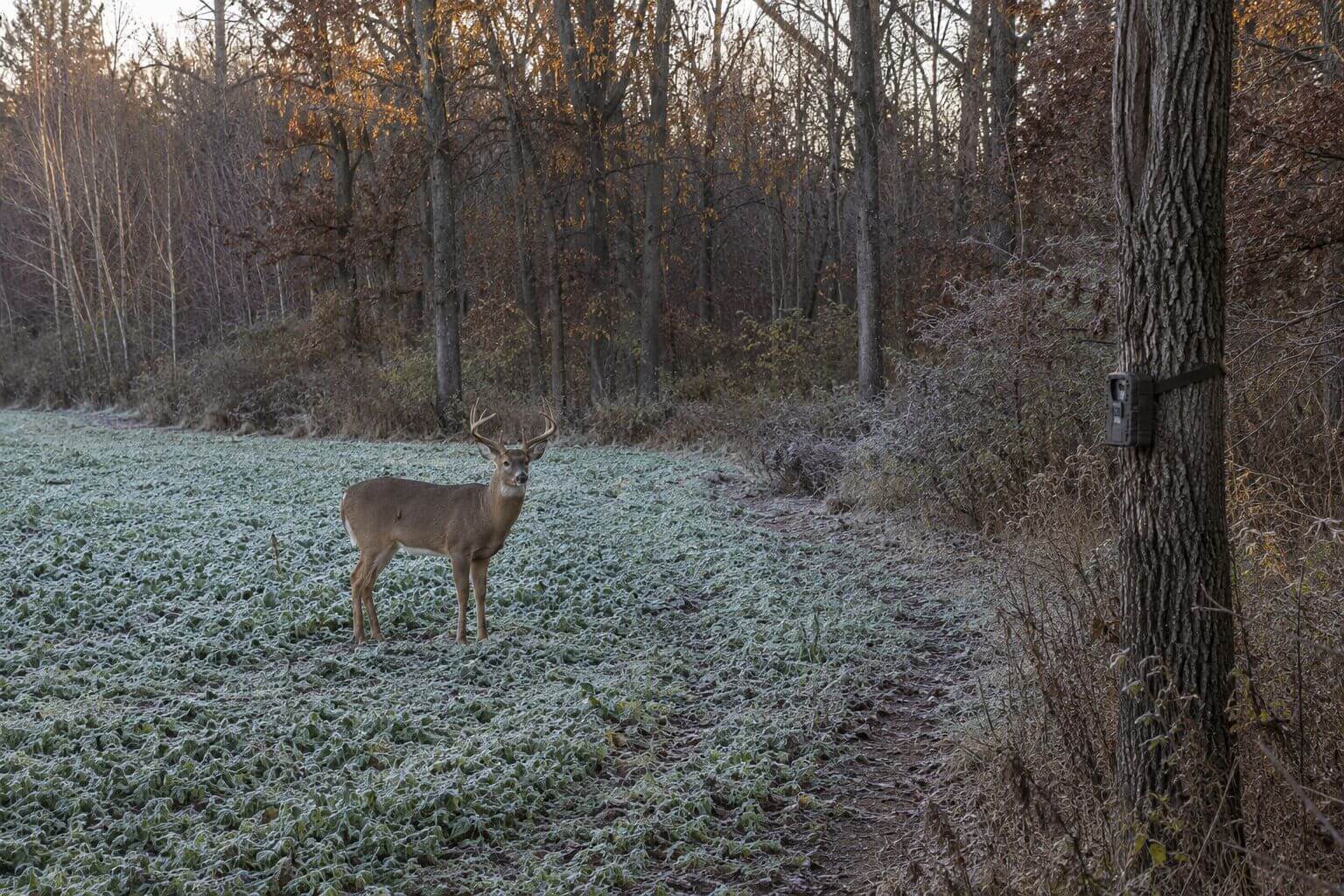 If you own land in a county that’s recently joined the CWD list, the instinct to panic is understandable and, based on what we’ve actually seen in the market, unnecessary. We’re not aware of a Michigan-specific legal requirement to disclose CWD status in a land purchase agreement the way certain environmental hazards must be disclosed — but confirm current requirements with your closing attorney, since this isn’t legal advice and disclosure rules can shift. What we’d tell any seller is simpler than a disclosure question: lead with your property’s strengths. If you’ve got testing history, note it. If you’ve managed the herd well — food plots, sanctuary areas, a documented buck-age structure — that story matters more to a serious buyer than a county-level CWD headline they can look up themselves in thirty seconds. Buyers who’ve done their homework already know CWD-positive doesn’t mean CWD-everywhere, and they’re evaluating your specific 80 or 160 acres, not a county-wide average.
How to Research CWD Status Before You Buy or List Michigan Hunting Land
A little homework up front saves a lot of second-guessing later. Before you write an offer or set a listing price on Michigan hunting land, work through these steps:
- Pull the current CWD status for the target county directly from the Michigan DNR’s website rather than relying on a list from six months ago — it’s updated as new detections come in.
- Ask whether the county is inside this year’s DNR focused collection group, which signals active, current-year monitoring rather than older, lapsed data.
- Check the detection history: one confirmed case several years back with clean follow-up testing reads very differently than repeated positives in the same area.
- Confirm the current baiting and feeding rules for that specific county and peninsula, since restrictions can shift with new detections or new legislation.
- Talk to a broker who’s actually walked comparable ground in CWD-positive and CWD-free counties and can tell you, honestly, whether the difference is showing up in local sale prices.