Michigan’s deer baiting ban 2026 status is simpler than the news cycle has made it sound: baiting for hunting purposes is still illegal across the entire Lower Peninsula, and it will stay that way for the 2026 season. A bill that would lift the ban, House Bill 4445, passed the Michigan House 66-38 in February 2026 and has been sitting in a Senate committee ever since, with no floor vote scheduled. What did become law this summer is a different, much narrower measure — House Bill 4350, signed by Governor Whitmer on July 27, 2026 — that legalizes small-scale backyard wildlife feeding for viewing purposes, not hunting. Michigan Whitetail Properties tracks every regulatory change that touches how our clients manage and value hunting ground, and this is one of those moments where getting the details right matters more than getting the news first.
If you’ve been in a deer camp conversation any time since February, you’ve probably heard three different versions of “they lifted the baiting ban” — and at least two of them were wrong. That’s not surprising. Lansing has three separate bills floating around with nearly identical names, plus a totally unrelated bill about backyard bird feeders that happened to pass at the same time and grabbed similar headlines. We get calls from clients who are convinced they can bait this fall, and sellers who assume their food-plot investment just got less valuable overnight. Neither is true yet. But here’s the thing — “yet” is doing a lot of work in that sentence, because this fight has now failed twice before and Lansing keeps bringing it back. Whether you’re managing 40 acres in Montcalm County or shopping for your first parcel in the Thumb, you need to understand both where the law stands today and what actually changes for your property if it doesn’t.
Why Michigan Banned Baiting in the Lower Peninsula in the First Place
 Michigan didn’t always ban baiting statewide. Before 2018, the Department of Natural Resources restricted it more narrowly — the tightest rules applied to four northeastern Lower Peninsula counties (Alcona, Alpena, Montmorency, and Oscoda), the historic core area for bovine tuberculosis in Michigan’s wild deer herd. Everywhere else, hunters could legally use bait within basic limits.
That changed after chronic wasting disease (CWD) was confirmed in Michigan’s wild deer population, first in Ingham County in 2015. The Natural Resources Commission implemented a full Lower Peninsula baiting and feeding ban starting with the 2019 season, reasoning that concentrating deer around a food source dramatically increases nose-to-nose and saliva contact — exactly how CWD and bovine TB spread. Under current Michigan DNR regulations, baiting remains prohibited across the entire Lower Peninsula, with one narrow carve-out: hunters with qualifying disabilities may use up to 2 gallons of bait, scattered across a minimum 10-by-10-foot area, during the Independence Hunt (October 13-16, 2026), with a permitted setup window beginning October 8. Outside that exception, a baiting violation is a 90-day misdemeanor carrying a $50-$500 fine.
The disease numbers explain why the DNR and the Natural Resources Commission have been reluctant to reverse course. As of early 2026, CWD has been confirmed in wild deer in 16 Lower Peninsula counties, with Genesee County the most recent addition and Gladwin, Mecosta, and Osceola counties all added within the past two years. Every one of those detections happened after the 2019 baiting ban took effect — which repeal supporters point to as evidence the ban hasn’t worked, and which the DNR and groups like the National Deer Association point to as evidence the disease is still spreading and this is exactly the wrong time to loosen the rules.
Where the 2026 Repeal Bills Actually Stand
Three bills currently sit in Lansing aimed at reversing some or all of the Lower Peninsula baiting ban:
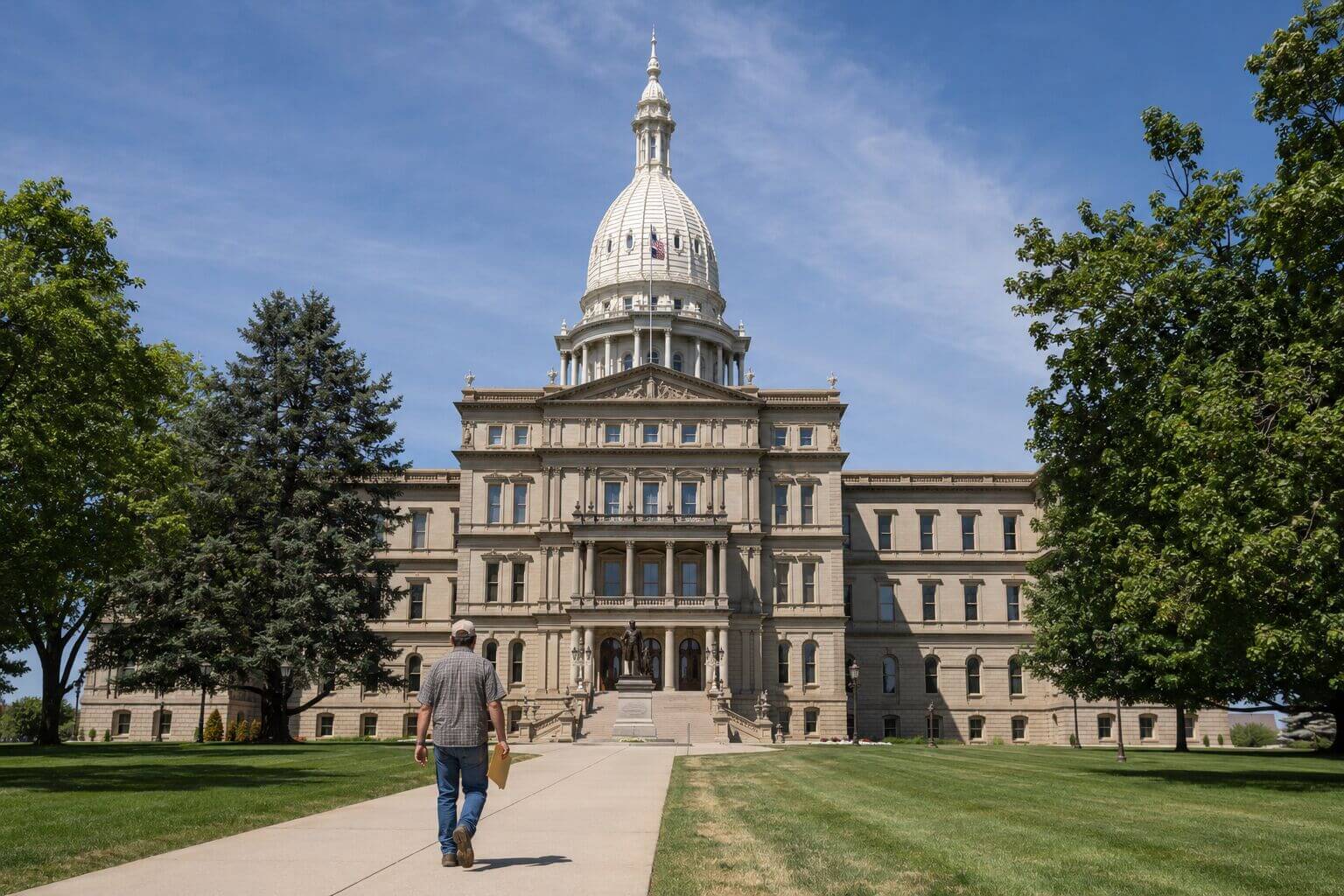
- HB 4445, sponsored by Rep. Jennifer Wortz (R-Quincy), is the furthest along. It would eliminate Lower Peninsula baiting restrictions entirely, with no carve-out for the 16 counties where CWD has already been detected. Introduced in May 2025, it passed the House 66-38 on February 4, 2026, and was referred to the Senate Natural Resources and Agriculture Committee a week later. It has not been scheduled for a Senate floor vote.
- HB 4191 and SB 65 are companion-style bills covering similar ground, both still parked in committee with no recorded floor action.
 This isn’t Lansing’s first attempt. A nearly identical repeal bill passed both chambers in 2019 and was vetoed by Governor Whitmer, who cited disease control concerns. Another repeal effort passed the Legislature again in 2021 and met the same fate. That history matters for anyone trying to plan around this law: even if HB 4445 clears the Senate, it would still need the Governor’s signature, and Whitmer has vetoed this exact policy twice already on the same public health rationale.
Meanwhile, HB 4350 — the bill people keep confusing with a baiting repeal — does something narrower and different. It legalizes feeding wildlife and birds for recreational viewing purposes, capped at less than 2 gallons of feed within 300 feet of a residence, and it requires compliance with state and federal disease-prevention standards. Rep. Ben Borton, who championed the measure, was explicit that it covers backyard viewing only: hunting-related baiting is untouched. Whitmer signed it on July 27, 2026, alongside several unrelated animal-welfare bills. If someone tells you Michigan “legalized deer feeding this year,” they’re referring to this bill — not to hunting baiting, and not to HB 4445.
The Michigan Farm Bureau’s Case for Repeal — and Why MSU Extension Calls Baiting a Double-Edged Sword
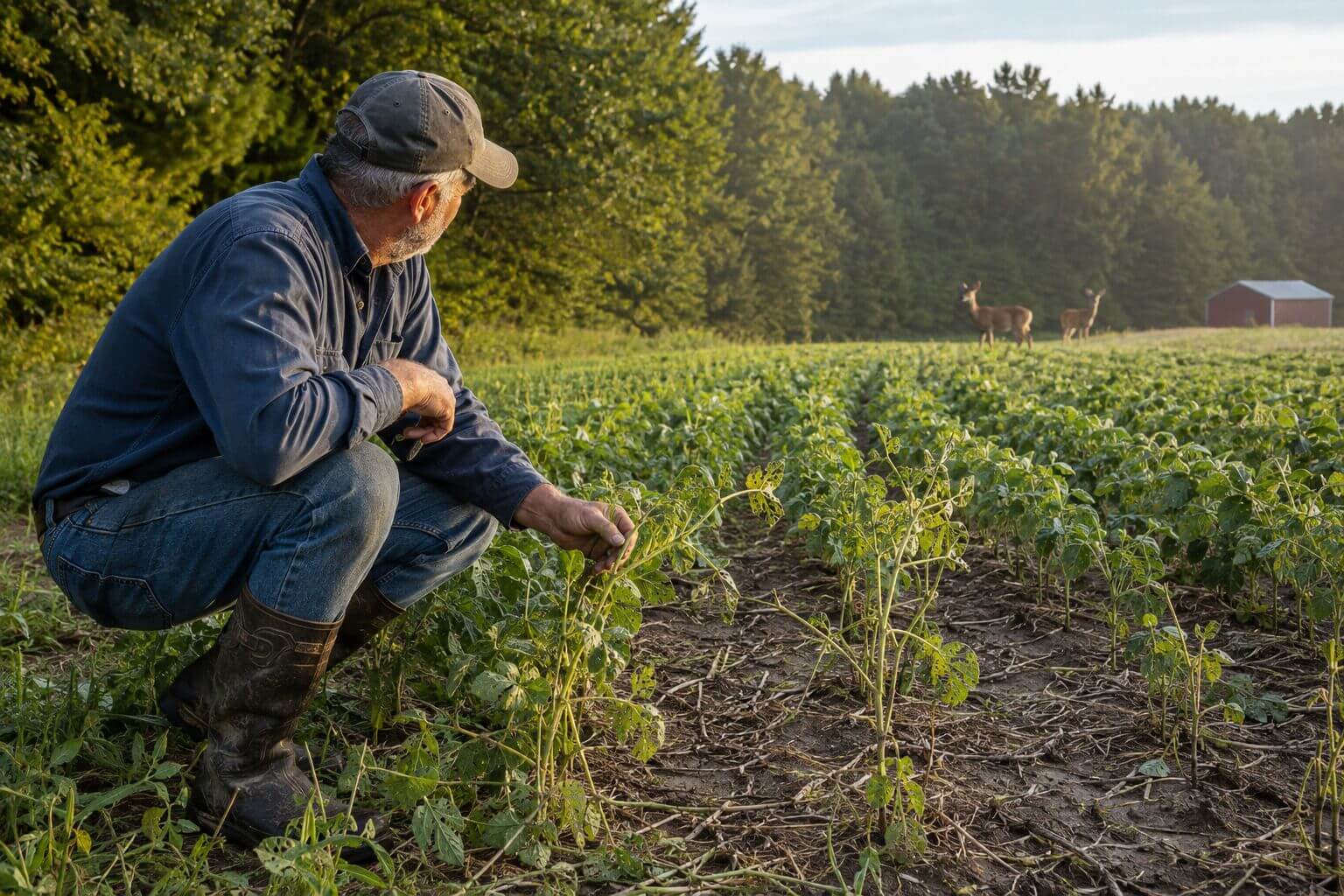
Repeal isn’t a purely partisan hunting-culture fight; Michigan Farm Bureau has backed HB 4445, arguing that seven years of an unchecked Lower Peninsula deer herd has driven up crop damage and vehicle-collision risk for the agricultural communities its members represent. That’s a legitimate cost, and it’s the strongest argument repeal advocates have.
But MSU Extension’s own analysis of baiting’s agricultural impact — going back to the years before the statewide ban — described it as a genuine double-edged sword for farmers, not an unambiguous win. On one hand, cull produce unsuitable for primary markets found a real outlet through the bait trade; cull carrots alone generated an estimated $2.2 million in farm-gate value statewide in the 1990s, and deer corn at $5-$8 per 50-pound bag can outprice traditional grain markets. On the other hand, Michigan Farm Bureau itself opposed loosening baiting rules back in 2011, specifically because livestock producers had sunk real money into TB testing and herd mitigation, and concentrated deer feeding sites risk undoing that work. The USDA has upgraded seven northern Michigan counties to bovine-TB-free status over the years — progress that took decades of coordinated testing, and progress that baiting’s critics argue a statewide reversal could put at risk.
What This Means for Land Value: Food-Plot Ground vs. Bait-Friendly Ground
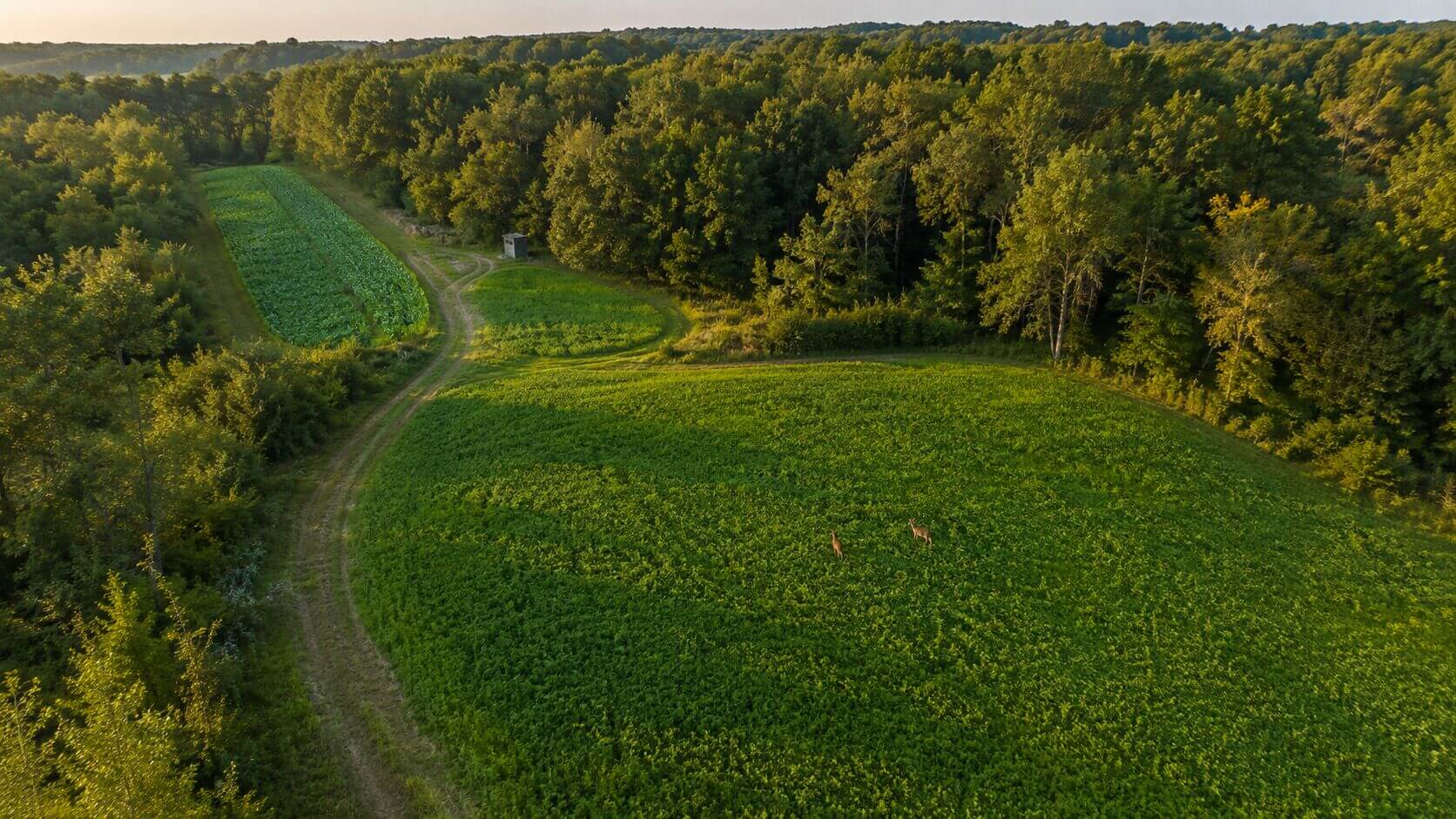 Here’s where this stops being a Lansing story and starts being a property story. Since 2018, Lower Peninsula hunting land has effectively split into two categories: properties where the previous owner built real food-plot infrastructure, and properties where they didn’t bother because baiting used to do the job for free.
A mature food plot system — cleared and limed ground, a defined plot rotation of clover and brassica, tractor access, maybe a small equipment shed — takes one to three growing seasons to establish and represents real capital investment: soil testing, lime, seed, fertilizer, and equipment time. That work shows up in an appraisal the same way tillable acreage or a maintained trail system does — it’s the same category of improvement that can also help qualify managed acreage for programs like Michigan’s Qualified Forest Program, which rewards actively managed forestland with real property tax savings. It’s a durable land improvement. A bait pile is a consumable. It has no capital value, and legally, it could disappear again tomorrow if the DNR or a future administration reverses course — which is exactly what’s happened twice already in this decade.
That asymmetry is the single most important thing for buyers and sellers to understand right now. If HB 4445 somehow clears the Senate and gets signed, it would modestly narrow the value gap between food-plot properties and undeveloped ground for pure fall-attraction purposes — a landowner could go back to running bait instead of building plots. But it wouldn’t touch the deeper value drivers a plot system provides: year-round nutrition that supports antler growth and herd health, drought-season food security, and the simple fact that a plot-built property reads as “turnkey” to the next buyer regardless of what Lansing does. We’ve walked properties on both sides of this line, and the ones with real habitat infrastructure — not just a feeder pole in the woods — hold value through every swing in this legislative fight.
There’s a second wrinkle buyers need to watch even in a repeal scenario: HB 4445 as written makes no exception for the 16 CWD-positive counties. If it ever does pass, expect the Natural Resources Commission to revisit county-by-county or DMU-level restrictions through its own rulemaking authority regardless of what the statute says, since that’s the mechanism the DNR has consistently preferred over legislative action. A property in a CWD-positive county — Genesee, Gladwin, Mecosta, Osceola, and twelve others — could end up under separate baiting restrictions even after a statewide repeal. Don’t assume statewide law automatically means county-level practice.
What to Check Before You Buy or List Right Now
 For the 2026 season, and for any property changing hands in the meantime, a few things are worth confirming directly rather than assuming — whether you’re buying or getting ready to list your land:
- Baiting is illegal on Lower Peninsula hunting ground this fall, full stop, outside the Independence Hunt exception. Don’t let a listing or a seller’s claim about “grandfathered” bait sites mislead you — there’s no such exception in current law.
- Check whether the county is one of the 16 confirmed CWD-positive counties. That status affects carcass transport rules and testing requirements independent of the baiting question, and it’s worth knowing before you make an offer.
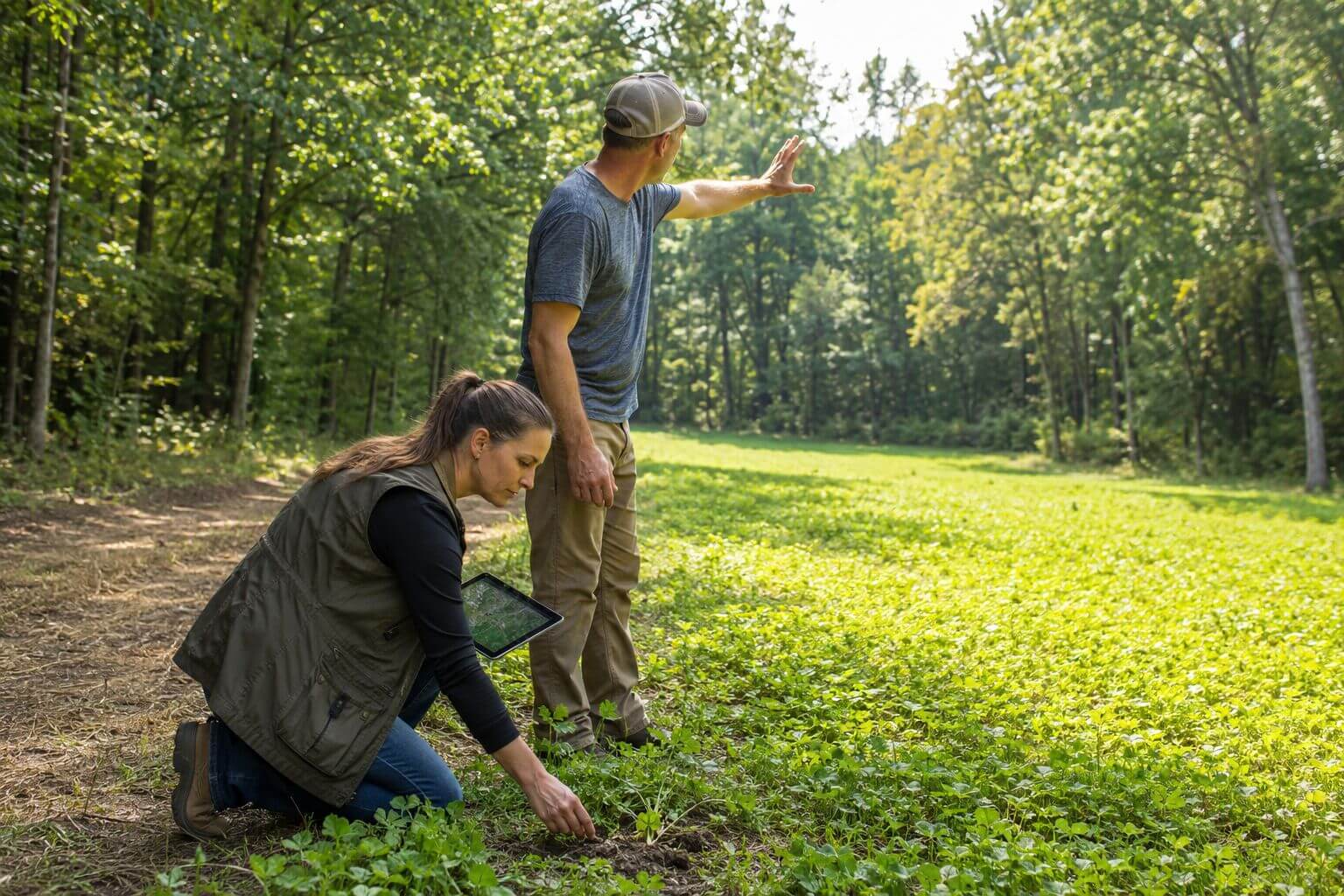
- Evaluate food-plot potential on its own merits, not as a hedge against the law changing. Soil type, sun exposure, and tractor access determine whether a parcel can support a real plot rotation — that’s a due-diligence item MWP walks every property for, regardless of what’s happening in Lansing.
- Watch the Senate committee, not the news cycle. HB 4445 needs a Senate Natural Resources and Agriculture Committee vote before it can even reach the floor, and Whitmer’s two prior vetoes on this exact issue are the honest baseline for what happens if it gets to her desk a third time.