Buy 80 acres today and you’re likely looking at $6,900 to $15,100 a year in tax, based on USDA’s 2026 land values and the state’s 2025 non-homestead average. Land that’s been owned for years, or is farmed, usually pays less. A plot and gravel add about $1,100.
Key takeaways
- Bare hunting ground gets billed as non-homestead, and in 2025 that averaged 54.01 mills across the state (Michigan Treasury, as of Oct 22, 2026).
- The same 80 acres can carry three very different bills. Worth $7,000 an acre, it costs a new buyer about $15,123 a year, an owner since 2016 about $13,509 under the Proposal A cap, and qualified farmland about $10,083.
- Real 2025 non-homestead rates in three core-county townships ran from 42.21 mills (Amboy Township, Hillsdale County) to 51.84 (Cheshire Township, Allegan County).
- The Qualified Forest Program can cut up to 18 mills of school operating tax on the land, less a 2-mill fee. On an average non-homestead bill, that’s up to about 30% off.
- If you lease, the cheapest published 2026 liability policy we found was $260 a year for up to 499 acres.
Why Ongoing Costs Matter
 Buying a hunting property for sale is only the first bill. The ones that come every year decide whether the place stays fun, so plan for them. Here’s what a budget buys you:
- No surprise when the winter tax bill shows up in December.
- Money set aside so the plots, trails and stands don’t slide.
- A way to sort out which projects actually pay you back, now or at resale.
- Time to see if your parcel fits a tax program before the deadline passes.
Property Taxes: The Biggest Line
 Don’t let the first number scare you off. Your neighbor’s bill on the same size parcel could be far lower than yours, because it mostly comes down to when each of you bought, how the land is used, and which township it sits in.
Some background first. Michigan taxes land on its taxable value. Assessed value (SEV) is half of market value, and each year taxable value can rise only by inflation or 5%, whichever is lower, until the land sells. The year after a sale, taxable value “uncaps” back up to SEV (Proposal A; MCL 211.27a; Mich. Const. art. IX, sec. 3, as of Oct 22, 2026).
Hunting land without a home on it is non-homestead, so it pays the full local rate, school operating millage included. Rates swing a lot by county. If you lump every kind of property together, Leelanau averaged 27.63 mills in 2025 and Ingham hit 62.55, while non-homestead parcels statewide averaged 54.01 mills (according to the Michigan Treasury 2025 Ad Valorem Tax Levy Report, as of Oct 22, 2026).
We don’t have a state number for hunting ground, since USDA doesn’t break it out, so we used two of theirs as bookends: $3,200 an acre for Michigan pasture and $7,000 for farm real estate in 2026 (USDA NASS Land Values 2026, as of Oct 22, 2026). Don’t read either one as an appraisal of your place. On 80 acres, that puts SEV at $128,000 to $280,000.
Case 1: You Just Bought It
This is the highest of the three, since the bill resets to half of market value.
- Cheap ground at $3,200 an acre: 80 acres is $256,000, so SEV is $128,000, and $128,000 x 0.05401 gets you roughly $6,913.
- Pricier ground at $7,000: 80 acres is $560,000, SEV is $280,000, and $280,000 x 0.05401 works out near $15,123.
Here’s how that same 80 acres plays out at real 2025 non-homestead rates in three townships, picked from Michigan Treasury’s 2025 Total Property Tax Rates report (as of Oct 22, 2026):
- Amboy Township, Hillsdale County (Camden-Frontier schools), 42.2134 mills: about $5,403 to $11,820.
- Day Township, Montcalm County (Montabella schools), 46.3290 mills: about $5,930 to $12,972.
- Cheshire Township, Allegan County (Allegan schools), 51.8414 mills: about $6,636 to $14,516.
Case 2: You’ve Owned It a While
After that first year, taxable value can rise only by the state’s inflation multiplier, and never more than 5%. Starting in 2018, the multipliers went 1.021, 1.024, 1.019, 1.014 and 1.033, then 1.05 in 2023 and again in 2024, then 1.031 and 1.027 for 2026 (State Tax Commission Bulletin 14 of 2025, as of Oct 22, 2026). Stack them up and taxable value could grow at most about 30.3% from 2017 to 2026.
Here’s what that means for one parcel. Say an 80-acre property is worth $7,000 an acre today, like the 2026 state average. A buyer pays about $15,123 a year (Case 1). Now say the current owner bought it in 2016, when USDA put Michigan farm real estate at $4,800 an acre (USDA NASS Land Values 2017 Summary, as of Oct 22, 2026). Its taxable value would have reset to half of that for 2017, $192,000, and the cap would hold it to no more than $192,000 x 1.3027 = about $250,119 in 2026.
- New buyer, same land: about $15,123 a year.
- Owner since 2016, same land: about $13,509 a year.
This is an illustration that assumes the parcel tracked the state average, not a real tax bill. The gap grows when local land values climb faster than inflation, and it’s why the seller’s bill is usually lower than what you’ll pay after you buy.
Case 3: Qualified Farmland
Qualified agricultural property is exempt from up to 18 mills of local school operating tax (MCL 211.7ee). A parcel qualifies if it’s classified agricultural on the assessment roll, or if more than half its acreage is in farm use. Land in a federal conservation reserve program counts as farm use, but managing and cutting a woodlot doesn’t. If the land isn’t classified agricultural, you file Form 2599 by May 1 (Michigan Treasury Qualified Agricultural Property guidelines and Form 2599, as of Oct 22, 2026).
Taking 18 mills off the 54.01 average leaves 36.01. On the 80-acre example, that’s $128,000 to $280,000 x 0.03601 = about $4,609 to $10,083 a year. Treasury’s township tables also print the rate with the farm exemption applied, for example 24.2134 mills in Amboy Township and 33.9067 in Cheshire Township. Mostly-wooded hunting land usually won’t qualify.
Where your bill actually lands comes down to the township and school district you’re in, so call the assessor for the parcel’s taxable value and check Michigan Treasury’s property tax estimator for the local millage.
Tax Programs That Can Lower the Bill
Qualified Forest Program (QFP). Run by MDARD. Parcels need at least 20 contiguous acres, with 80% productive forest under 40 acres or 50% at 40 acres and up, plus a forester’s management plan. Applications are due September 1 for the next tax year. The land is exempt from up to 18 mills of school operating tax, on land value only, and you pay a yearly fee of 2 mills on taxable value. Public access isn’t required (MDARD QFP; MCL 211.7jj, as of Oct 22, 2026). That’s a net cut of up to 16 mills. On the 80-acre example, it’s $128,000 to $280,000 x 0.016 = about $2,048 to $4,480 a year, or roughly 30% of a 54.01-mill bill. Our QFP guide for hunters walks through the deadlines and the common mistakes.
Commercial Forest (CF). Run by the DNR. Instead of regular property tax, you pay $1.35 an acre for tax years 2022 to 2026, rising 5 cents every five years. The trade-offs are big for hunters: 40 forested acres minimum, the land must stay open to public foot traffic for hunting, fishing and trapping, no buildings or permanent blinds, and no “No Trespassing” signs (DNR Commercial Forest Program, as of Oct 22, 2026).
PA 116 farmland agreement. Run by MDARD, for working farms: 40 acres or more with at least 51% in farm use, or smaller parcels that meet farm income tests. You get a Michigan income tax credit for property taxes above 3.5% of household income. MDARD’s own example: $2,000 in taxes and $20,000 of income gives a $1,300 credit (MDARD PA 116 FAQ, as of Oct 22, 2026). Mostly-wooded hunting land usually won’t qualify.
Insurance
 Michigan’s recreational use law limits a landowner’s liability to people who hunt the land for free, except for gross negligence or willful and wanton misconduct (MCL 324.73301, as of Oct 22, 2026). It doesn’t cover paying hunters, so leasing changes the picture.
- Lease liability (published rates). For 1 to 499 acres, the American Hunting Lease Association’s 2026 form shows $260 a year for $1 million per occurrence or $425 for $2 million (AHLA 2026 application, as of Oct 22, 2026), and the National Deer Association’s 2026-27 program comes to $364.93 all in for anything under 2,250 acres (NDA 2026-27 application, as of Oct 22, 2026).
- Cabin, fire or owner policies. These vary by carrier and building, and we didn’t find a published Michigan range. Get a quote from your agent.
If you’re weighing a lease, our hunting lease income and liability guide covers both sides.
Food Plots and Habitat
Plot costs swing with your soil, so start with a soil test. MSU Extension sets lime rates off the test (MSU Extension, Lime for Michigan Soils, as of Oct 22, 2026). The DNR’s landowner guide suggests putting no more than 10% of a property into grain plots.
- Lime (one example invoice): $31 a ton for high-calcium ag lime plus $10 a ton to spread, on a Nov 12, 2025 invoice to an MSU research site in southwest Michigan (MSU KBS invoice, as of Oct 22, 2026). If a test calls for 2 tons an acre, that’s $82 an acre.
- Fertilizer: USDA’s Iowa Production Cost Report for the week ending Oct 16, 2026 lists distributor asking averages of $971.67 a ton for MAP, $494.00 for potash and $488.00 for 32% liquid nitrogen (USDA AMS Iowa Production Cost Report, as of Oct 22, 2026). It’s the nearest USDA regional report to Michigan.
- Machine work: If you hire it out, MSU’s 2025 numbers figure $18.79 an acre to run a 21-foot tandem disk, $38.08 for a no-till drill and $7.17 for a pull-type sprayer. Those are farm-scale estimates (MSU Custom Work Rates 2025, as of Oct 22, 2026).
- Seed: Tractor Supply listed a 40-pound bag of PlotSpike Forage Feast, which plants half an acre, at $29.99, or about $60 an acre (Tractor Supply listing, as of Oct 22, 2026). Clover and brassica blends price differently.
Add lime at 2 tons, disking, drilling, one spray and that seed, and you get about $206 an acre before fertilizer. For what to plant and when, see our 2026 Michigan food plot planting guide.
Roads, Trails and Access
 Two-tracks rut, culverts wash out, and trails grow shut. Gravel is about the only piece of this with a public price tag; on the Monroe County Road Commission’s 2025 bids, MDOT 22A and 23A went for $13.25 to $13.80 a ton picked up at the quarry (MCRC 2025 aggregate bid tab, as of Oct 22, 2026). Hauling and grading come on top of that and depend on how far the truck has to go, so get a quote from someone local.
Cabins and Other Improvements
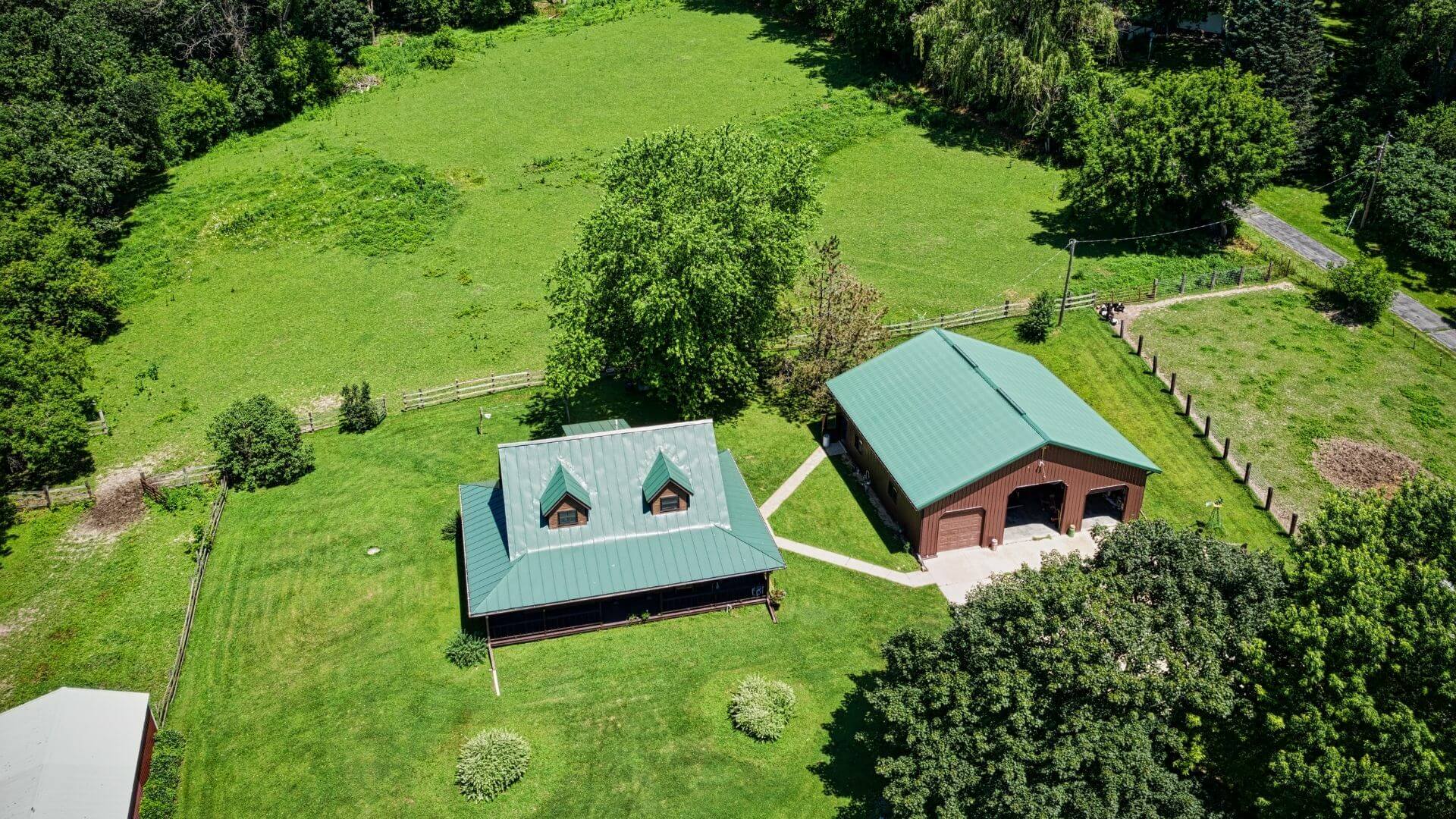 A cabin, well, septic or power line brings its own upkeep, and buildings are taxed even on QFP land. Repair costs depend too much on the building to put one number on. Set aside a yearly reserve and adjust it after the first full year of bills.
Michigan Winters and Access
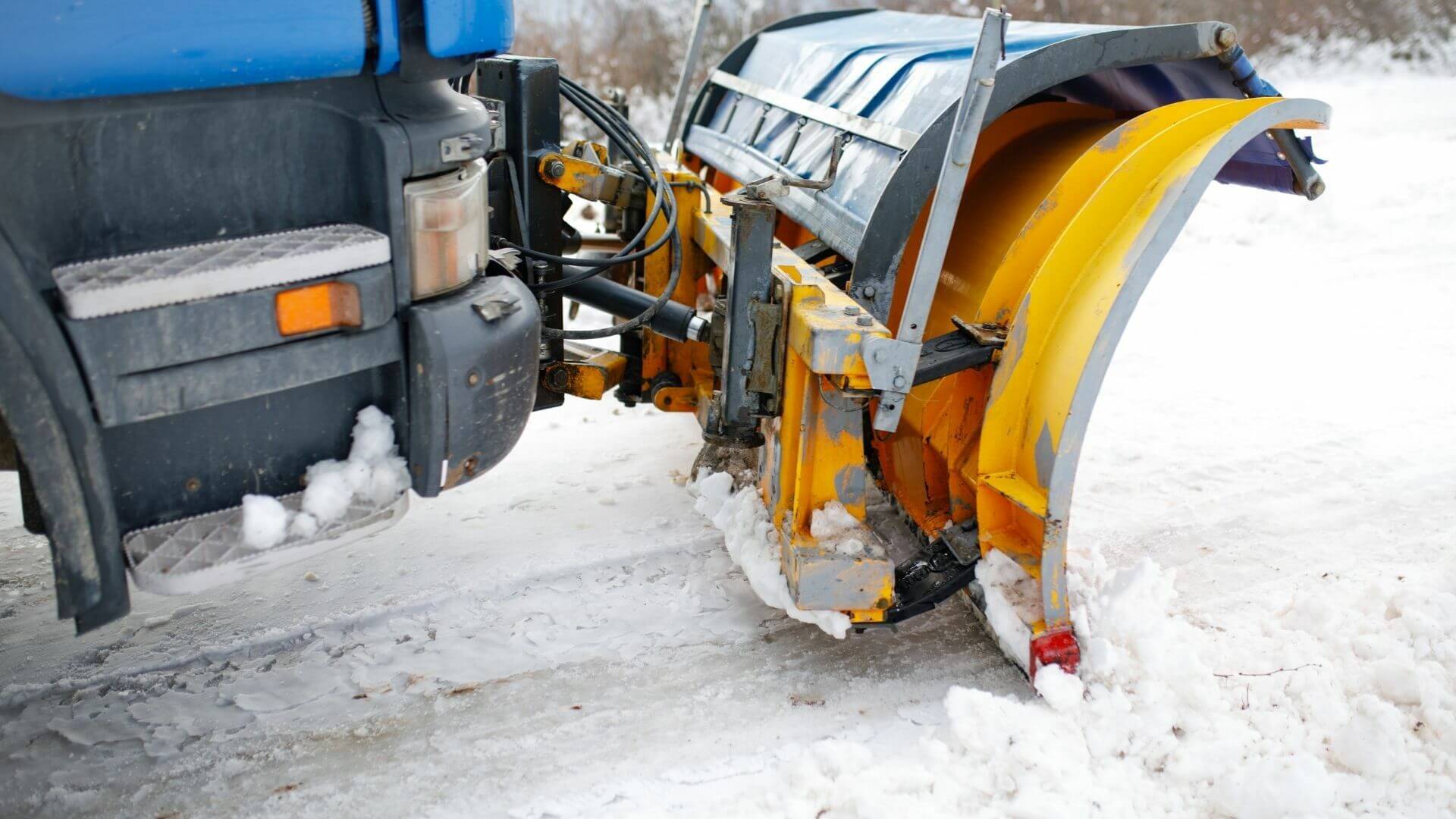 Planning to get in after the snow flies? You’ll need someone to plow or a snowmobile, and it’s worth pinning down a seasonal rate with someone nearby before deer season, not after the first storm.
Programs That Can Offset Costs
- Hunting Access Program (HAP). The DNR can pay up to $30 an acre for high-quality habitat in a Farm Bill program such as CRP, or for land in wildlife food plots. In return, the public can hunt it (DNR HAP for landowners, as of Oct 22, 2026).
- Hunting leases. Lease income can cover part of the tax bill, though it brings insurance and wear.
- Timber. A planned harvest can offset costs on wooded ground, and a QFP plan already maps one out.
Cost Ranges by Acreage
This table rebuilds every line from the sources above. Here’s what we assumed: land at $3,200 to $7,000 an acre (USDA 2026 pasture and farm real estate), assessed at half of value, 54.01 mills for a new buyer (2025 statewide non-homestead average) and 36.01 mills for qualified farmland, food plots on 5% of the acreage at $206 an acre, and 10, 20 or 40 tons of gravel at quarry price. Fertilizer, trucking, cabin costs and owner insurance aren’t included.
| Acreage | Tax, new buyer | Tax, qualified farmland | QFP savings (up to) | Food plots | Gravel | Total, new buyer |
|---|---|---|---|---|---|---|
| 20 acres | $1,728 to $3,781 | $1,152 to $2,521 | $512 to $1,120 | 1 acre: $206 | 10 tons: $133 to $138 | $2,067 to $4,125 |
| 80 acres | $6,913 to $15,123 | $4,609 to $10,083 | $2,048 to $4,480 | 4 acres: $824 | 20 tons: $265 to $276 | $8,002 to $16,223 |
| 160 acres | $13,827 to $30,246 | $9,219 to $20,166 | $4,096 to $8,960 | 8 acres: $1,648 | 40 tons: $530 to $552 | $16,005 to $32,446 |
Long-held land isn’t in the table because its bill depends on the year it last sold. In the Case 2 example, the same 80 acres at $7,000 an acre runs about $13,509 for an owner since 2016, against $15,123 for a new buyer. If you lease the land, add $260 to $425 a year for a published lease liability policy. QFP only applies where the parcel meets the forest stocking rules.
How to Keep Costs Down
- Mostly woods? Look into QFP well ahead of the September 1 deadline.
- Ask the assessor how the parcel is classified and valued, and question it if something looks off.
- Soil test before you buy lime or fertilizer.
- Do the mowing and small plot work yourself where you can.
- Look at a lease, HAP or a timber sale to offset the bill.
Want to know what your yearly cost works out to per day you actually hunt? Our October signals article shows how to figure it.
Budget Checklist
- Property tax (summer and winter bills)
- Liability coverage, plus cabin coverage if you have one
- Soil test, lime, fertilizer and seed
- Gravel, culverts and trail mowing
- Equipment fuel and repairs
- QFP fee or other program costs
- A reserve for storm damage and washouts
Plan Your Budget Before You Buy
Michigan Whitetail Properties has been an independent Michigan land brokerage since 1995. Before you make an offer, ask the township for the current taxable value and the millage, then run the math above. Out-of-state? Start with our out-of-state buyer’s guide. When you’re ready to look, browse our current Michigan hunting land for sale.