A Michigan food plot planting guide is a season-long roadmap — not a single planting date — that starts with clover in May and closes with cereal rye in late August, because the window between your last spring frost and the October 1 archery opener is shorter than most landowners realize. A properly sequenced food plot system combines cool-season perennials like red and white clover (15–25% crude protein, planted May through early June) with warm-season summer annuals like buckwheat, then finishes with brassicas and cereal rye timed to pull deer into shooting range from September through late fall.
Michigan Whitetail Properties has evaluated food plot systems on properties across all 83 Michigan counties since 1995, and the properties with year-round food sources consistently sell faster and command $500–$2,000 more per acre than comparable unmanaged parcels. One critical detail the calendar specs almost never include: Upper Peninsula food plot timelines run three to four weeks behind the Lower Peninsula due to frost date differences, which means the cereal rye going in the ground the last week of August in Hillsdale County doesn’t go in until September 8–12 in Marquette County.
You can tell a lot about a piece of hunting land by looking at what the deer do in September. On properties without food, they scatter. The bachelor groups break up, the summer patterns dissolve, and by the time you hang a stand in early October, you’re guessing. On properties with clover fields and a few acres of brassicas, deer don’t scatter — they concentrate. Every day. And that difference between a property that holds deer and one that doesn’t? That’s what shows up in the trail camera photos that sell listings before they ever hit the open market.
Here’s how to build that food plot system — or evaluate whether one already exists on a property you’re considering.
The Michigan Food Plot Calendar: Three Zones, Three Timelines
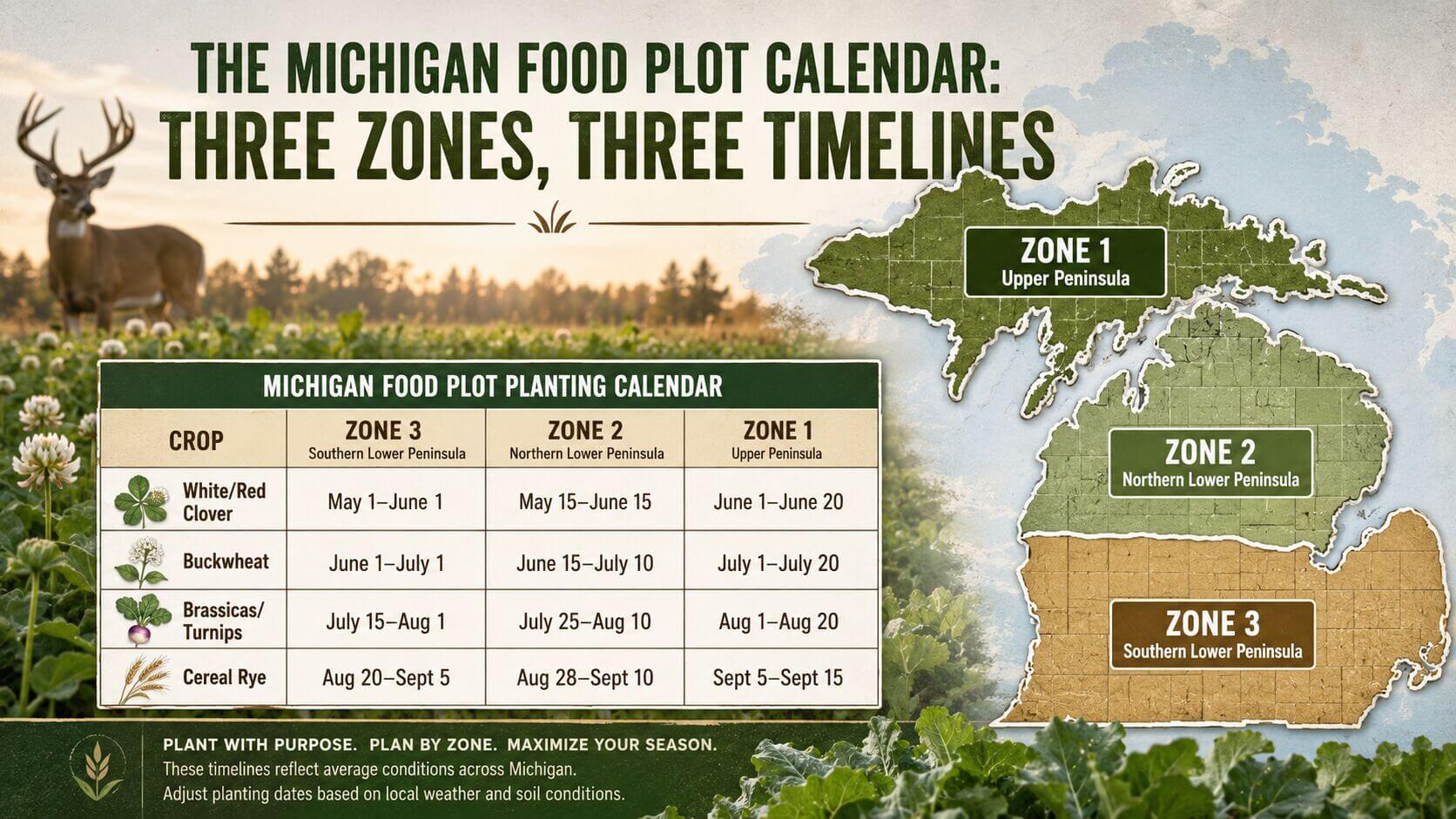 Michigan’s growing conditions split into three distinct zones for food plot purposes, and planting the wrong crop at the wrong time in the wrong zone is the most common reason food plots fail.
Zone 3 is the Southern Lower Peninsula — everything roughly south of US-10. Zone 2 is the Northern Lower Peninsula. Zone 1 is the Upper Peninsula. According to MSU Extension’s regional planting calendars, last frost in Zone 3 typically falls between mid-April and early May; in Zone 1, last frost can stretch into late May or even early June in high-elevation inland areas.
Here’s how the planting calendar breaks down by zone:
| Crop |
Zone 3 (SLP) |
Zone 2 (NLP) |
Zone 1 (UP) |
| White/Red Clover |
May 1–June 1 |
May 15–June 15 |
June 1–June 20 |
| Buckwheat |
June 1–July 1 |
June 15–July 10 |
July 1–July 20 |
| Brassicas/Turnips |
July 15–Aug 1 |
July 25–Aug 10 |
Aug 1–Aug 20 |
| Cereal Rye |
Aug 20–Sept 5 |
Aug 28–Sept 10 |
Sept 5–Sept 15 |
Soil temperature matters more than calendar date. Clover needs at least 40°F soil temp to germinate. Brassicas want 45°F or warmer. Cereal rye germinates in soil down to 34°F — which makes it Michigan’s most forgiving late-summer option and the easiest way to get green food in front of deer before opening day.
The Five Essential Food Plot Species for Michigan Deer Properties
Not every plant works in every Michigan situation. These five cover the full season, from spring green-up through December.
White and Red Clover
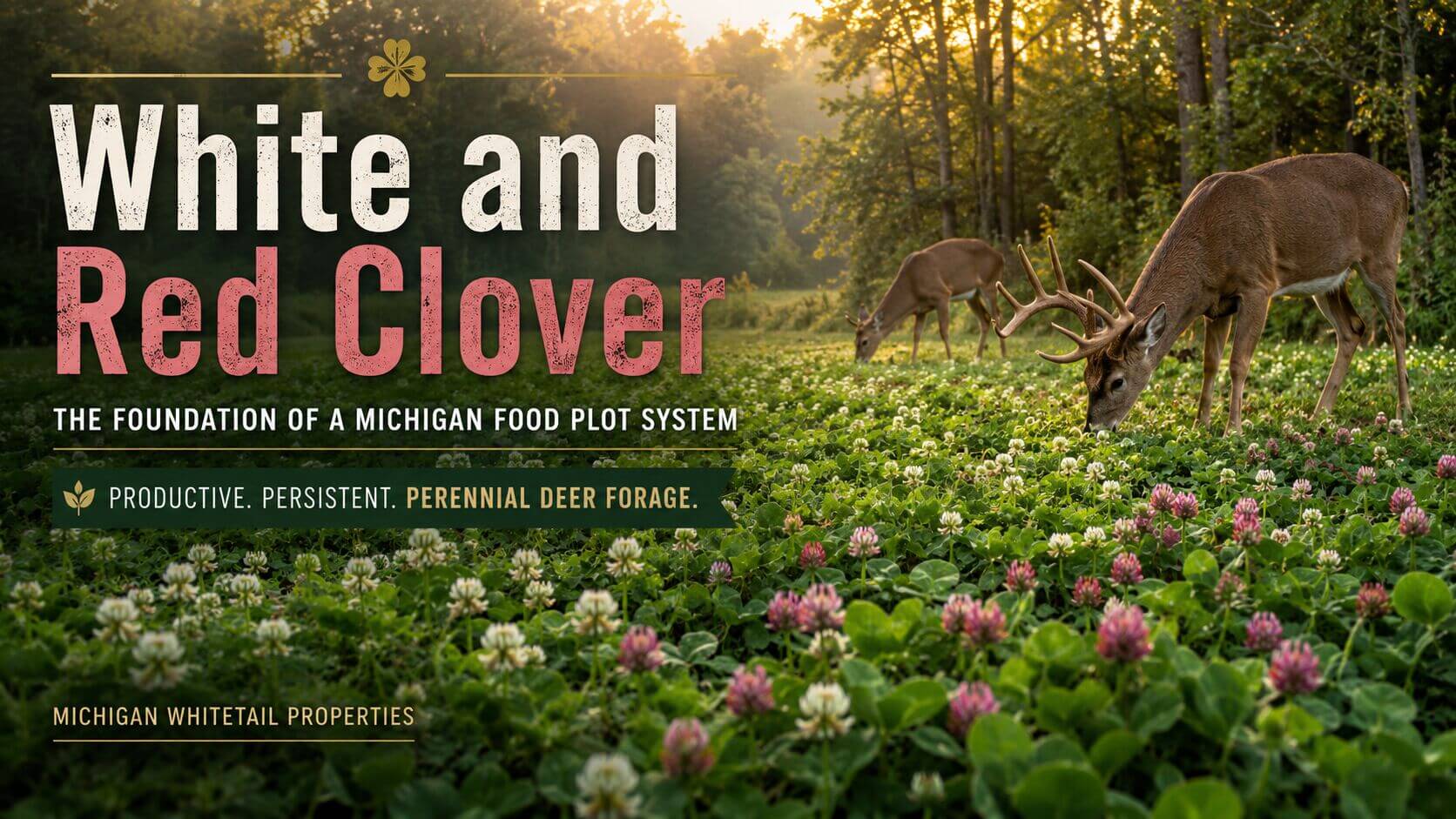 The foundation of any Michigan food plot system. Plant May through early June as a perennial stand that feeds deer from spring through fall without annual replanting. White clover averages 18–25% crude protein — higher than most commercial deer supplements — and tolerates moderate hunting pressure because deer return to it daily. Seed cost runs $20–$40 per acre, making it the highest-ROI planting on most properties.
Buckwheat
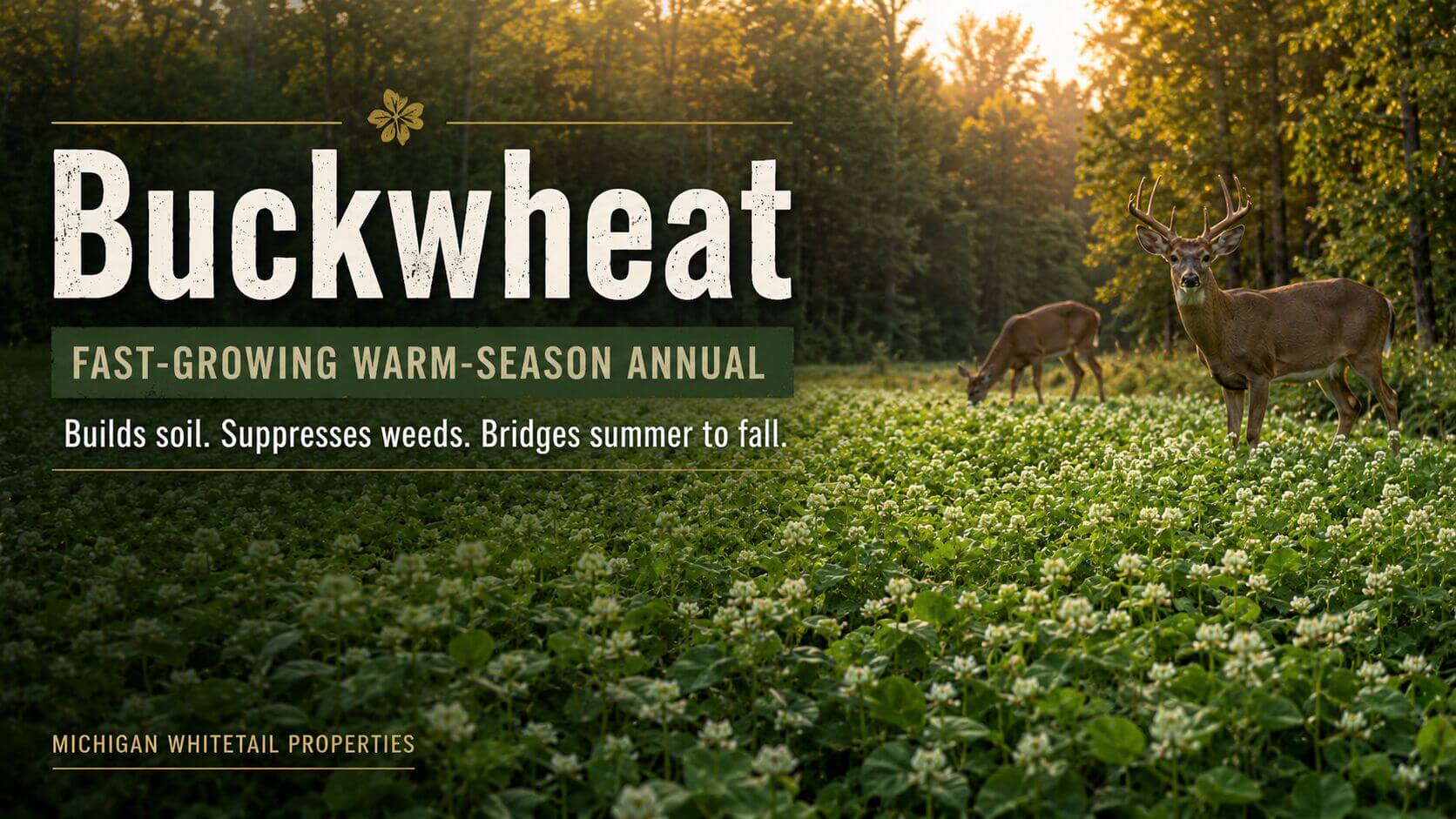 A fast-growing warm-season annual that does double duty: it feeds deer from midsummer through early fall while suppressing weed competition and fixing nitrogen into the soil. It matures in about 70 days, which makes it a reliable bridge between your spring clover and your fall brassica plot. Plant June through early July in Zones 2 and 3.
Brassicas (turnips, rape, kale)
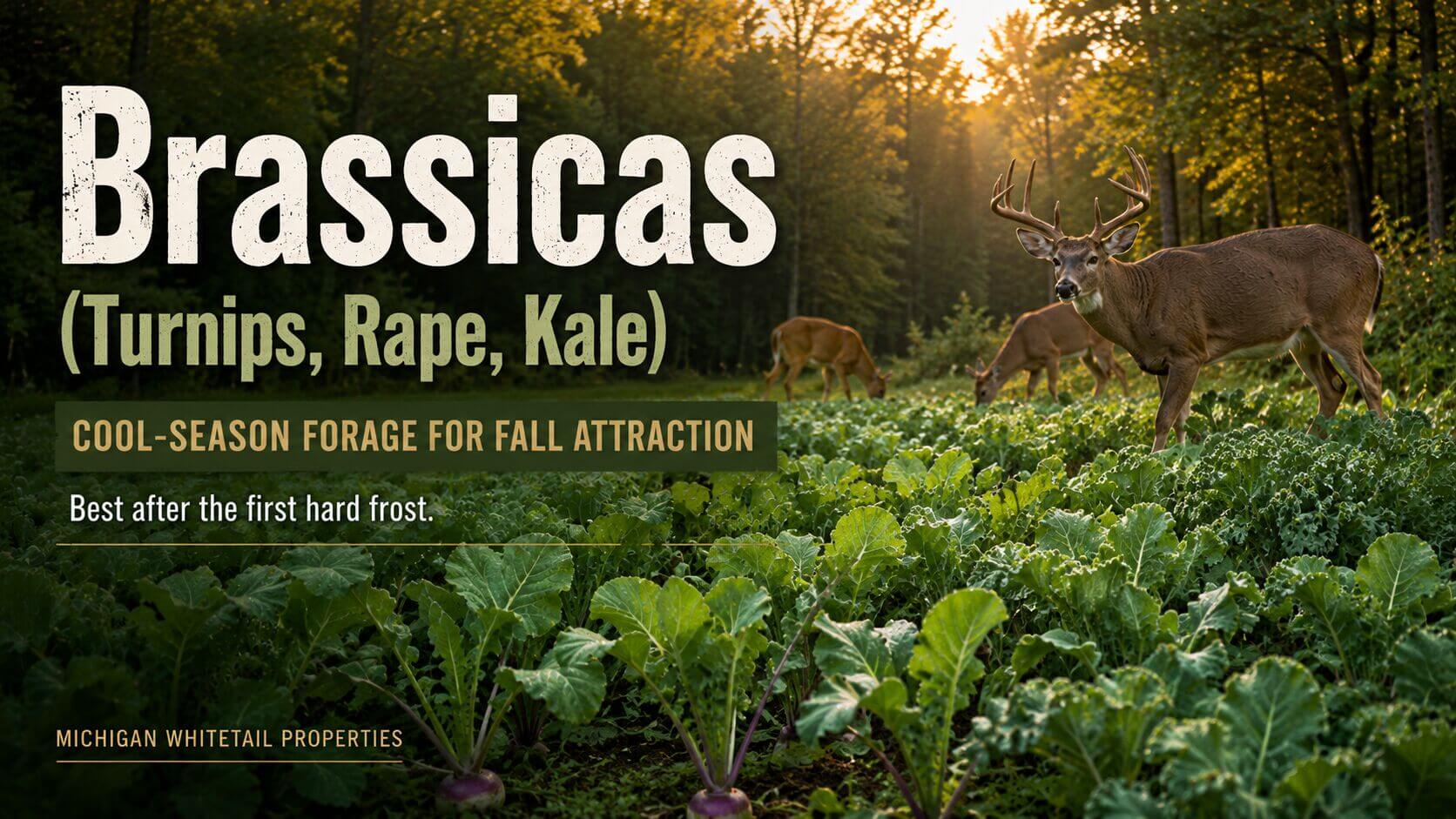 Per MSU Extension, forage brassicas contain 15–20% crude protein and 65–80% digestibility, but they don’t reach peak palatability until after the first hard frost converts their starches to sugar. In Zone 3, that typically happens mid-October. In Zone 2, late October. Plant no deeper than one-half inch and budget 75–100 lbs of nitrogen per acre for strong growth.
Cereal Rye
 Michigan’s most underused food plot crop. It germinates faster than almost any other cool-season grain, tolerates poor soils, and starts attracting deer within three weeks of germination. According to the National Deer Association, mixing 50 lbs per acre of cereal rye with 2–4 lbs per acre of brassica creates a dual-purpose plot that works from September through December — exactly the window that covers Michigan’s archery season and the firearm opener.
Chicory
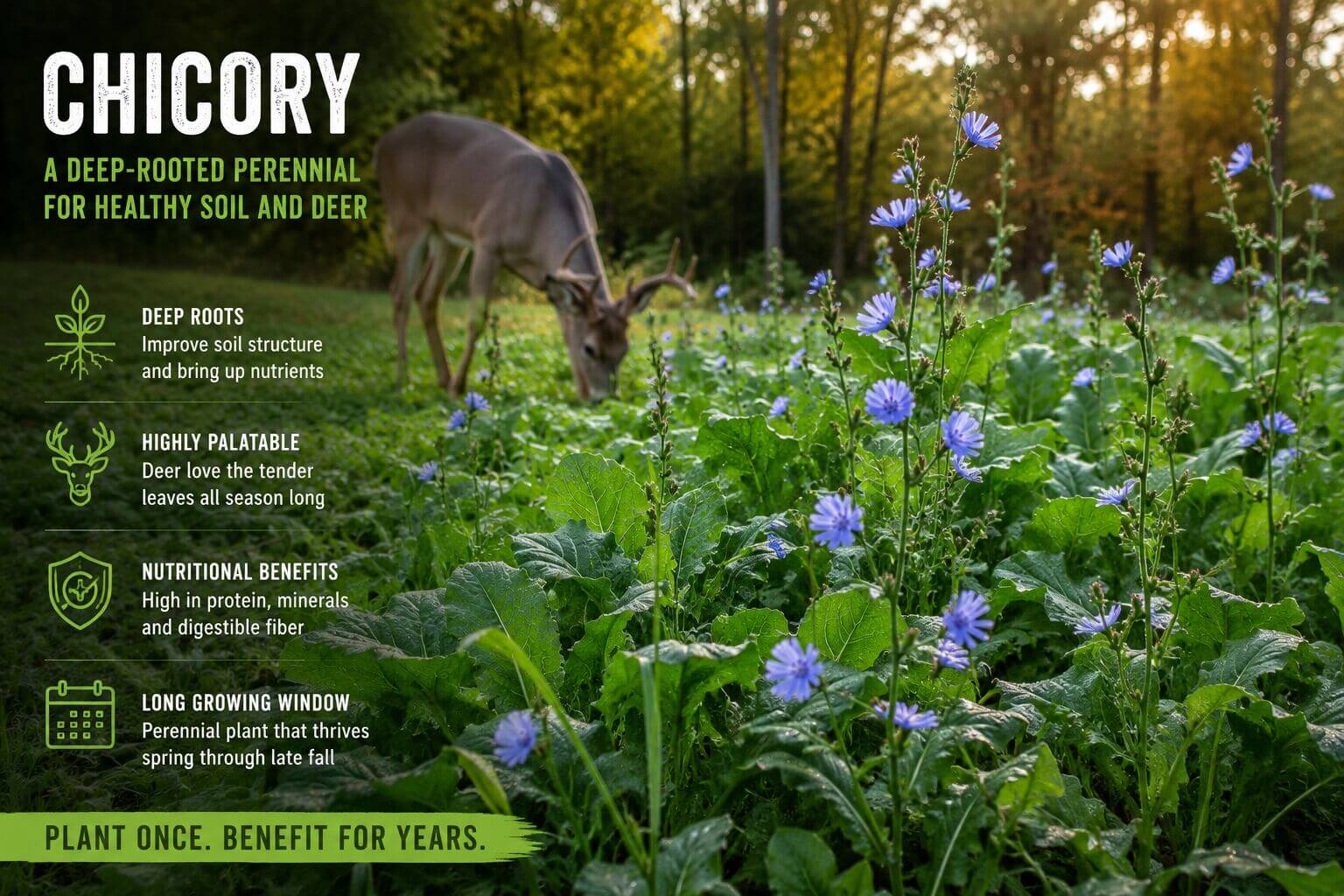 Often overlooked, chicory is a deep-rooted perennial that holds up in drought conditions and adds variety to established clover stands. Young leaves average 15–25% crude protein. Mix into clover plots at 1–2 lbs per acre for a low-cost stand upgrade.
Food Plot Size: What Actually Works on a Michigan Property
The minimum effective food plot size in Michigan is roughly a half-acre for a single-species plot — enough to establish consistent deer attraction, but not enough to sustain a deer herd through the season on its own.
A few benchmarks worth knowing before you plan or evaluate a property’s food plot system:
- 1 productive acre of food plots can support 4–6 deer through a Michigan summer season
- Properties with 5–10% of total acreage in food plots consistently produce more predictable deer movement than those with less
- One well-placed 2-acre clover field in a high-traffic area can consolidate deer movement into shootable patterns within a single season
For stand placement strategy tied to food plots, see our land management guide for Michigan hunting properties. And if you’re managing food plots on 20 or more forested acres, documented habitat work strengthens Qualified Forest Program eligibility — here’s how QFP tax savings work for Michigan hunters.
What Grows in Shade: The Honest Answer
Most food plot species want 6+ hours of direct sunlight per day. On heavily wooded Michigan properties with tight canopy — common in Crawford County oak flats or Oscoda County jack pine cuts — that’s a real limitation.
Here’s what actually tolerates partial shade:
- White clover performs reasonably well with 4+ hours of sun and is the best shade option in open hardwood stands
- Brassicas handle partial shade better than cereal grains, especially in morning-sun situations
- Cereal rye tolerates moderate shade slightly better than oats or wheat
- Chicory establishes in partial canopy gaps once it’s rooted
For deep shade — under mature hemlock or dense cedar — don’t waste seed. TSI (Timber Stand Improvement) work to open the canopy before planting is a better investment than trying to force crops in the dark.
Soil Testing: The Step Most Hunters Skip
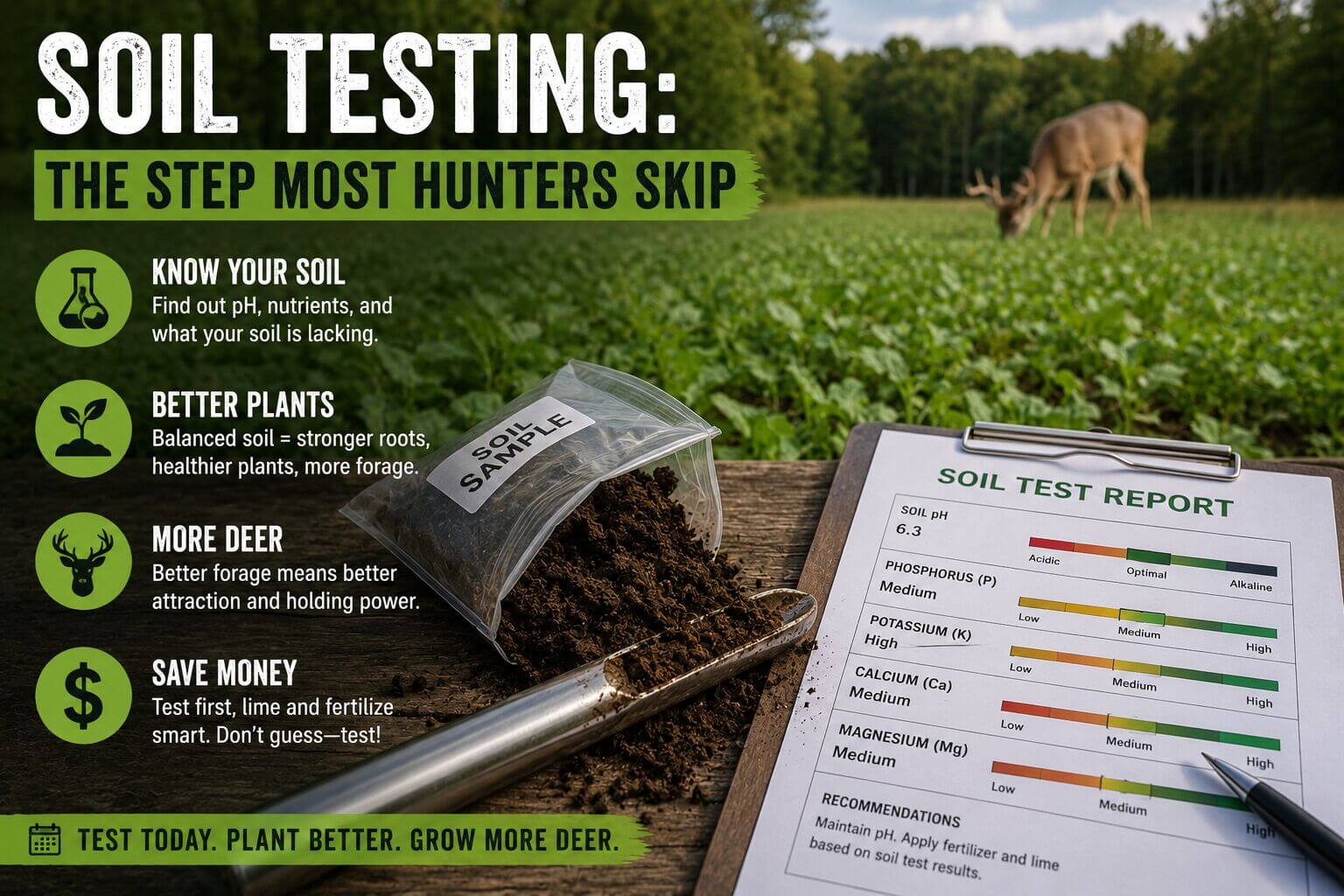 Pull a soil sample before you plant anything. Extension offices across Michigan distribute sample bags at no cost, and MSU Extension soil testing runs $25–$40 per sample. Brassicas fail in low-pH soils. Clover struggles below 6.0 pH. Most Michigan soils — especially in the northern zones — benefit from 1–2 tons of lime per acre before the first food plot season.
A $35 soil test and proper liming will outperform expensive seed in untreated acidic dirt. Every single time.
If you’re buying a property with existing food plots, ask when the plots were last tested. The answer tells you whether the previous owner actually managed for results or just scattered seed and hoped. Browse current Michigan hunting land listings with established food plot infrastructure to see what a managed property looks like.
FAQs
Frequently Asked Questions About Michigan Food Plots
Can I use corn in a Michigan food plot?
Corn is legal for food plots in Michigan, but DNR baiting regulations restrict its use within 2 miles of any CWD-detected location and in certain designated zones. Always verify current baiting rules for your specific county at the Michigan DNR website before planting corn near stand sites. Corn requires significantly more equipment and inputs than most food plot species, so most smaller properties stick with clover, brassicas, and cereal rye.
What food plot grows fastest before bow season in Michigan?
Cereal rye is the fastest option for the October 1 archery opener. Planted in late August, it begins germinating within 5–7 days in warm soil and reaches 3–4 inches — deer-attractive height — within three to four weeks. A mix of 50 lbs per acre of cereal rye with 2–4 lbs per acre of brassica is the go-to combination for hunters working against the clock in August.
How big should my Michigan food plot be?
For a dedicated seasonal food plot, aim for at least one acre. Plots under a half-acre can work as close-range “kill plots” positioned directly in front of a stand, but they won’t hold deer through a full season. On a 40–80 acre Michigan property, most land managers recommend 3–5 total acres spread across two or three separate plots positioned to cover different travel corridors from bedding to food.
What food plots work in shade in Michigan?
White clover is the most shade-tolerant common food plot species and produces in 4+ hours of sunlight — the most realistic choice in open hardwood stands across northern Michigan counties like Montmorency or Alcona. Brassicas tolerate partial shade, particularly in morning-sun situations. For heavy canopy conditions, TSI work that opens one or two canopy gaps creates a better return on investment than forcing shade-intolerant crops under a closed canopy.
Food plots don’t turn mediocre properties into great ones overnight. But the right species, planted at the right time for your zone, creates the kind of daily deer activity that shows up in trail camera pictures year after year — and in the per-acre price a buyer is willing to pay when it’s time to sell.
Buying a Michigan property with established food plots — or ready for one? Our agents have walked thousands of acres across every region of the state and can tell you in the first twenty minutes whether a property’s food situation is an asset or a project. Call Michigan Whitetail Properties at 517-437-2946 to schedule a walkthrough before the summer planting window closes.