Michigan’s 2026 Independence Hunt starts Thursday, October 15 and wraps up Sunday, October 18. Over those four days, hunters with qualifying disabilities can take one deer each in a firearm deer season that’s open on private land and on some public land, where you’ll need an access permit.
If you’re planning a hunt for someone with a disability, the rules, the paperwork and the question of whether the ground will work can pile up fast. We’re Michigan Whitetail Properties, selling Michigan land since 1995, and this guide takes those pieces one at a time. For most families, the land question is really about access and grade. Acreage comes second.
Key takeaways
- Dates: Thursday, Oct. 15 through Sunday, Oct. 18, 2026. The DNR ties it to the third Saturday in October and starts it the Thursday before.
- Who qualifies: you need a 100% VA disability rating, or a VA unemployability rating if you’re a Michigan resident. A DNR standing-vehicle or laser-sighting permit also counts, and so do blindness and deafness.
- Where: private land, plus some public land by access permit only.
- Rules: one deer per hunter, and you’ll wear hunter orange. On a single or combo tag there are no antler point restrictions.
- Land: you’ll get more out of firm all-season access and a level blind site near parking than out of total acres.
Independence Hunt Dates, Eligibility, and Rules
 The Michigan DNR lists the Michigan Independence Hunt 2026 dates as October 15–18. Because it’s pegged to the third Saturday in October, the dates move a little from year to year.
A hunter must meet one of these DNR criteria:
- A 100% VA disability rating, or a VA individual-unemployability rating for Michigan residents
- A DNR permit to hunt from a standing vehicle
- A DNR permit to use a laser-sighting device
- Blindness, or deafness as defined in MCL 408.202
There is no separate Independence Hunt license. You hunt on a base license plus either a single deer or a deer combo license, and where it’s valid, a universal antlerless license covers one antlerless deer. Veterans should carry their VA documentation afield.
The standing-vehicle permit, for hunters permanently unable to walk, allows shooting from a parked vehicle, ORV or mobility device. Hunter orange is required, and any legal firearm, bow or crossbow may be used under firearm-season rules. Qualifying hunters may also bait in the Lower Peninsula: up to 2 gallons from Oct. 10, hunting over it only Oct. 15–18.
| Liberty Hunt | Independence Hunt | |
|---|---|---|
| 2026 dates | Sept. 12–13 | Oct. 15–18 |
| Who | Youth 16 and under, plus qualifying disabilities | Qualifying disabilities only |
| Where | Public and private land open to firearm deer hunting | Private land; some public land by access permit only |
| Deer allowed | One antlered, plus antlerless (one per tag) | One deer total |
Source: Michigan DNR 2026 Deer Hunting Regulations Summary. More in the Michigan DNR’s Independence Hunt rules and our 2026 deer regulation changes guide.
4 days, 1 deer: Oct. 15–18, 2026 (Michigan DNR).
What Makes Hunting Land Genuinely Accessible
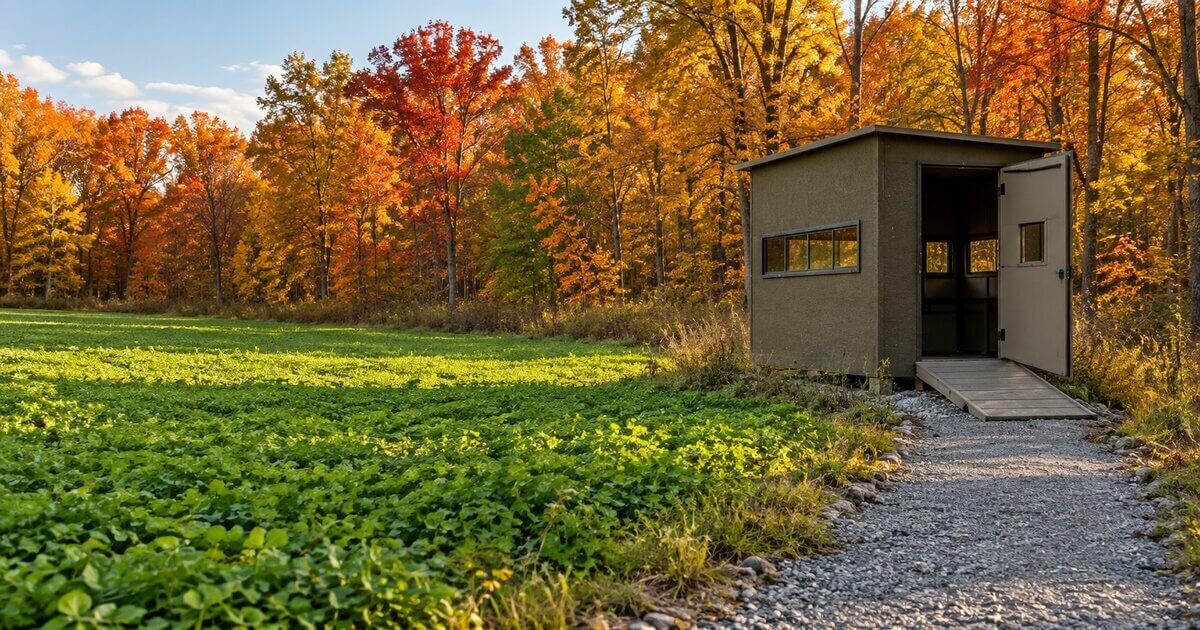 A property is accessible when the hunter can get from the vehicle to a shooting position safely in October weather.
All-season vehicle access. A lane that holds when wet beats one that looks good in August. Crowned gravel sheds water; bare clay two-track can turn soft.
Grade and surface. The U.S. Access Board’s trail standards, written for federal sites, are a useful yardstick for private land: up to 5% slope for any distance, up to 8.33% for no more than 200 feet with level rest areas, a firm and stable surface, and at least 36 inches of clear width.
Parking close to the blind. The shorter and flatter that path, the better. For a standing-vehicle permit holder, a parked spot with a safe shooting lane can itself be the hunting position.
Turnaround and blind space. Leave room to turn the vehicle around. At the blind, plan a level pad with a 60-by-60-inch turning space, the Access Board’s size for trail passing and turnaround spaces, and a door wide enough for the hunter’s actual chair.
Safety zone. Michigan bars firearm hunting within 150 yards of an occupied building, including a neighbor’s, without written permission.
That’s how 20 well-designed acres can end up hunting better than 80 inaccessible ones, since cover across a creek bottom may never get hunted.
If the hunter can’t reach it, the acreage doesn’t count.
An Accessibility Checklist for Evaluating a Property
 Before you walk a property, grab a tape measure and download a phone level app.
- Visit after rain. Note ruts, standing water and soft spots on the lane.
- Measure grade. By U.S. Access Board trail standards, over 5% deserves a closer look, and over 8.33% for more than 200 feet is a problem.
- Measure width. Paths need at least 36 inches clear; the lane must fit the actual vehicle.
- Pace the distance from parking to each likely blind site.
- Test the turnaround with the vehicle the hunter will use.
- Find a level pad near cover with a safe backstop.
- Ask the seller who keeps up the lane and whether the access is a deeded easement. While you’re at it, ask whether the culverts flood.
- Then call the county road commission and find out whether the road gets plowed in winter.
A dry September showing hides seasonal problems. Budget for upkeep with our hunting land maintenance costs guide.
Michigan DNR Accessible Hunting Resources
 Hunters without their own land have Michigan DNR options.
- Accessible blinds, free to reserve, at Hartwick Pines and Sleepy Hollow state parks; Holly, Island Lake, Lake Hudson, Pinckney and Rifle River recreation areas; and Fish Point, Gladwin, Maple River, Sharonville and Shiawassee River state game and wildlife areas. A Recreation Passport is required to park.
- Track chairs, free off-road electric chairs at many state parks.
- Sharonville State Game Area in Jackson and Washtenaw counties holds reserved deer hunts only for hunters with disabilities, including an Independence Hunt with a daily morning draw. If you wanted in for 2026, you had to apply between July 15 and Aug. 15.
- Shiawassee National Wildlife Refuge also added a lottery hunt for 24 hunters on the 2026 Independence Hunt weekend, and you’ll need a DNR standing-vehicle permit to take part.
Want to own near Sharonville? See land for sale in Jackson County and Washtenaw County.
Designing an Accessible Property You Already Own
 Here’s the order we’d work in.
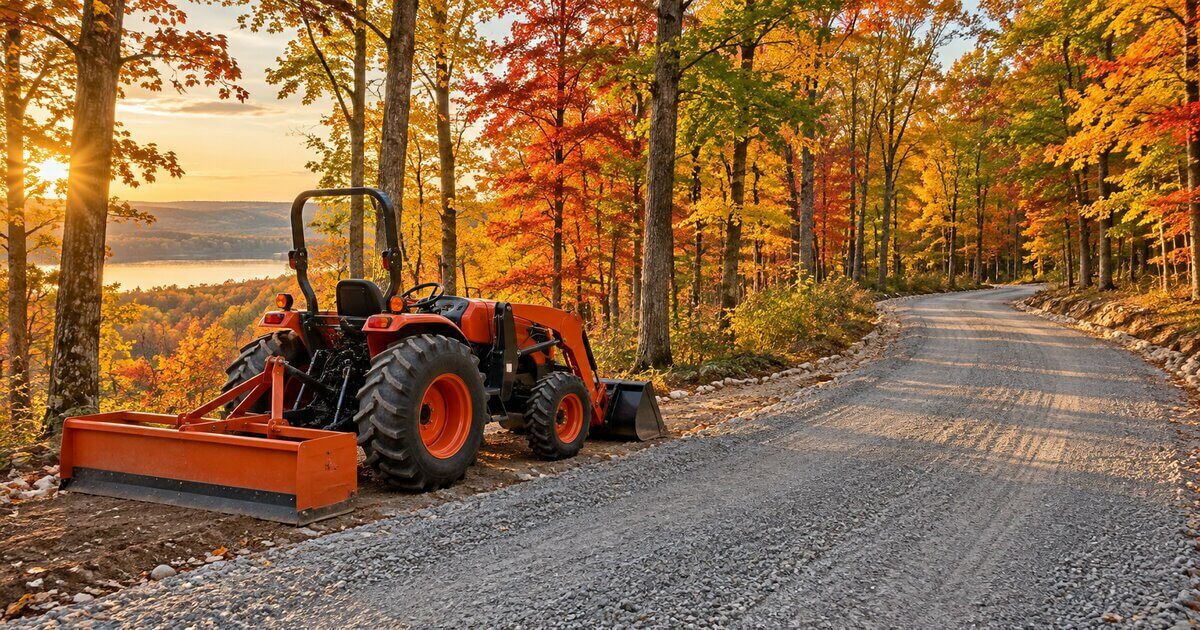
The road comes first. Widen it, give it a crown, and put gravel down wherever it stays soft; where water crosses, put in a culvert. Next comes a turnaround near the hunting area. After that, build a level blind pad of compacted gravel with a 60-by-60-inch turning space, which is the U.S. Access Board’s trail turnaround size. Once the pad is down, set the blind on it. Give it a wide door and put the windows at seated eye height. Last, run a firm path at least 36 inches wide from the turnaround to the blind, and hold it to 5% grade or less where the ground lets you. Costs vary by county. We’d get two written quotes and spread the work out the same way: road, then pad, then blind.
Fix the road before you buy the blind.
We found no public data measuring a resale premium for accessibility, but an all-season road and a level blind site make a property easier for everyone.