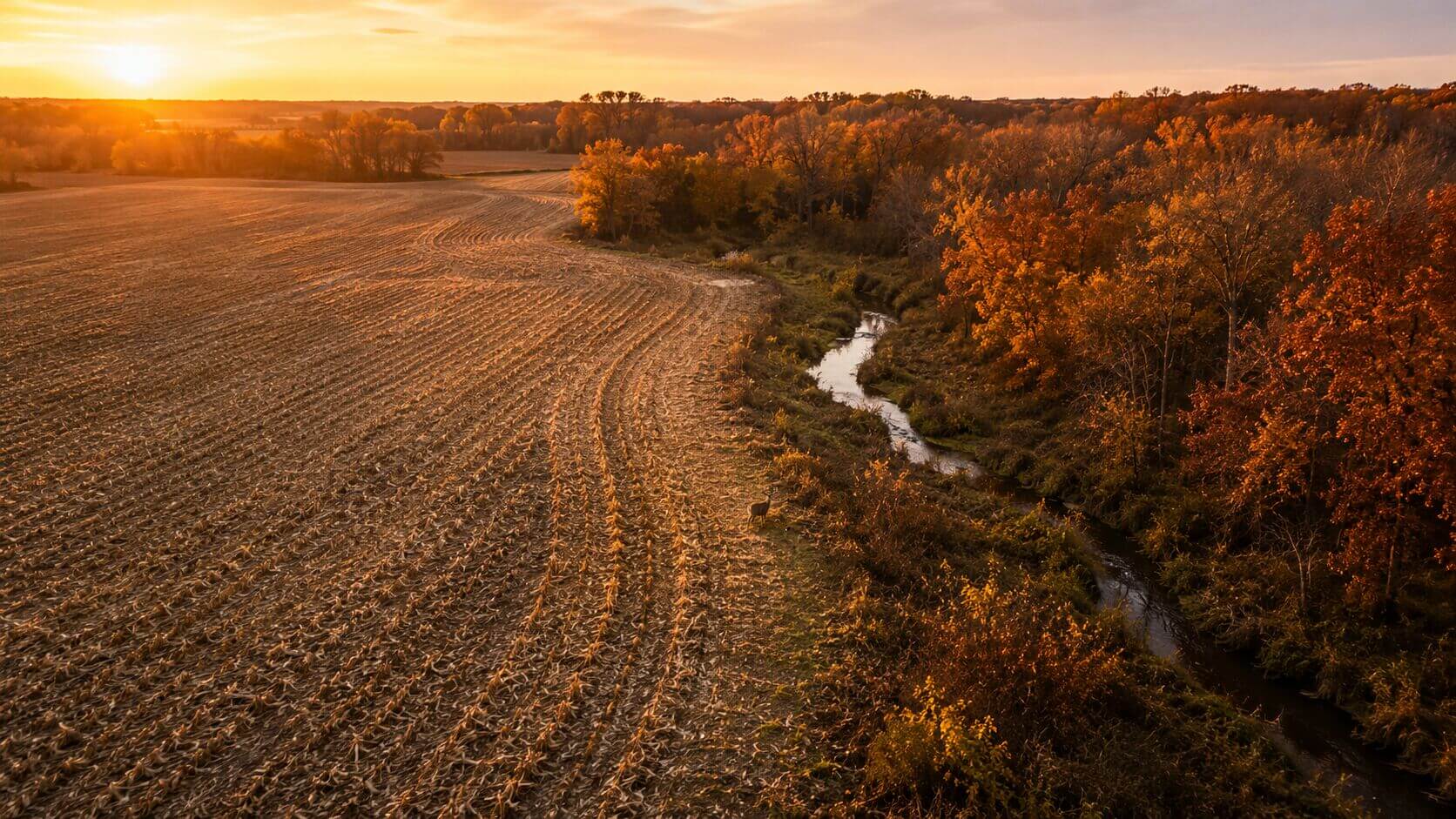
 Michigan farm-hunting properties — tillable agricultural ground adjacent to or interspersed with wooded deer habitat — consistently produce the state’s largest whitetail bucks and can generate $100–$200 per acre per year in cash rent income from tenant farmers while you’re not hunting them. The combination of high-protein crops and thermal timber cover is the most reliable deer-growing formula in the Midwest, and Michigan’s southern Lower Peninsula delivers it at scale. Michigan Whitetail Properties has sold hundreds of these hybrid properties over 30 years of Michigan land transactions, and farm-hunting combos are consistently among our most competitive listings — when a well-configured one hits the market in Hillsdale County or Tuscola County, qualified buyers move fast. A 160-acre property with 80 acres of tillable corn ground and 80 acres of wooded hunting habitat isn’t just a deer camp. It’s a cash-producing land asset with a built-in food plot measured in dozens of acres — one a tenant farmer maintains for you.
Stand at the edge of a picked soybean field in Tuscola County in late October. The beans came off three weeks ago. Every deer trail in the woodlot runs through the same 50-yard gap where the hedgerow meets the drainage ditch — the only wooded connection between the creek bottom and the remaining field cover.
You didn’t engineer that stand site. The farmer’s tillage pattern created it.
Michigan’s southern Lower Peninsula has been producing record whitetails for decades — not because the genetics are different, but because agricultural nutrition plus thermal timber cover plus fragmented woodlots equals exactly the habitat deer want. The bucks that end up on the wall often grew up eating corn and beans in Zone 3.
That’s what you’re buying when you buy a Michigan farm-hunting property.
Why Agriculture and Deer Hunting Are a Natural Match in Michigan
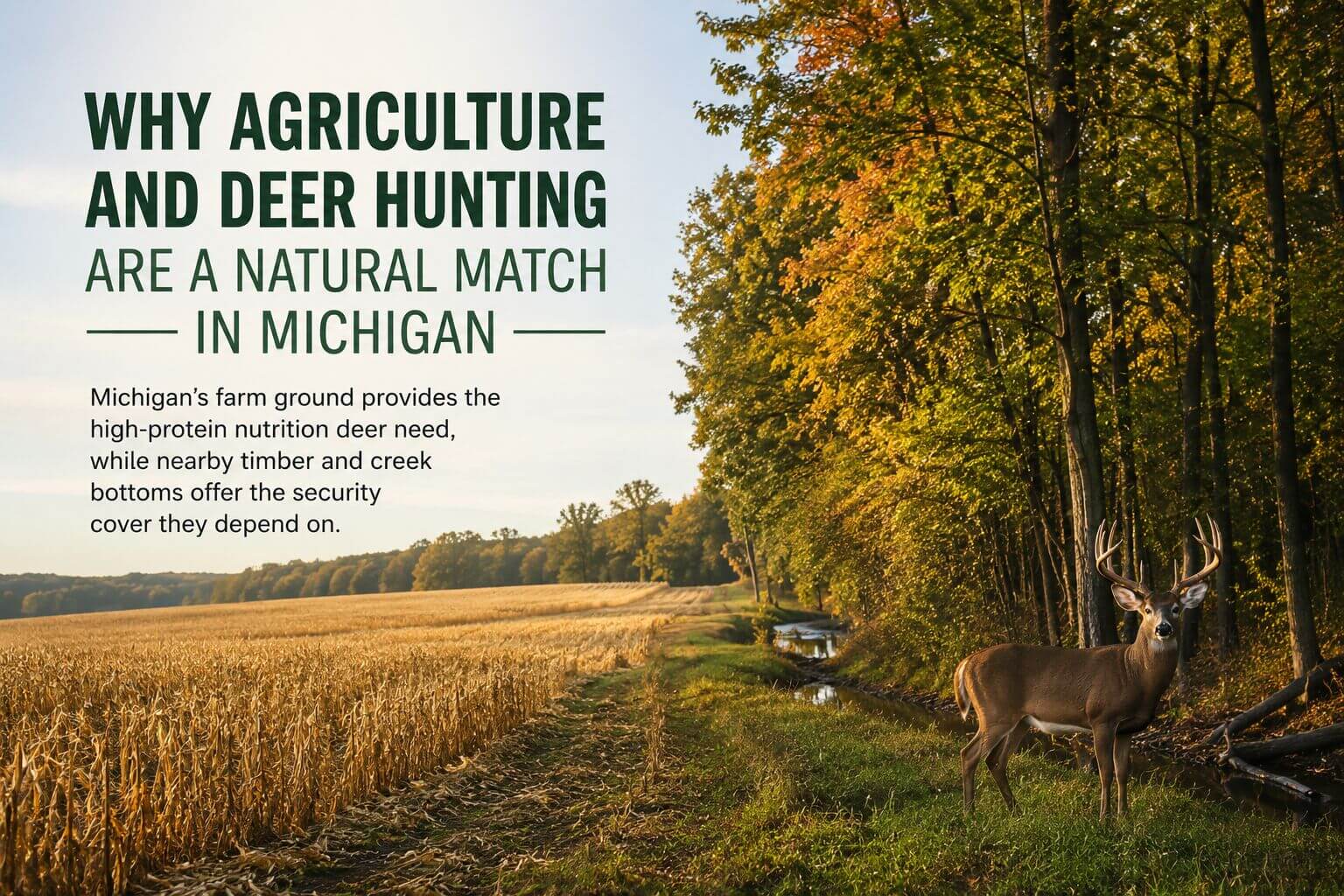 Deer are edge animals. They feed in open areas and retreat to timber for security cover — which means the transition zone between a crop field and a woodlot is one of the most predictable stand locations in the state. Agricultural fields provide protein and carbohydrates in concentrated form: corn and soybeans through summer and fall, waste grain after harvest, and additional forage if the tenant farmer runs a cover crop rotation.
Michigan’s Zone 3 — the Southern Lower Peninsula — carries the highest deer density in the state. According to the Michigan DNR’s deer management data, agricultural landscapes in Zone 3 support heavier deer body weights and significantly better antler development than comparable-aged deer in the northern LP and Upper Peninsula. A mature Zone 3 buck fed on corn and beans through July and August can carry 20–30% more antler mass than a deer of the same age from a big-timber county eating browse.
The math is simple. High-calorie crops plus thermal bedding cover plus fragmented woodlots with creek drainages equals predictable, repeatable deer hunting. You’re not hoping deer find your property. You’re putting them there.
What Makes a Farm-Hunting Property Work — and What Doesn’t
Not every farm makes a good deer hunting property. The configuration matters as much as the acreage.
The best Michigan farm-hunting properties share these characteristics:
- An ag-to-timber ratio between 40/60 and 60/40. Pure tillable ground with a 5-acre woodlot won’t produce consistent hunting opportunity. Pure timber with a small food plot can work, but it doesn’t generate the cash rent income that helps offset carrying costs. The sweet spot is balanced — enough ag to fund the property, enough timber to hold and grow deer.
- Creek drainages or river bottoms within or adjacent to the property. Water plus wooded lowland equals bedding cover. Deer in agricultural areas bed in creek bottoms, drain tile headwater areas, and lowland timber — then travel ag field edges to feed. Properties with a creek running through them have a built-in bedding destination.
- North-facing slopes with heavy timber. These are thermal cover zones where deer concentrate during cold fronts. In Michigan’s October–November hunting season, a cold front moving through will push mature bucks to north-facing timber within hours. If your property has it, you have a weather-dependent stand that works every time the temperature drops 15 degrees.
- Mast trees on woodlot edges. White and red oak adjacent to crop fields create a two-stage feeding pattern in early October — deer hit the acorns at last light, then move to crop fields after dark. Knowing where the mast trees are gives you an early season stand that works before corn and bean harvest kicks off.
The configurations that don’t hunt as well: heavily drained properties with minimal wet areas, pure row crop ground with a woodlot under 20 acres, and properties where the timber patch sits isolated with no travel corridor connecting it to bedding cover. Deer need both food and security — the best farm-hunting properties provide both without forcing deer to cross open ground to get between them.
For context on how farmland income factors into the overall investment equation on these properties, see our Michigan farmland investing guide.
Reading the Lease: How to Protect Your Hunting While the Farmer Works the Ground
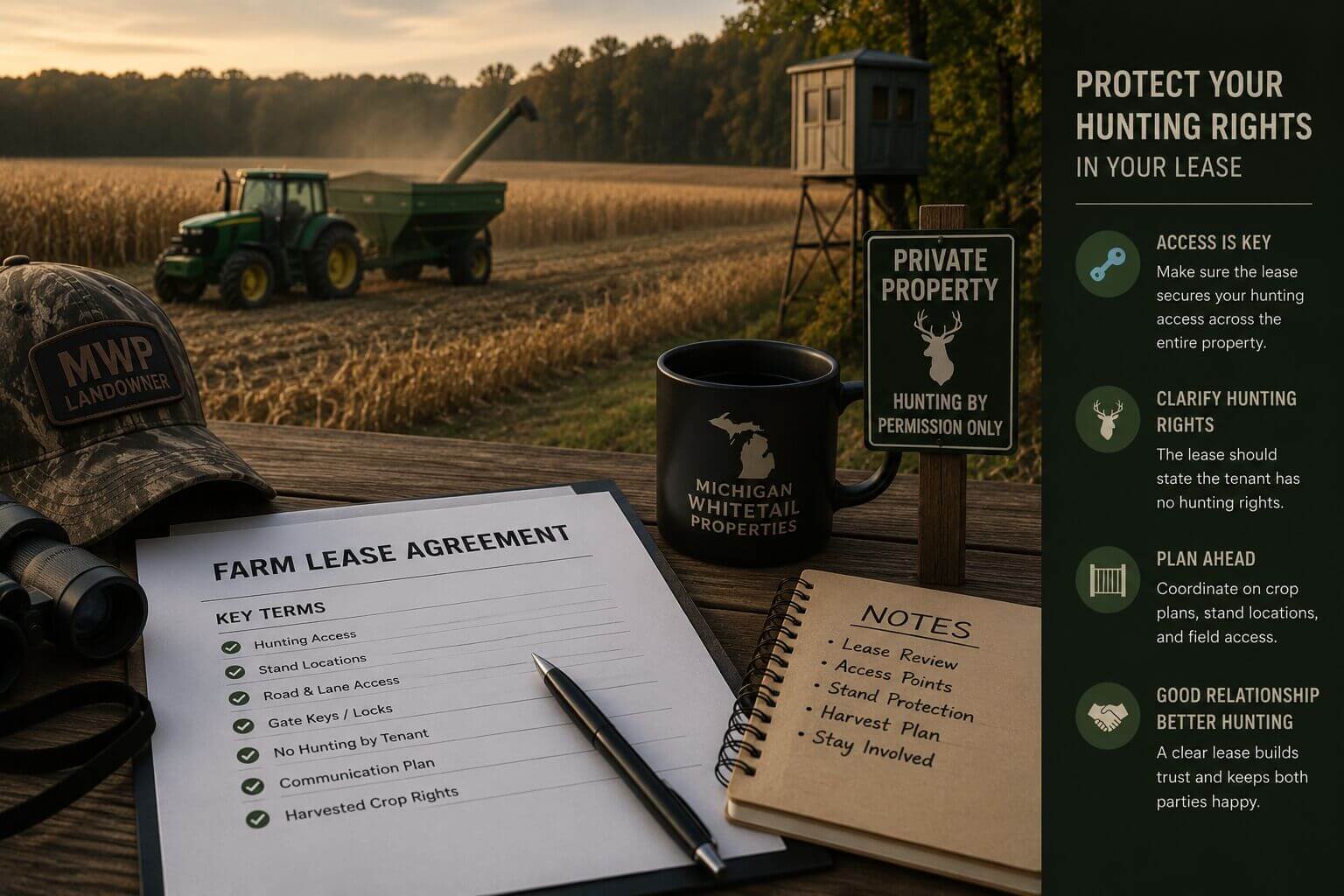 If you buy a Michigan farm-hunting property with an existing tenant farmer, the lease terms matter to your hunting. Most Michigan farm leases run calendar-year with cash rent paid in two installments — but without the right language, your hunting access can get complicated.
Per MSU Extension’s farmland rental resources, Michigan non-irrigated cropland averages approximately $143 per acre statewide in annual cash rent, with southern LP counties like Hillsdale, Lapeer, and Tuscola running $150–$200 per acre for competitive farm ground. That income offsets your carrying costs significantly — but only if the lease is structured correctly from the start.
Three things to verify before closing on a farm-hunting property with a sitting tenant:
First, check the lease end date and notice provisions. A year-to-year lease with 30 days’ notice gives you flexibility to renegotiate after closing. A multi-year lease with no early termination clause means you’re bound to existing access terms for the life of that agreement.
Second, clarify harvest timing. Zone 3 corn and soybean harvest typically runs September through November — right through archery season. A good tenant farmer will coordinate field operations to minimize disturbance during early archery. Some are very willing to work around hunting; others won’t. Find out which kind you’re inheriting before you close.
Third, check the lease for explicit hunting rights language. Farm leases convey a right to farm — not blanket access for all purposes. Make sure yours clearly states that all hunting rights on the property are retained by the owner and excluded from the farming right.
How the One Buck Rule Changes the Value Equation on LP Farm Properties
The NRC’s one buck rule — effective in the Lower Peninsula starting with the 2027 season — changes what farm-hunting properties are worth to a specific and growing buyer segment.
When LP hunters can take only one antlered deer per season statewide, they care deeply about where that single buck comes from. A farm-hunting property with documented mature deer, agricultural nutrition driving consistent antler development, and enough timber bedding cover to hold deer year-round becomes the preferred hunting environment. Hunters who pass on young bucks all season want to be confident that mature animals are using the property. Agricultural land makes that confidence easier to earn.
Properties in Hillsdale, Lapeer, and Tuscola counties — where deer quality is already high and management pressure from serious hunters has been building for years — are positioned to see demand increase as the rule reshapes buyer priorities in Zone 3. The full regulatory picture is covered in our Michigan one buck rule breakdown.
Enrolling your timber ground in the Qualified Forest Program is another value-add consideration for farm-hunting buyers — it eliminates school millage on forested acreage and transfers to the new owner with an updated management plan. See the QFP guide for hunters for specifics.
The Best Michigan Counties for Farm-Hunting Properties
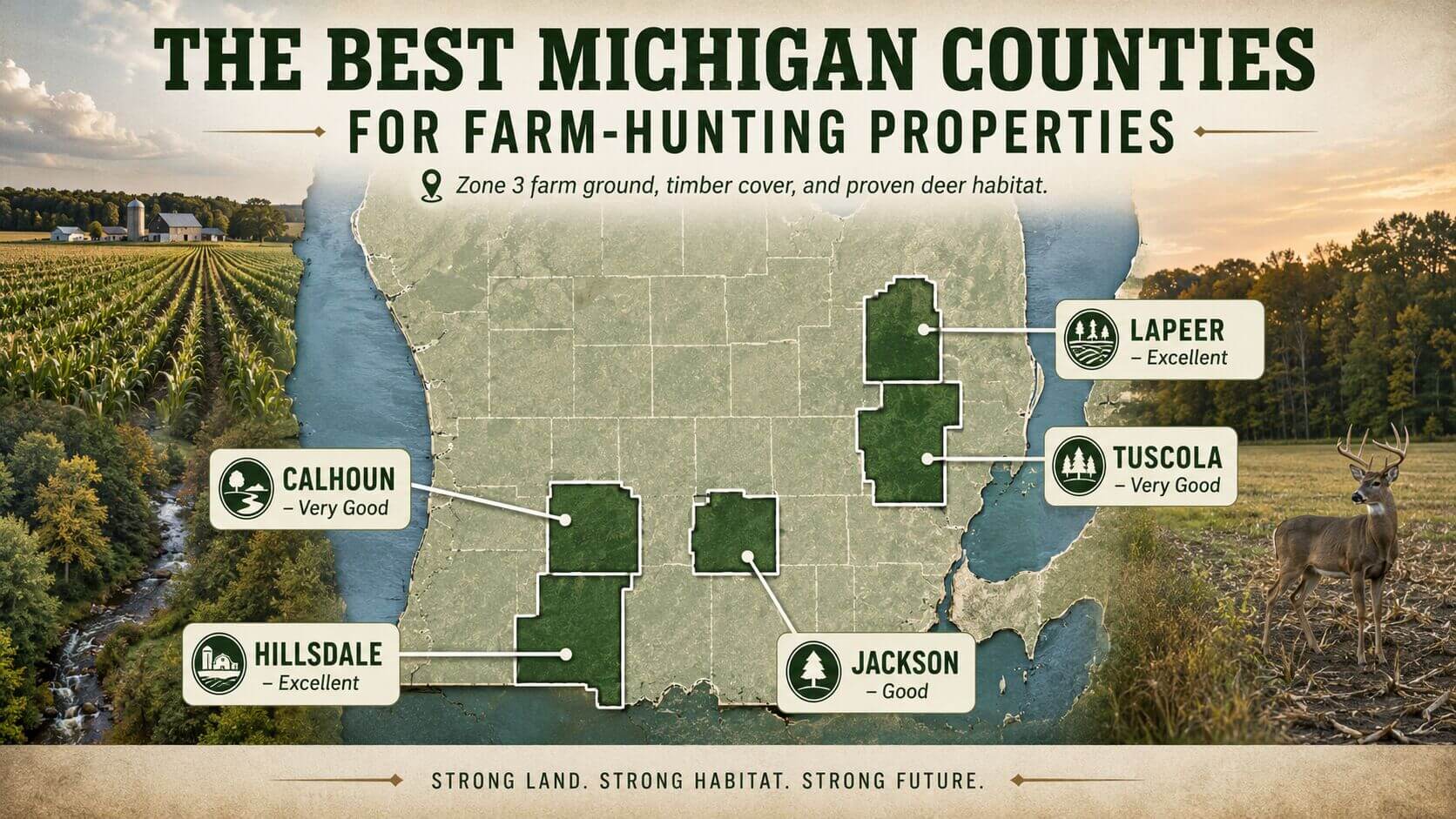 The strongest farm-hunting inventory in Michigan sits in Zone 3 southern LP counties — where productive row crop ground meets river drainages and quality deer habitat.
Here’s a comparison of the top Michigan farm-hunting counties:
| County | Deer Quality | Cash Rent Range | Land Price/Acre | Key Terrain Feature |
| Hillsdale | Excellent | $160–$200/acre | $5,500–$8,000 | St. Joseph River drainages, rolling terrain |
| Lapeer | Excellent | $150–$185/acre | $5,000–$8,500 | Flint River system, mixed ag/timber |
| Tuscola | Very Good | $150–$190/acre | $4,500–$7,000 | Flat-to-rolling, Thumb drain tile systems |
| Calhoun | Very Good | $140–$175/acre | $4,500–$7,500 | Kalamazoo River lowlands, diverse habitat |
| Jackson | Good | $130–$170/acre | $4,500–$7,000 | River drainages, moderate terrain |
Hillsdale County consistently ranks among Michigan’s top trophy producers. The St. Joseph River and its tributaries create bedding corridors throughout the county, and agricultural nutrition drives exceptional antler development. Competition for quality Hillsdale properties is high — they don’t sit long.
Tuscola County in Michigan’s Thumb is pure farm-hunting country. Flat-to-rolling tillable ground with drain tile creek systems provides the bedding cover that makes Tuscola deer patterns predictable. Tuscola properties typically offer better value per acre than Hillsdale, making them a strong option for buyers who want farm income and quality deer without paying a premium for the most famous ground.
Lapeer County sits in the transition zone between Metro Detroit’s eastern edge and the northern farm belt. Properties combine reasonable proximity to population centers with serious deer hunting — Lapeer has produced multiple Boone & Crockett caliber bucks in the last decade. Managed farm-hunting properties in Lapeer command strong prices and move quickly when listed.
Browse current farm-hunting listings on our Michigan farmland land for sale page, or read our Michigan hunting land management guide if you’re planning to take over habitat management after closing.