Michigan hunting property sits on market longer when red flags appear—and by September 2025, about 70% of listings nationwide had been on the market for more than 60 days, often considered a “stale” listing. While these lingering properties might initially raise concerns for buyers, they often represent the best negotiation opportunities if you know what to look for.
With Michigan’s average farm real estate value hitting $6,800 per acre in late 2025, representing a 7.8% year-over-year increase, hunting properties that can’t find buyers deserve serious scrutiny. Michigan Whitetail Properties has been walking buyers through these decision points since 1995, and we’ve learned that a property sitting too long usually tells a story—sometimes bad, sometimes just misunderstood.
Current data shows 880 hunting properties for sale in Michigan, with an average listing price of $419,148. When a tract sits longer than comparable properties in the same region, it’s sending signals that smart buyers can decode.
Look, we’ve seen properties sit for eight months that shouldn’t have lasted eight days, and we’ve watched overpriced disasters finally sell to buyers who understood what they were actually getting. Last fall, I walked a 120-acre Montcalm County property that had been listed for 14 months at $8,500 per acre—twice what similar ground was moving for. The photos made it look like prime whitetail habitat, but standing there in October, you could see the real issues: terrible access through a swampy two-track, pressure from three neighboring subdivisions, and timber that had been highgraded so hard it looked like a parking lot with scattered trees.
Three weeks later, a sharp buyer from Lansing picked it up for $4,200 per acre after understanding exactly what he was buying and having a plan for the access issues. Sometimes the best deals hide behind the longest listing periods.
The Most Common Red Flags That Stall Michigan Hunting Land Sales
Overpriced Properties That Ignore Local Market Reality
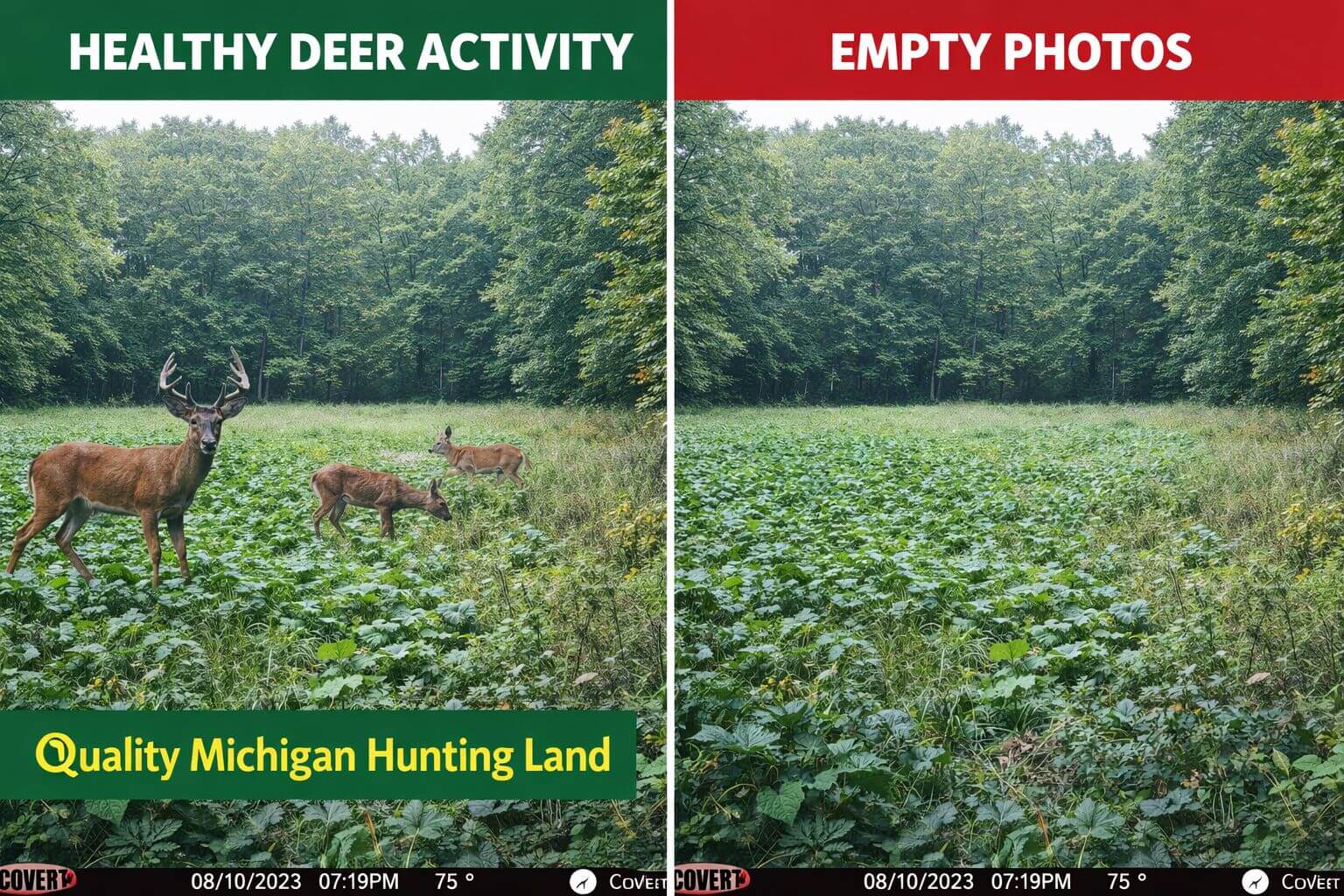 Correct pricing is the fastest way to attract serious offers and avoid a stale listing, and recreational tracts often take longer to sell than residential homes. When sellers ignore comparable sales data or rely on outdated appraisals, properties sit.
We see this constantly in northern Michigan counties where sellers remember 2021-2022 pricing but ignore current market conditions.
In the Northern Lower Peninsula, recreational properties range from $10,000-$30,000 per acre, with demand high for hunting lands and waterfront. Sellers asking $15,000 per acre for marginal hunting ground when better properties move at $8,000 create their own stale listings.
The math here is simple: overpriced properties don’t just sit longer—they often sell for less than if they’d been priced correctly from day one.
When a listing lingers longer than comparable homes, buyers often assume something is wrong, including overpricing.
Access Issues That Aren’t Obvious from Photos
Road access problems kill more hunting land deals than any other single factor. We’re talking about easements that exist on paper but not in reality, seasonal roads that turn into swamps, shared driveways through hostile neighbors, or “deeded access” that requires crossing someone else’s food plot during peak hunting season.
Properties with access issues tend to accumulate showings but no offers. Buyers drive out, see the problem, and move on without explanation. These properties sit because sellers either don’t understand the access limitations or hope buyers won’t notice until they’re emotionally invested.
Walk buyers through wind-friendly access routes, stand sites, and likely travel corridors. If storm damage or wet areas exist, point them out early and explain how you manage them.
Misleading Marketing That Doesn’t Match Reality
Trail camera photos from 2019. Aerial shots that don’t show the gravel pit next door. Descriptions that call 40 acres of marsh “wetland paradise” without mentioning it floods every spring. Marketing that oversells creates disappointed buyers and extended listing periods.
The worst offenders are properties marketed as “prime whitetail habitat” that are actually just woods.
In 2026, “great hunting land” is still great—but “just woods” is not the same as a purpose-built whitetail property. Buyers who understand deer movement, bedding requirements, and food sources can spot the difference immediately.
Poor Layout and Habitat Design
Some properties sit because they’re simply hard to hunt effectively. Long, narrow parcels with no pinch points. Properties with all the timber on the north end and all the food sources on the south end, separated by half a mile. Ground where every decent stand location is visible from the neighbors’ kitchen windows.
These layout problems aren’t always deal-breakers, but they require buyers who understand habitat management and have realistic expectations about what the property can produce.
Market Conditions and External Pressures Affecting Sale Timeline
Seasonal Timing and Hunting Calendar Impact
 Recreational tracts often take longer to sell than residential homes, and hunting properties follow seasonal patterns that residential real estate doesn’t experience. Properties listed in January compete for attention with buyers focused on ice fishing and planning for spring food plots. Summer listings battle vacation scheduling and agricultural work.
The sweet spot for hunting property marketing runs from late August through November, when deer season anticipation peaks and buyers are thinking seriously about stand placement. Properties listed outside this window often sit longer, not because they’re flawed, but because buyer psychology follows hunting seasons.
June is the best month to sell a house in Michigan to gain higher profits with fewer days on market, but hunting land follows different rules.
Impact of Recent Weather Events and Disease Concerns
The devastating March 2025 ice storm in the northern Lower Peninsula could affect hunters, as many downed trees and limbs remain in the woods, and salvage timber harvest will continue for some time. Properties in affected areas may sit longer while buyers evaluate access and damage.
With Chronic Wasting Disease (CWD) now confirmed in 17 counties, reports of Epizootic Hemorrhagic Disease (EHD) in 14, and testing for Bovine Tuberculosis in 10, disease concerns affect buyer psychology. Properties in or near CWD zones may face longer marketing periods as buyers weigh long-term herd health implications.
EHD has been confirmed in 11 southern Michigan counties in 2025, and if your tract was impacted by the March 2025 ice storm, document the damage and position the upside where appropriate.
Competition from Public Land and Changing Hunter Demographics
Michigan has over 4.6 million acres of public land open to hunting, and more than 2.2 million acres of privately owned forests are enrolled in the Commercial Forest Program and are accessible to the public for hunting. This abundance of huntable public ground affects private land demand and pricing.
Younger buyers especially compare private land value against public land access plus the cost of annual licenses. Properties that don’t offer clear advantages over nearby public hunting options may sit longer while sellers adjust expectations.
Smart Strategies for Buyers Looking at Stale Listings
How to Research and Evaluate Properties That Have Sat Too Long
 Ask your agent if the home has had price reductions, multiple listing relaunches, or a previous contract that fell through. These details can provide helpful context and strengthen your negotiating position.
Start with days on market analysis.
The national median DOM is 66 days, and homes typically sit on the market for about 66 days. For hunting properties, anything over 90 days deserves deeper investigation.
Check the MLS history for price changes, listing modifications, and previous marketing approaches. Properties that started at $12,000 per acre and dropped to $8,500 are telling you something about seller motivation and initial pricing mistakes.
Drive the area multiple times during different seasons and weather conditions. That “all-weather access road” might be impassable in March. Those “established food plots” might be visible from the main highway, creating hunting pressure issues.
Negotiation Tactics for Long-Listed Properties
Sellers who’ve watched their property sit for months are often more flexible than initial asking prices suggest.
Homes sitting for 60-plus days may signal sellers who are more open to negotiation, and sellers may be more flexible on price or concessions.
Start with understanding why the property hasn’t sold. If it’s overpricing, make offers based on comparable sales data, not listing prices. If it’s access issues, factor remediation costs into your offer. If it’s habitat problems, negotiate based on the property’s current hunting potential, not its theoretical maximum.
Cash offers carry extra weight with frustrated sellers, even if they’re significantly below asking price. Sellers who’ve dealt with financing delays and inspection surprises often prefer certainty over maximum price.
When a Stale Listing Might Actually Be a Good Buy
Not every long-listed property has serious problems. Sometimes properties sit for reasons that won’t affect the right buyer:
Properties marketed to the wrong audience—like timber investment properties advertised to recreational hunters. Properties in unfamiliar counties where local buyers don’t think to look. Properties with unique features that require educated buyers, like CRP contracts or wetland easements.
Does a high DOM always mean something is wrong? Not necessarily. Sometimes it just means waiting for the right buyer who understands the property’s true potential.
Due Diligence Essentials for Previously Unsold Properties
Triple-check everything when buying properties that have sat too long. Get your own survey, especially for irregular parcels or properties with shared access. Verify all easements, mineral rights, and timber rights independently.
Expect requests for surveys, tax info, easements, title work, and any timber or habitat plans. The easier you make verification, the faster the buy
er can move to closing.
Have the property evaluated by someone who understands both hunting land and the specific challenges that may have kept other buyers away. Sometimes the solution is obvious once you know what you’re looking at.
Understanding True Value vs. Listing Price in Today’s Market
Current Michigan Hunting Land Pricing Benchmarks
 West Michigan sees farmland from $5,000-$10,000 per acre, with rural recreational land from $10,000-$20,000.
Southwest Michigan has some of the highest land prices including choice waterfront at over $200,000 per acre, while away from the lakes, farmland is $8,000-$12,000 per acre.
But hunting value doesn’t always track farmland prices. A 40-acre oak ridge with natural funnels and water might be worth more per acre than 160 acres of flat timber with no topographic features.
Experienced hunting land appraisers can capture value drivers that generic appraisals sometimes miss—like access quality, habitat diversity, income potential, and comparable sales from outdoor-focused buyer segments.
Factors That Justify Premium Pricing vs. Red Flag Pricing
Premium pricing makes sense for properties with exceptional access, proven trophy production, diverse habitat, water features, and buildable sites. Properties adjacent to public land, with established food plots, or with hunting infrastructure like permanent blinds and maintained trails can command higher prices.
Red flag pricing appears when sellers add value for features that don’t improve hunting outcomes: proximity to towns (often hunting pressure), road frontage (may increase pressure), or “potential” that requires massive investment to realize.
How Current Harvest Data Affects Property Values
Michigan’s 2025 whitetail deer season ended with roughly 295,739 reported harvested deer, just shy of 2024 early totals.
Despite that healthy percentage, the 2025 firearm deer season saw fewer deer taken in Upper Michigan, with the deer harvest down about 15 percent.
Regional harvest numbers affect property values more than statewide statistics. Properties in counties with strong harvest numbers and healthy deer populations hold value better than those in areas with declining herds or chronic disease issues.
Including nearby harvest context in your marketing can help buyers feel confident about the region’s opportunity, and the same logic applies when evaluating properties for purchase.
Regional Differences in Market Performance
![]() Upper Peninsula vs. Lower Peninsula Market Dynamics
Upper Peninsula vs. Lower Peninsula Market Dynamics
 Upper Peninsula vs. Lower Peninsula Market Dynamics
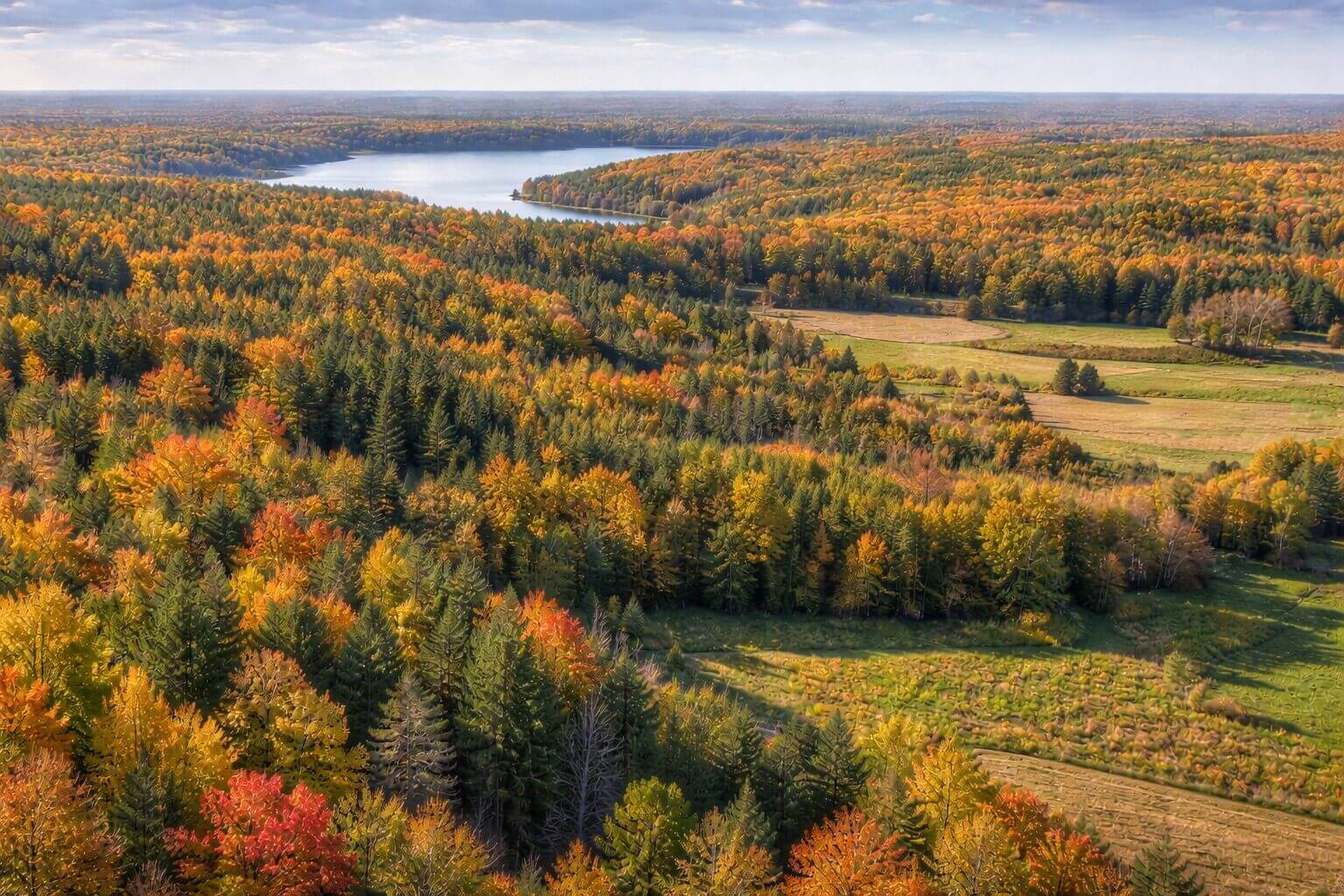
The Upper Peninsula and northern Lower Peninsula tend to attract buyers looking for hunting camps, seasonal cottages, and other recreational parcels. UP properties often sit longer due to distance from population centers, but they also offer unique opportunities for buyers seeking remote hunting experiences.
“Here in the U.P., it’s been another pretty weak harvest, there’s not a lot of deer, the numbers are down,” and “Across the northern two-thirds of the U.P., they have been for several years”. This affects buyer confidence and property values in UP markets.
County-by-County Considerations for Stale Listings
Some counties consistently see longer marketing times due to specific challenges. Counties with heavy industrial activity, limited access to public land, or ongoing disease management issues may see properties sit longer regardless of pricing.
Conversely, counties with strong deer populations, good public land access for additional hunting opportunities, and stable recreational economies move properties faster, even in challenging market conditions.
Economic Factors Affecting Different Regions
Demand for land is driven by buyers looking for recreational properties, future retirement homesites, land for farming and forestry, and development sites, with suburban and exurban areas around cities like Detroit, Grand Rapids, and Traverse City seeing demand for land for residential development as well as small hobby farms.
Properties near major population centers benefit from multiple buyer types, while remote properties depend primarily on dedicated hunters and outdoor enthusiasts. This affects both pricing and marketing time across different regions.