What Makes a Michigan Property “Bulletproof” for Long-Term Value?
There’s a moment we see all the time with buyers—usually leaning against the truck, looking out across a piece of ground, trying to picture what it’ll be five, ten, even twenty years from now.
Some properties just feel right the second you step onto them. Others might check a few boxes on paper, but something’s missing—and you don’t always realize what it is until after you own it.
That’s the reality with land.
After walking hundreds of properties across Michigan, we can tell you this with confidence:
not all land holds value the same way.
Some tracts get better every year—better hunting, stronger demand, easier resale. Others stay flat… or quietly become harder to enjoy and even harder to sell.
Let’s break down what actually makes the difference.
Not All Land Is Created Equal (And Buyers Learn This the Hard Way)
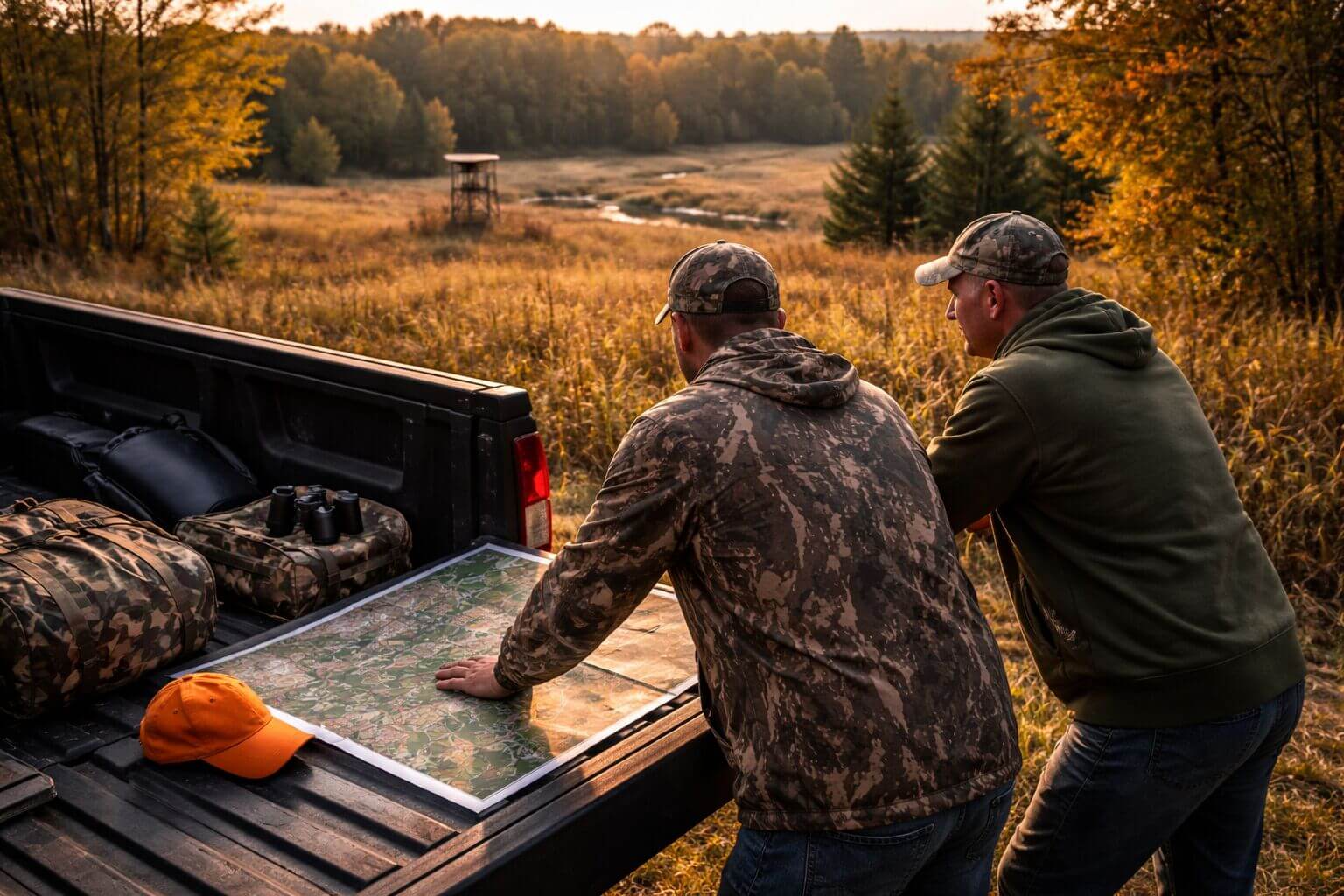 Every now and then, we get a call that starts the same way:
“We wish we would’ve known this before we bought…”
Sometimes it’s access. Sometimes it’s neighbor pressure. Other times, the property just doesn’t hunt like they expected.
And to be fair—none of those mistakes are obvious when you’re first looking.
On the flip side, we’ve also helped buyers land properties that turned out to be absolute home runs. The kind that improve with a little time, hold deer consistently, and draw strong interest if they ever decide to sell.
The difference usually isn’t luck.
It comes down to understanding what actually drives long-term value—and what just looks good in a listing.
Location Still Matters—But Not How You Think
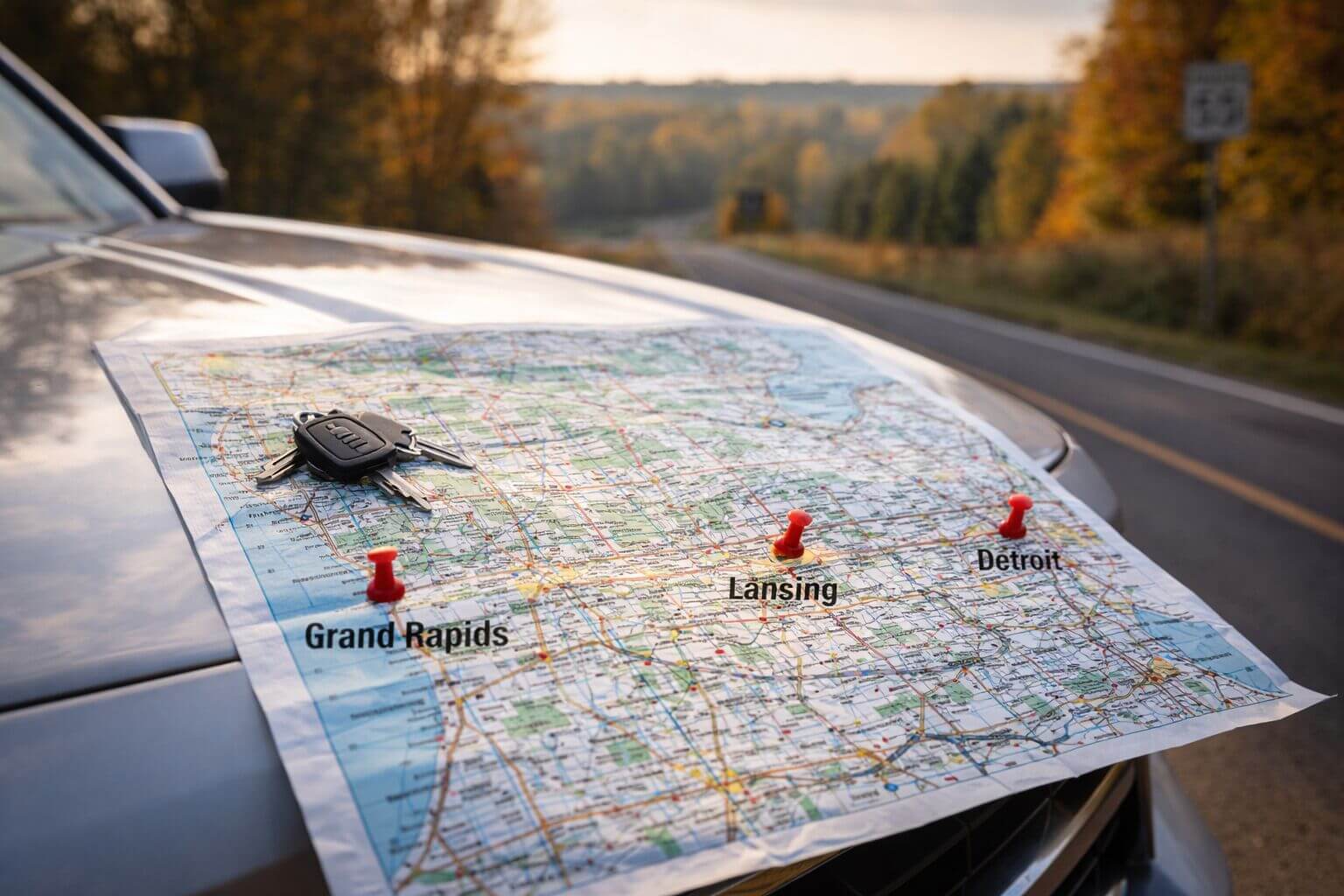 You’ve heard it a thousand times: location matters.
But when it comes to hunting land in Michigan, it’s not just about north vs south or big woods vs ag country. It’s about who your future buyer is—and how easy it is for them to get there.
Proximity to Population Centers
Properties within a reasonable drive of cities like Grand Rapids, Detroit, and Lansing tend to stay in demand.
Why? Because that’s where most buyers live.
A manageable drive means:
- More weekend use
- More consistent interest
- A larger resale pool
We’ve seen smaller parcels outperform larger ones simply because they were easier to get to.
County-Level Demand Differences
Southern Michigan often brings stronger pricing due to:
- Tillable ground
- Consistent deer densities
- Higher competition
Northern Michigan offers:
- Bigger acreage
- More seclusion
- Lower entry points
Both have their place. The key is understanding how each fits your long-term goals.
If we’re being honest, though?
Drive time quietly outweighs a lot of other factors.
Access Is Everything (And You Can’t Fix Bad Access)
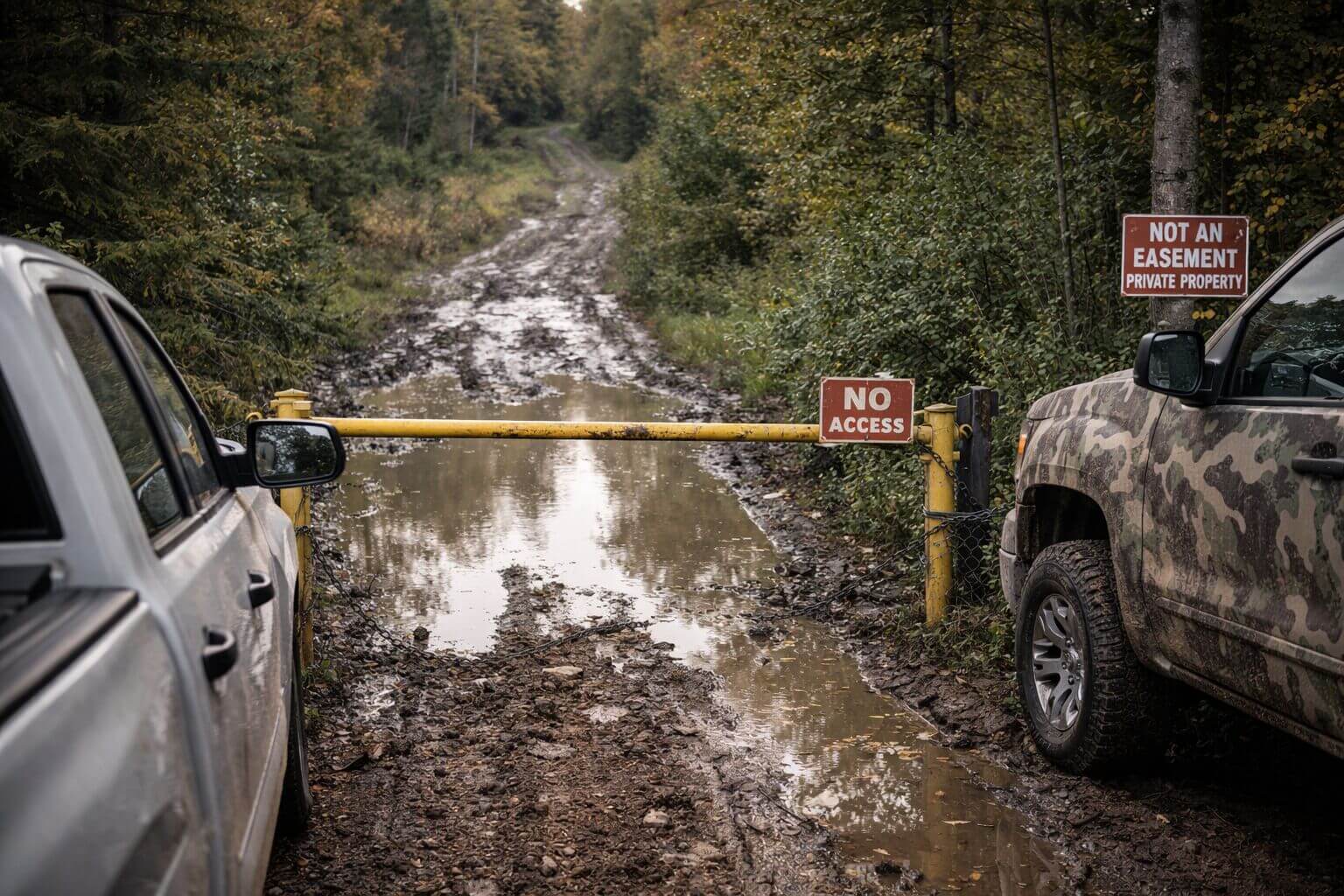 If there’s one thing we consistently caution buyers on—it’s access.
Because once you own it, you’re living with it every season.
Road Frontage vs Easements
Road frontage gives you:
- Simplicity
- Flexibility
- Stronger resale appeal
Easements can absolutely work—but they need to be clean, recorded, and usable year-round. If there’s any question, buyers will hesitate later.
We’ve watched great properties linger on the market for one reason alone: access uncertainty.
Year-Round Accessibility
Michigan doesn’t make it easy.
Spring thaw, fall rain, winter snow—if your access point turns into a problem during any of those, you’ll feel it fast.
And so will the next buyer.
Internal Trail Systems
Good internal access changes everything.
It allows you to:
- Hunt smarter
- Move quietly
- Improve habitat efficiently
Without it, even a great property can feel limited.
Habitat Diversity Drives Long-Term Demand
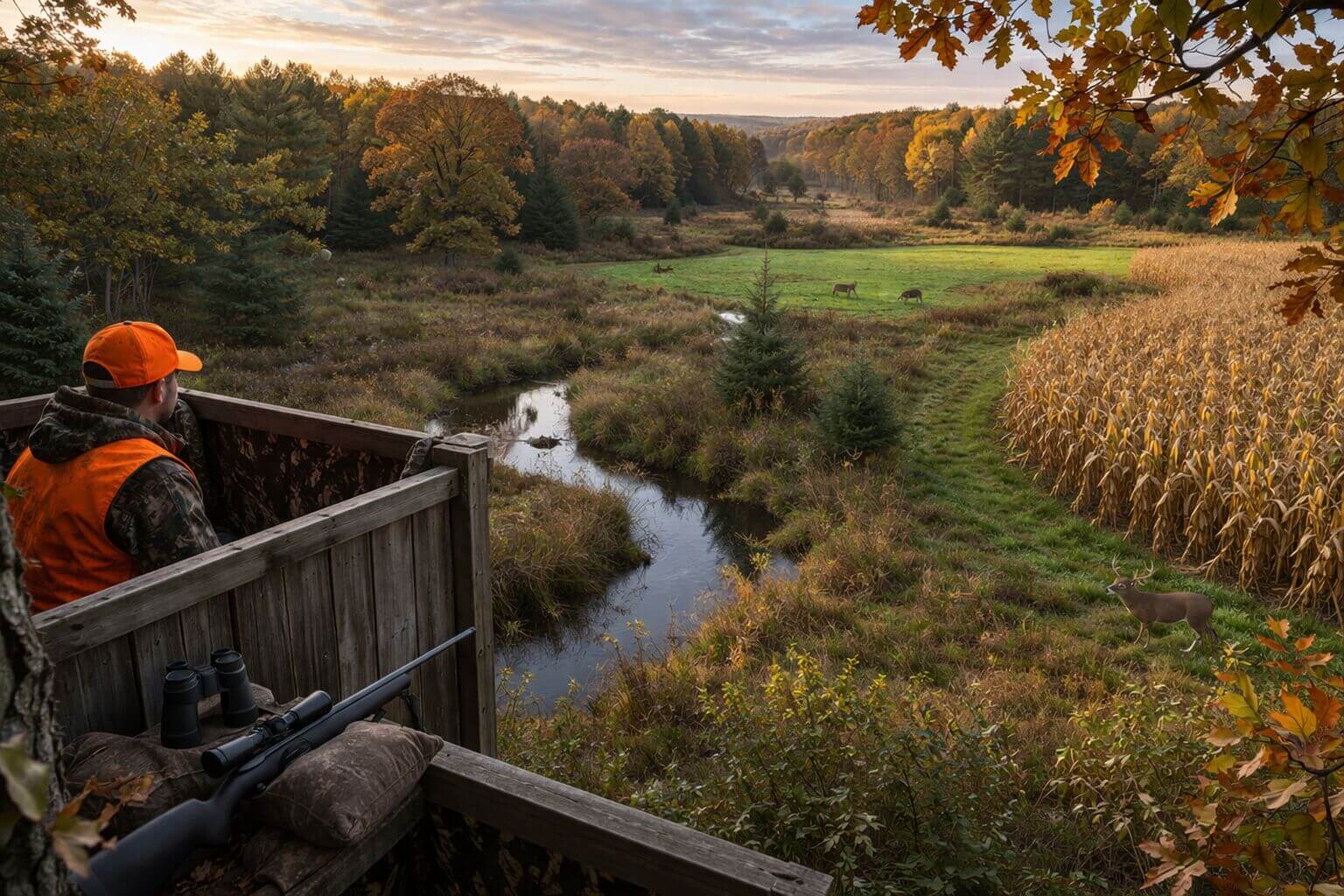 There’s something we notice almost immediately when walking strong properties—they feel balanced.
Not perfect. Just complete.
The Ideal Mix
The properties that tend to hold value—and hunt well—usually include a blend of:
- Bedding cover
- Timber
- Edge transitions
- Nearby food or food plot potential
That combination supports wildlife year-round and gives you options as a landowner.
Why “One-Dimensional” Properties Struggle
We’ve walked properties that were:
- All swamp
- All open
- All young growth
Can they work? Sure.
But they limit flexibility, and that matters—not just for you, but for the next buyer too.
A well-rounded property appeals to more people. And that’s what protects value.
Income Potential = Value Stability
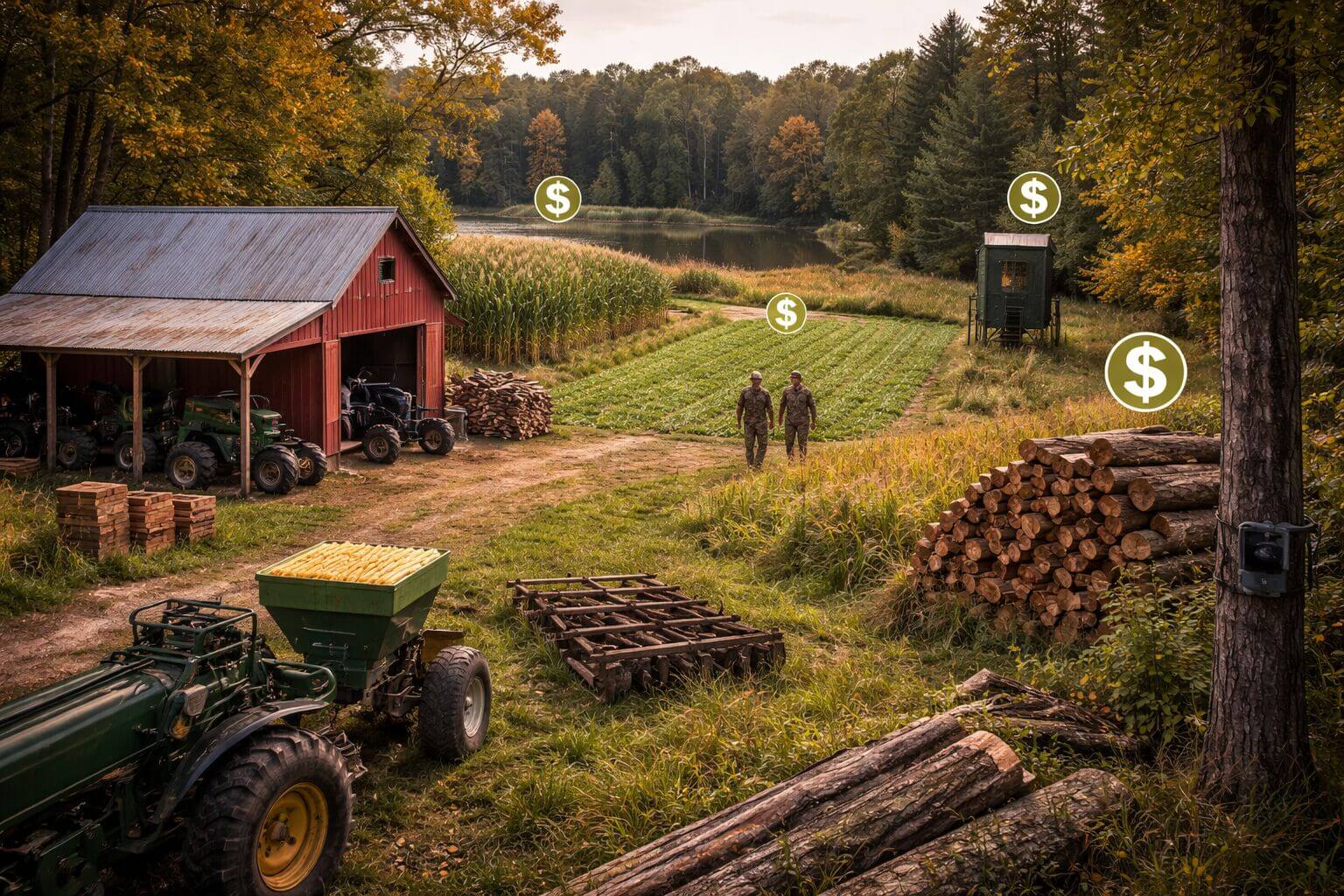 This is where things start to get interesting from an investment standpoint.
Because now your land isn’t just something you enjoy—it’s something that can work for you.
Tillable Ground & Cash Rent
Even a small percentage of tillable acreage can:
- Offset property taxes
- Generate annual income
- Add another layer of buyer interest
Timber Value
Timber is often misunderstood.
It’s not just about what’s there today—it’s about:
- Management potential
- Long-term growth
- Strategic harvest opportunities
Organizations like Michigan State University Extension are great resources if you want to understand what you’re actually looking at.
Hunting Lease Potential
Even if you never lease your property, the fact that you could matters.
It signals demand. And demand supports value.
Parcel Shape and Layout (The Silent Value Killer)
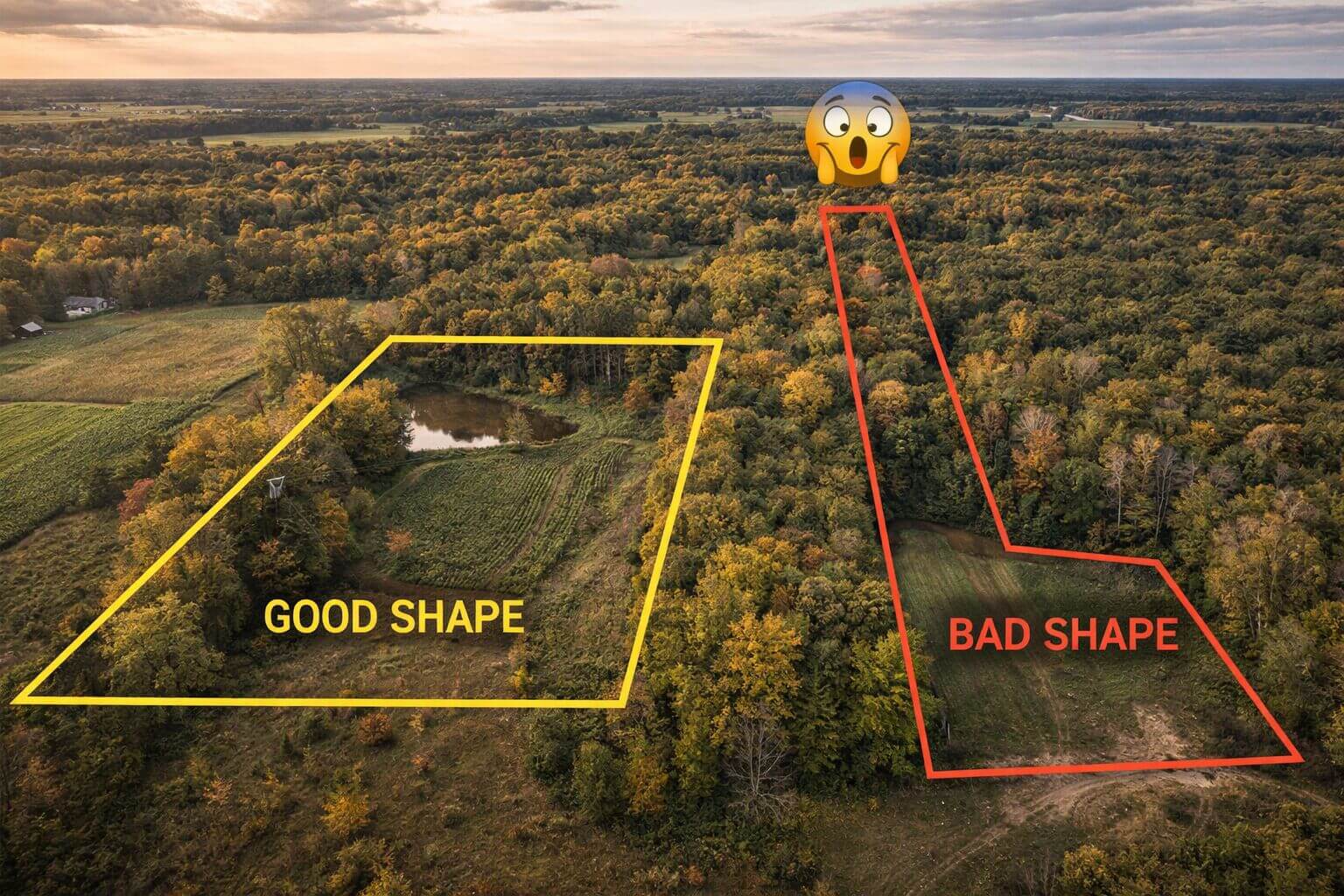 This is one of those things that rarely gets talked about—but probably should.
Because layout affects everything.
Square vs Long/Narrow Parcels
A square or blocky parcel gives you:
- Better access options
- More stand locations
- Flexibility with wind
Long, narrow parcels? They can be tough to hunt effectively, especially under pressure.
Huntability & Wind Access
If you can’t get to your stands without blowing deer out… it doesn’t matter how good the habitat looks.
We’ve seen properties that checked every box on paper—but were frustrating to hunt because of access and wind limitations.
Neighbor Influence
Boundaries tell a story.
Who owns around you?
How do they hunt?
How often are they there?
These are the details that don’t show up in listings—but absolutely affect long-term enjoyment and value.
Water Features: Small Detail, Big Impact
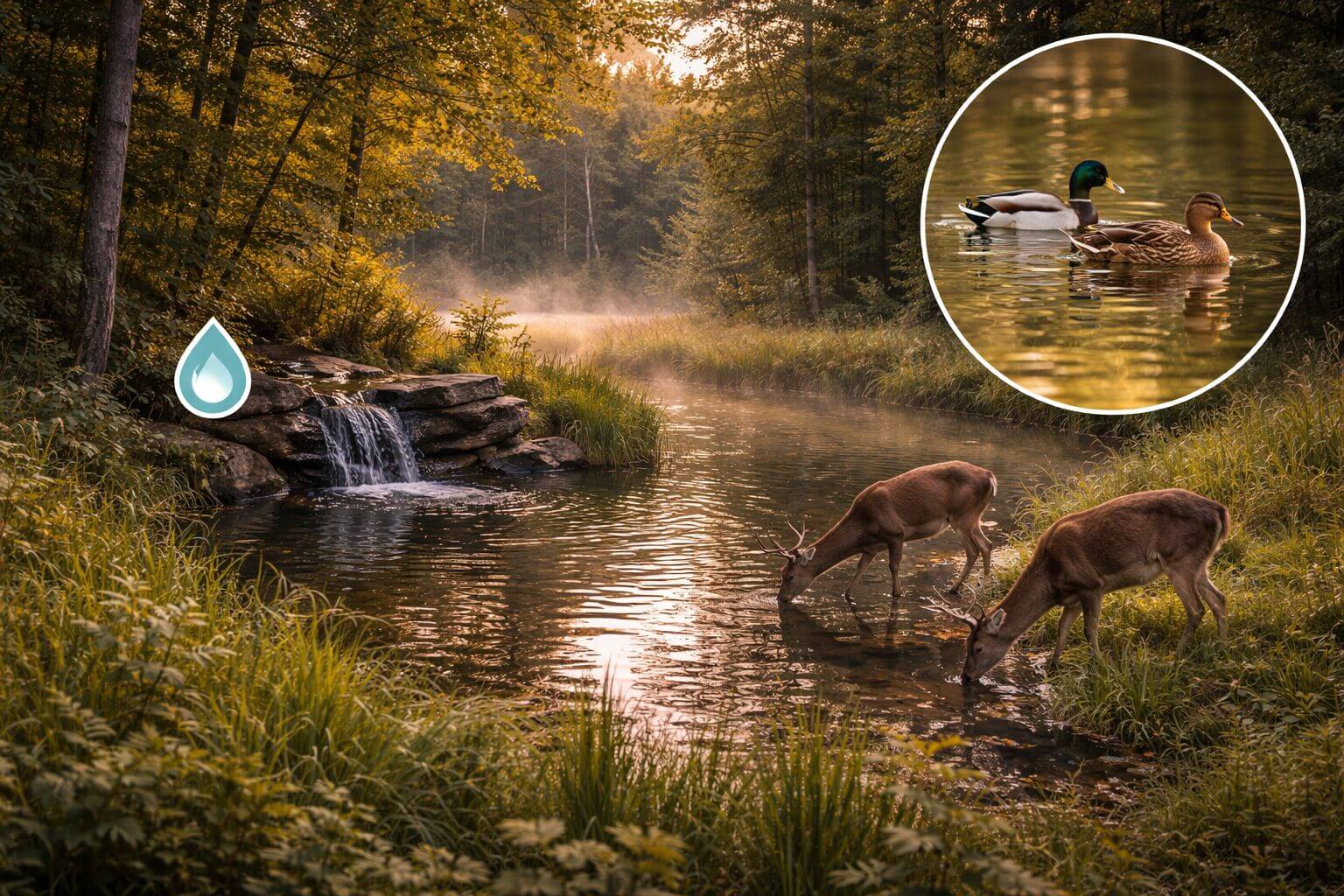 Water tends to be one of those features people appreciate more over time.
A small creek. A tucked-away pond. Even a reliable low area that holds water during dry stretches.
It all matters.
From a wildlife standpoint, resources like the Michigan Department of Natural Resources highlight how critical water is for movement and habitat use.
From a buyer’s standpoint?
It simply makes a property feel more complete—and more usable year-round.
Future Development Pressure (Hidden Risk or Opportunity)
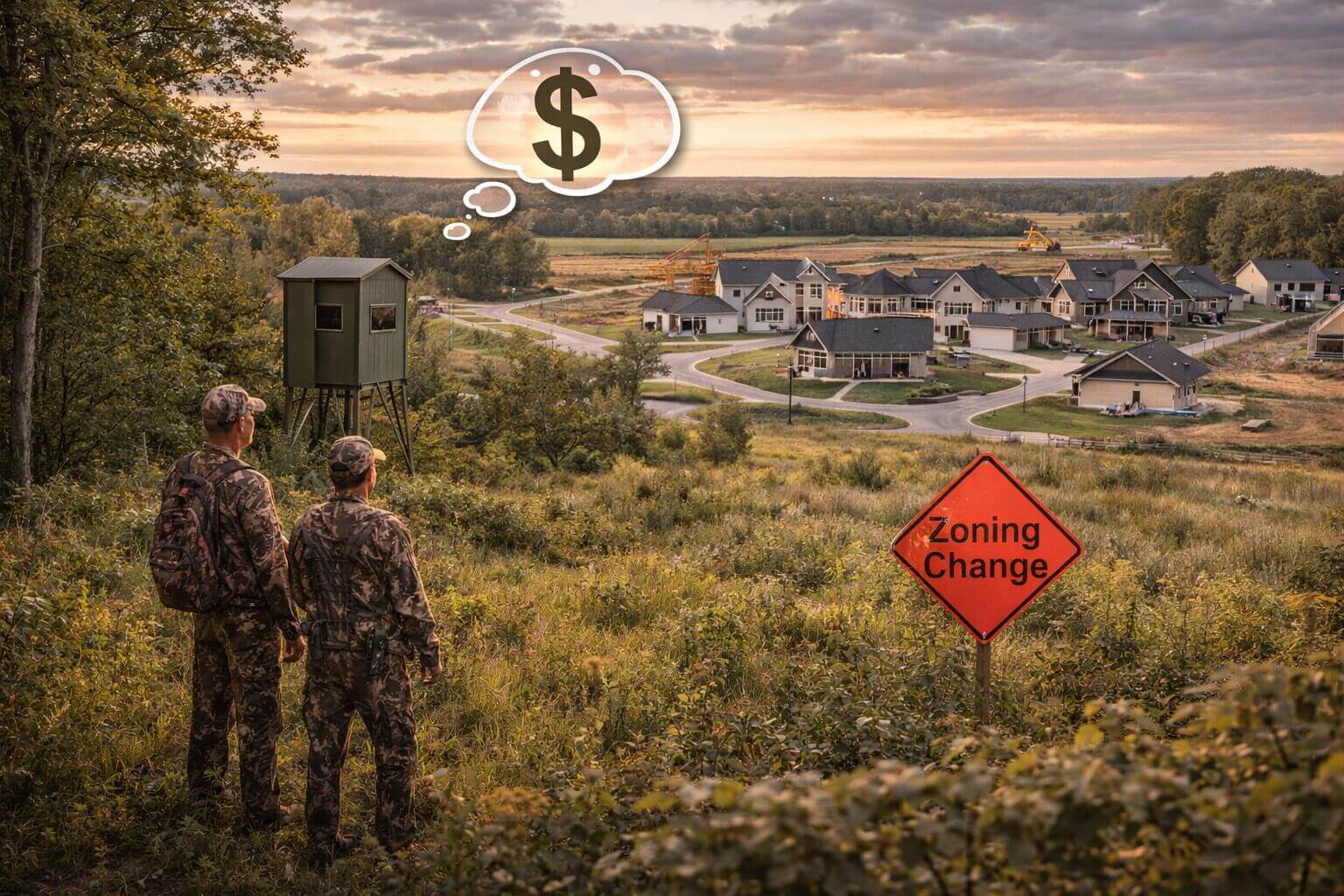 This is where things get a little more strategic.
Because what’s happening around your property can matter just as much as what’s on it.
Potential Risks
- Increased hunting pressure
- Loss of surrounding habitat
- Changing land use
Potential Upside
- Appreciation
- Easier resale
- Splitting or development opportunities
We always encourage buyers to zoom out—look beyond the property lines and think about where the area is heading.
The “X-Factor” You Can’t See on a Map
 Some of the most important factors aren’t visible from an aerial or listing sheet.
Things like:
- Neighbor relationships
- Local hunting culture
- Property history
We’ve walked pieces that looked incredible online—only to realize they weren’t the right fit after spending time there.
And we’ve seen the opposite too.
That’s why experience—and local knowledge—go a long way.
What “Bulletproof” Really Means for Michigan Land Buyers
 Let’s define it clearly.
A “bulletproof” property isn’t perfect. It’s resilient.
It typically has:
- Strong, reliable access
- A desirable location
- Habitat diversity
- Income potential
- Functional layout
- Broad buyer appeal
It’s the kind of property that:
- Hunts well year after year
- Holds interest in any market
- Doesn’t sit when it’s time to sell
Final Thoughts: Buy It Right the First Time
If there’s one thing we’ve learned over the years, it’s this:
You don’t fix a property after you buy it—you choose it correctly before you do.
Focus on the fundamentals. Think long-term. Be honest about how you’ll use it—and how someone else might down the road.
Do that, and you’ll put yourself in a position to enjoy the land and feel confident in the investment.
Thinking About Buying Michigan Hunting Land?
If you’re looking for a property that checks these boxes—or you’ve got one in mind and want a second opinion—we’re always happy to take a look with you.
👉 Browse current listings or reach out to Michigan Whitetail Properties.
We’ve seen what works. We’ve seen what doesn’t. And we’re here to help you get it right the first time.