There’s a moment every land buyer remembers—and it usually doesn’t happen at the closing table.
It happens later.
Maybe it’s that first evening you pull into the property alone. The truck shuts off. Everything goes quiet. You step out, look across the field or timberline, and it finally hits you:
This is yours now.
And right behind that feeling comes another one…
“Alright… now what do we actually do with it?”
We’ve walked a lot of Michigan properties with new owners during those first few weeks. Some are fired up and ready to start cutting trails, planting plots, and hanging stands immediately. Others hesitate, worried about doing the wrong thing.
Truth is, both instincts are understandable.
But here’s what we’ve learned:
The first 90 days aren’t about doing everything—they’re about doing the right things, in the right order.
And if you get that part right, everything that follows gets a whole lot easier.
The First 90 Days Matter More Than You Think
 Let’s start with something we’ve seen play out more times than we can count.
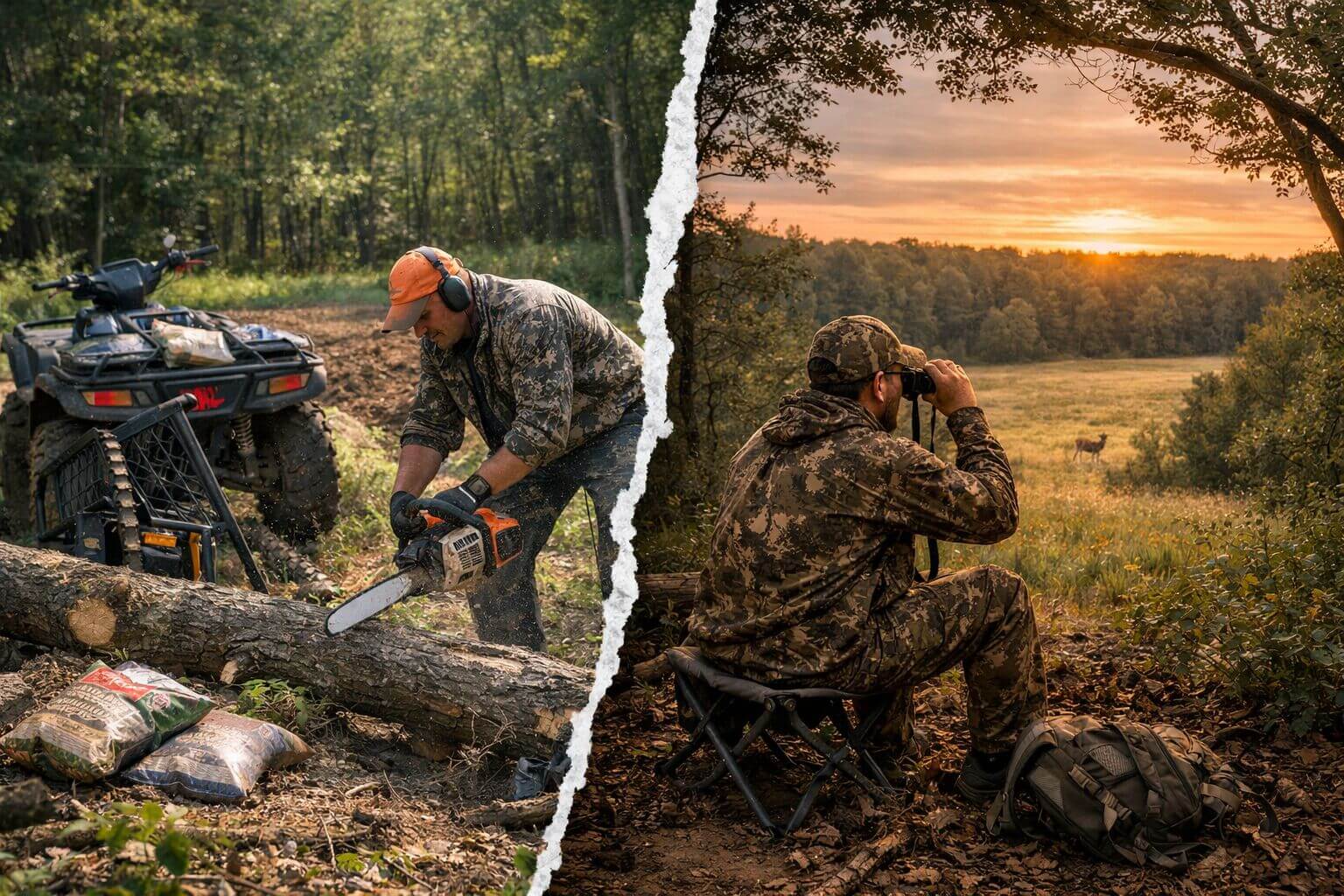
Two buyers purchase very similar properties—same region, similar acreage, comparable habitat.
One of them hits the ground running. Chainsaws come out. Trails get cut everywhere. Food plots go in based on what “looks good.” Stands get hung in all the obvious spots.
It feels productive. Busy. Like progress.
But by fall?
Access isn’t working like they thought. Deer movement feels inconsistent. The property just doesn’t hunt as well as expected.
Now compare that to the second buyer.
They still work hard—but they slow down just enough to pay attention first. They walk more than they change. They observe before they act. They let the property tell them what it wants to be.
And over time?
That property starts to come together. Cleaner access. Better setups. More consistent movement. Less pressure.
Same effort. Completely different outcome.
The difference isn’t how much they did.
It’s when they did it.
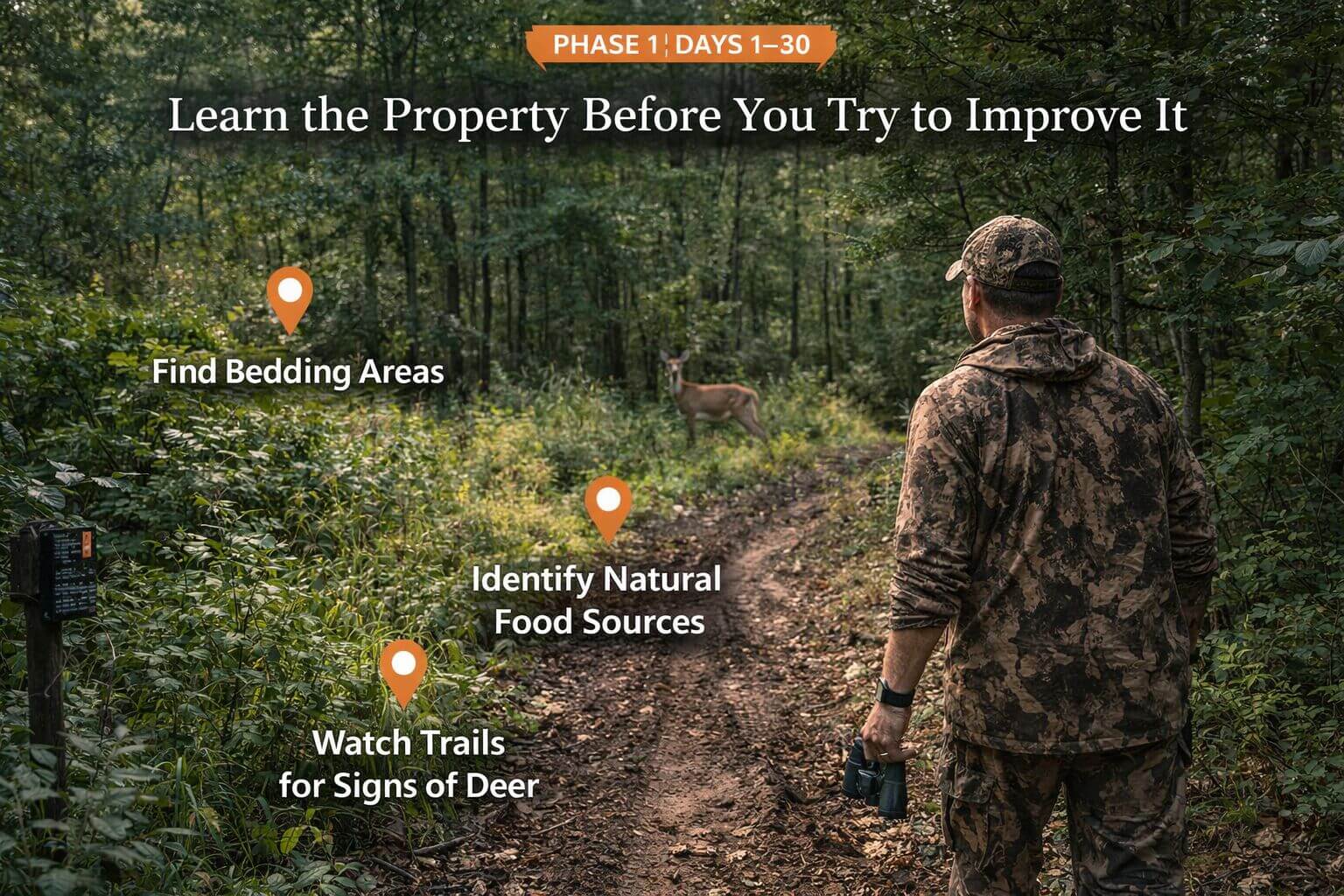
Phase 1 (Days 1–30): Learn the Property Before You Try to Improve It
 This is the phase most people want to skip.
It’s not flashy. It doesn’t feel like progress. There’s no tractor involved. No big visible changes.
But this is where good properties are built.
If we could give one piece of advice to every new landowner, it would be this:
Don’t outwork your understanding of the property.
Start With Your Boots—Not Your Equipment
Before anything else, just walk.
And not just once.
Walk it:
- Early morning when everything’s still
- Midday when deer are bedded
- Evening when movement starts
- After a rain when tracks show up clearly
Pay attention to the subtle stuff.
A faint trail cutting through grass.
A patch of thicker cover that “feels right.”
An edge where two habitats meet and everything seems to funnel through.
Those are the details that don’t show up on aerial maps.
And in Michigan—especially with how diverse properties can be—that matters more than people realize.
Let the Property Show You Where Deer Actually Live
A lot of buyers assume they know where deer should be.
But what matters is where they are.
Look for:
- Consistent trails (not just random tracks)
- Bedding areas—thick, secure, slightly overlooked spots
- Natural browse and food sources
Sometimes it’s exactly where you expected.
Sometimes it’s not even close.
That’s why this step matters.
Trail Cameras: Less Quantity, More Purpose
We see this all the time—new owners hang cameras everywhere.
There’s nothing wrong with that, but it’s not always helpful either.
Instead, think strategically.
Focus on:
- Funnels between bedding and food
- Transition zones
- Natural pinch points
- Scrape lines
You’re not just trying to get pictures.
You’re trying to answer questions:
- Where are deer coming from?
- When are they moving?
- How are they using the property?
That information becomes your foundation.
Access: Start Thinking About It Now (Even If You Don’t Change It Yet)
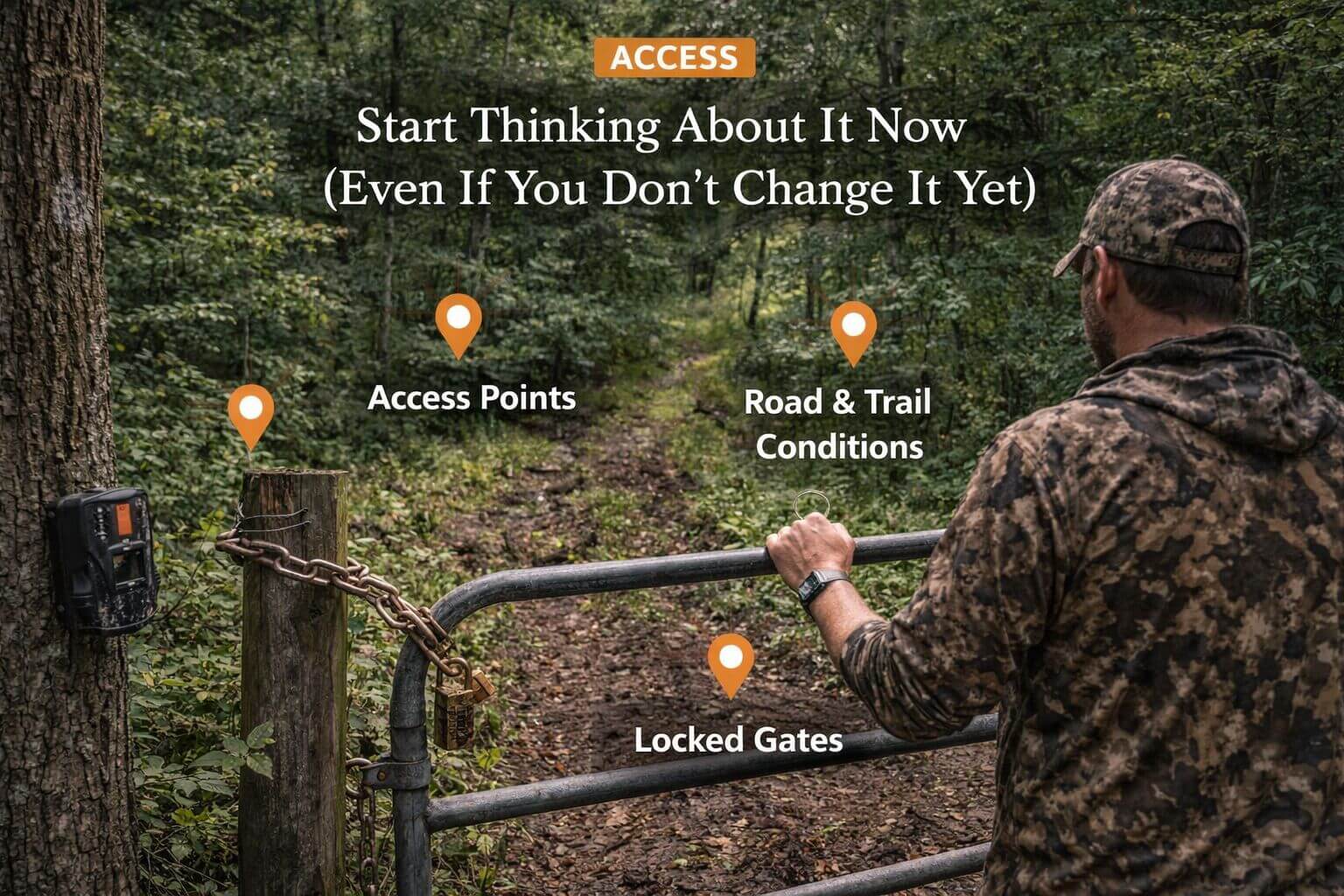 You don’t need to clear trails yet.
But you do need to understand:
- How you would access stands
- Where wind will help—or hurt—you
- What areas feel “safe” vs risky
Walk your entry routes like you’re hunting.
If you’re bumping deer now, you’ll definitely bump them in season.
The Neighbor Factor (Don’t Ignore It)
This part gets overlooked—and it shouldn’t.
If the opportunity feels right, introduce yourself.
Keep it simple. No agenda.
You might learn:
- How the property was hunted previously
- Where pressure tends to come from
- How surrounding land is used
Sometimes, a 10-minute conversation saves you months of guesswork.
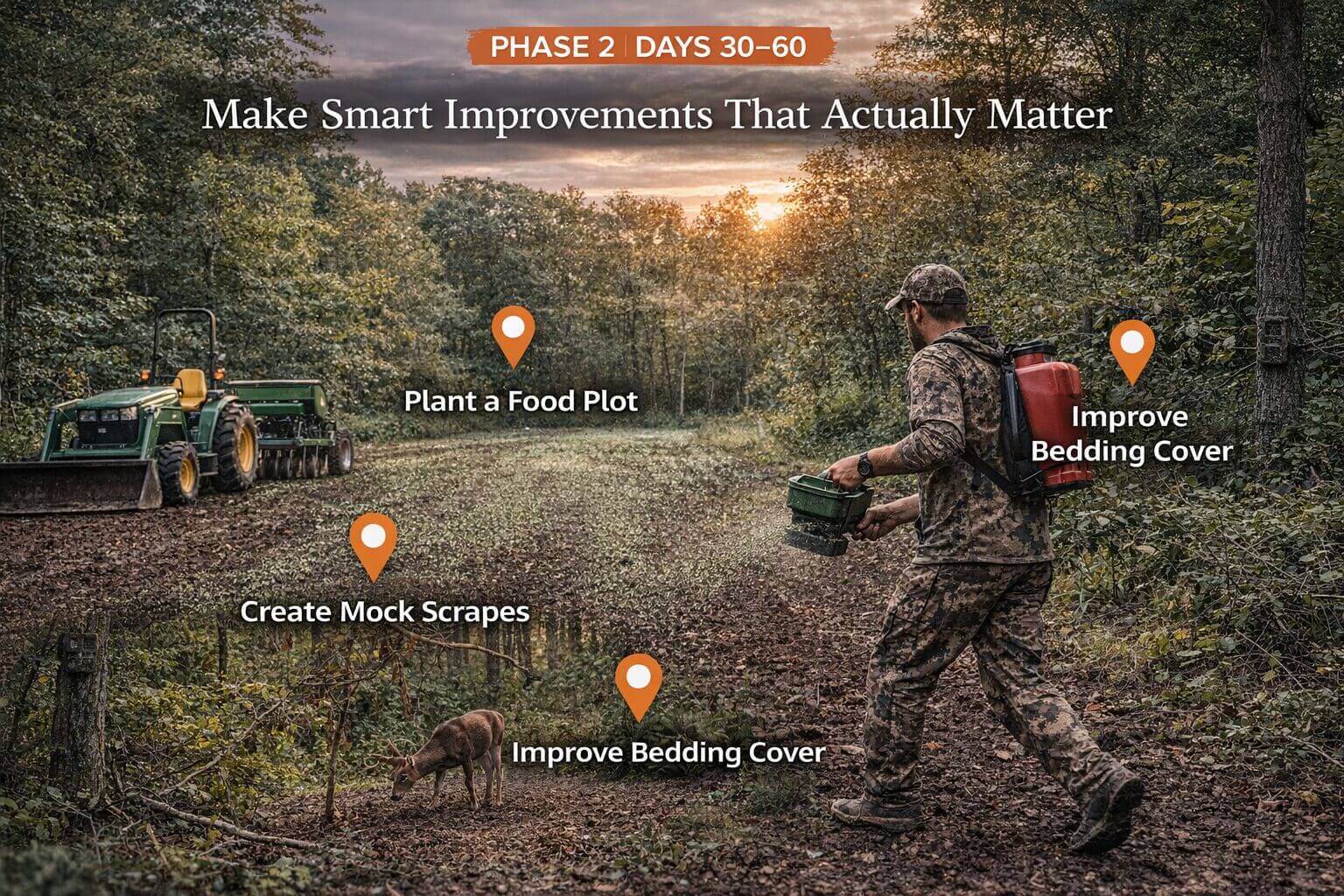
Phase 2 (Days 30–60): Make Smart Improvements That Actually Matter
 Now we start to shift gears.
You’ve spent time learning the property. You’ve got some data. You’ve started to see patterns.
This is where you begin making changes—but with purpose.
Not everything at once.
Just the things that move the needle.
Fix Access Before You Fix Anything Else
If there’s one thing we prioritize every time—it’s access.
Because access affects:
- How you hunt
- How often you hunt
- Whether you bump deer getting in and out
And ultimately…
Whether the property works or not.
Start by:
- Clearing quiet walking paths
- Establishing clean entry routes
- Minimizing disturbance
You don’t need highways through the woods.
You need efficient, low-impact access.
Food Plots: Keep It Simple (For Now)
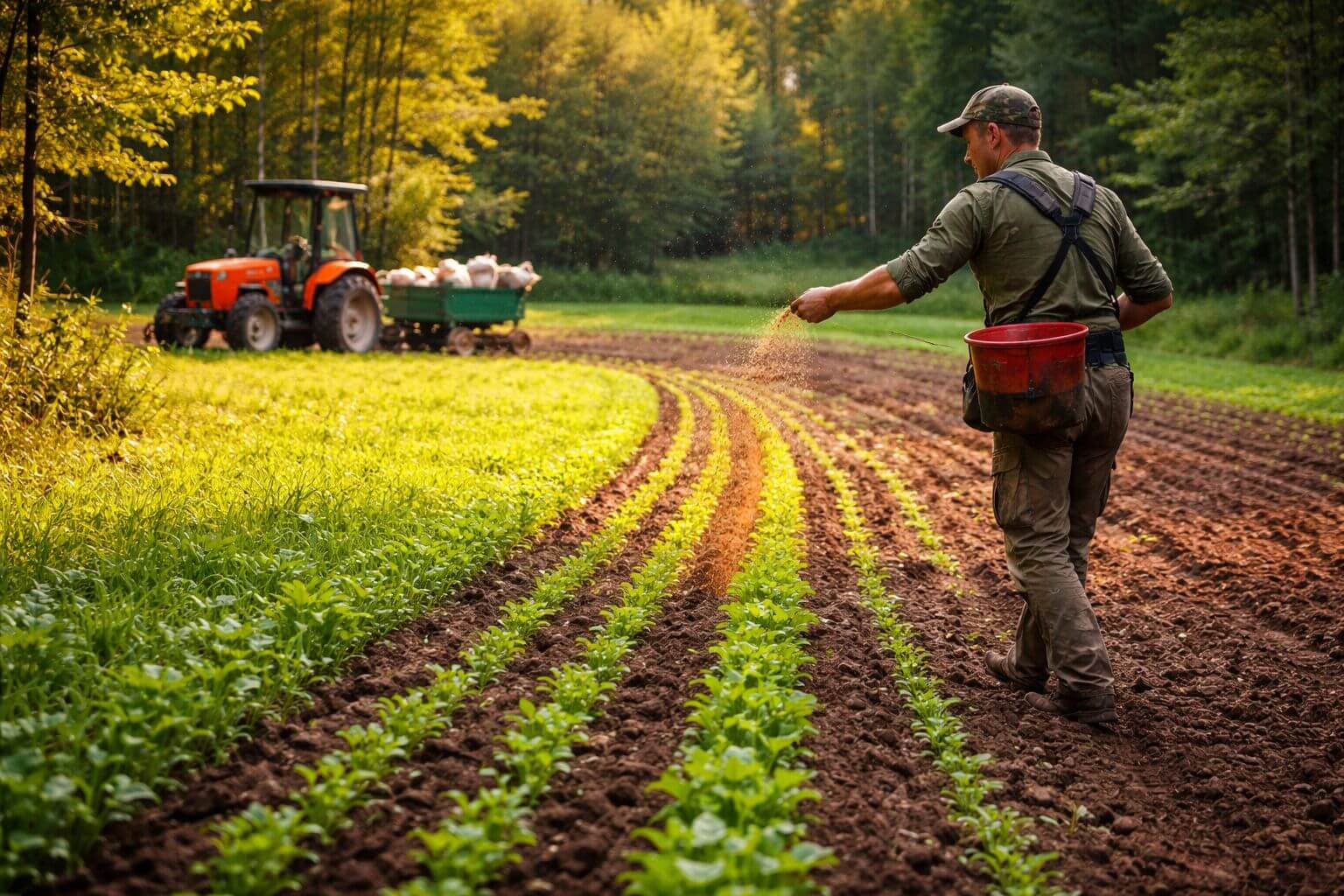 There’s a temptation to go big right away.
Multiple plots. Complex blends. Equipment upgrades.
You don’t need that yet.
Start small:
- One or two well-placed plots
- Close to bedding, not just “open space”
- Good sunlight and decent soil
If you haven’t done a soil test, do it. It’s one of the simplest, most overlooked steps—and it makes a big difference.
Stand Locations: Quality Over Quantity
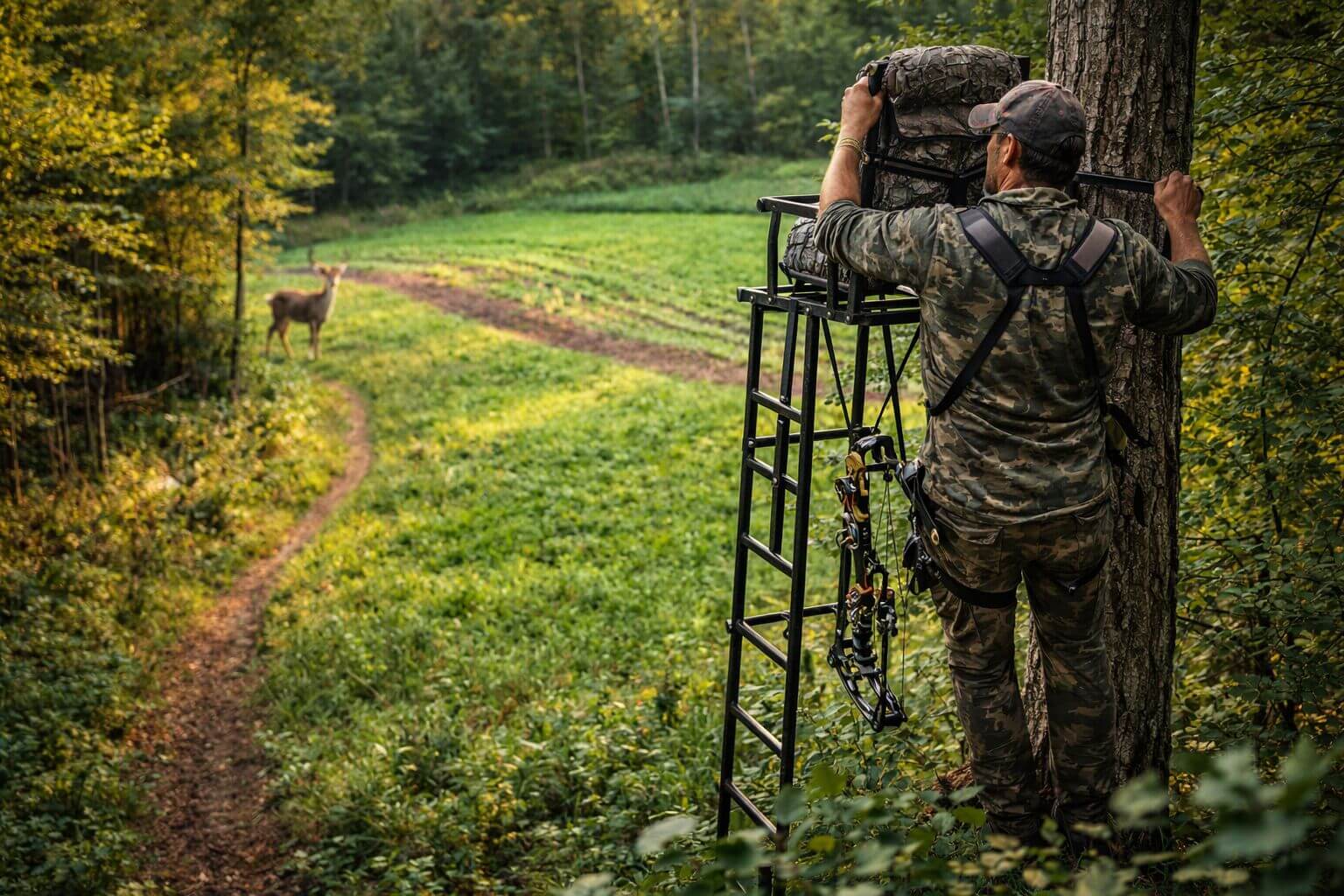 You don’t need a stand in every corner.
In fact, that usually causes more harm than good.
Instead, identify:
- 2–3 high-confidence setups
- Good wind advantage
- Clean access in and out
Think of it this way:
Would you rather have 10 average spots…
or 3 that you trust completely?
Start Building Your Own Map (This Becomes Huge Later)
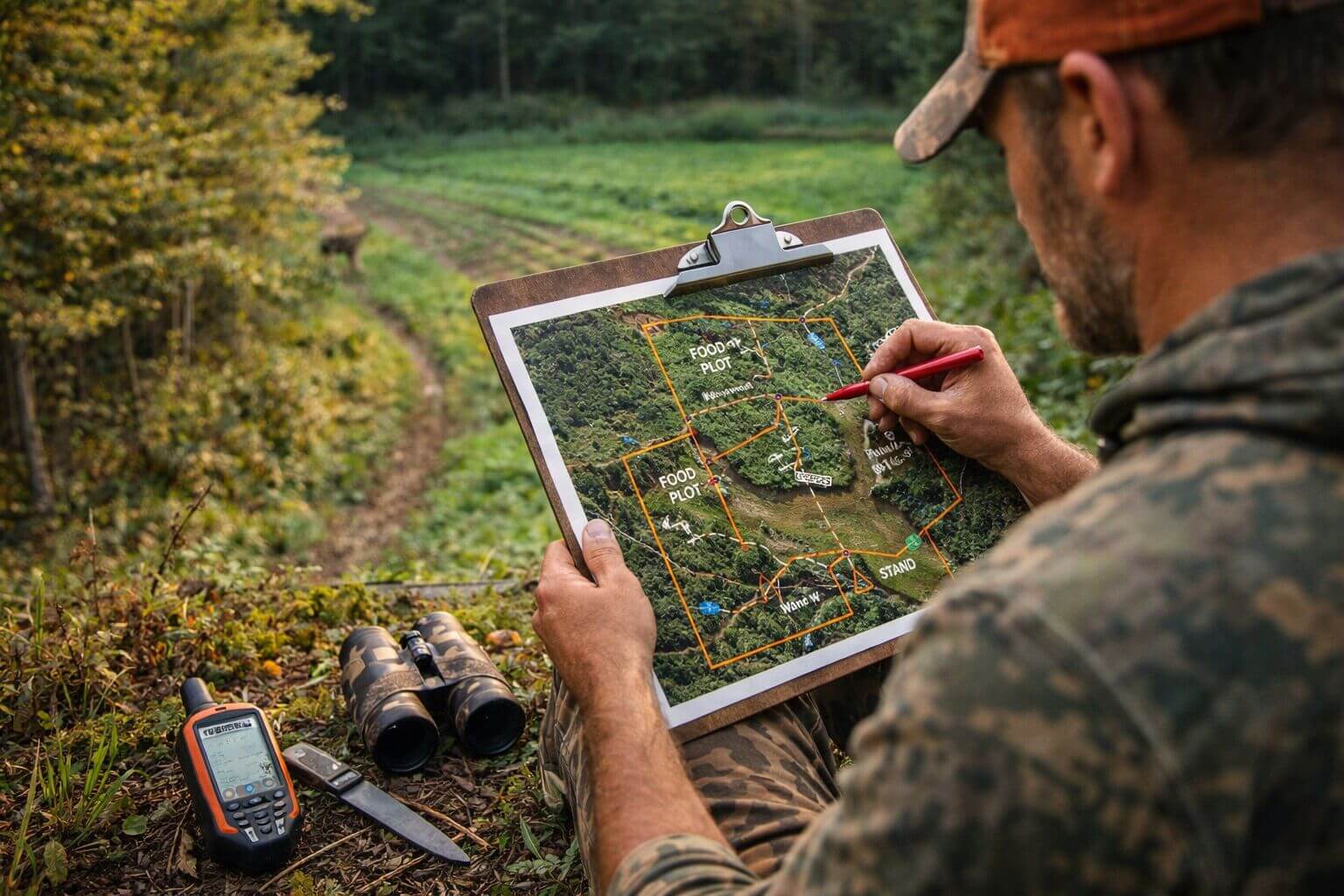 This doesn’t need to be fancy.
But it does need to be intentional.
Mark things like:
- Trail cam locations
- Deer movement patterns
- Bedding areas
- Access routes
- Stand sites
Over time, this becomes one of the most valuable tools you have.
Because now you’re not guessing anymore—you’re tracking.
Phase 3 (Days 60–90): Turn Knowledge Into Strategy
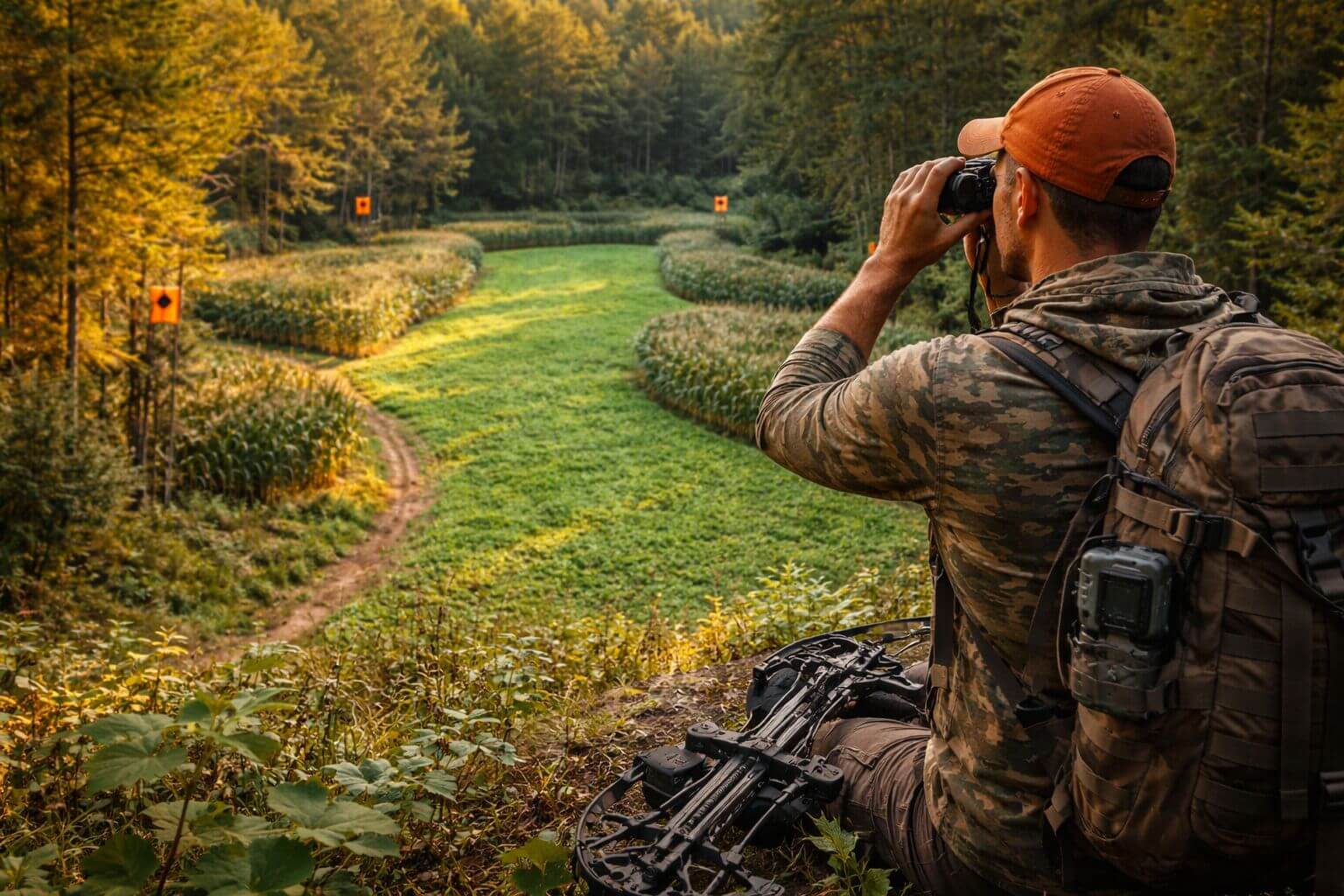 Now we’re getting close to go-time.
At this point, you’ve:
- Walked the property multiple times
- Gathered trail cam data
- Identified patterns
- Made key improvements
Now it’s about refining—not overhauling.
Adjust Based on Reality—Not Assumptions
This is where a lot of people get stubborn.
They pick a stand location early… and stick with it, even when the data says otherwise.
Don’t do that.
Move things if needed.
Shift setups based on:
- Wind
- Movement patterns
- Pressure
The property is giving you feedback—listen to it.
Dial In Entry and Exit Routes
Walk them again.
Slowly. Quietly.
Trim only what you need:
- Shooting lanes
- Access paths
Avoid overdoing it.
We’ve seen properties get worse—not better—because they were over-cleared.
Build a Hunting Plan (Not Just Spots)
This is where things separate.
Instead of thinking:
- “Where should we hunt?”
Start thinking:
- “When should we hunt this spot?”
- “Under what conditions?”
- “When should we stay out?”
Especially in Michigan—where pressure can vary a lot—discipline matters.
The Mistakes We See Over and Over Again
Let’s be honest—most mistakes don’t come from lack of effort.
They come from too much of it, too fast.
Here are the big ones:
Doing Too Much Too Soon
Clearing everything. Changing everything. Trying to “fix” the property immediately.
It usually backfires.
Ignoring Access Until It’s Too Late
This one shows up every fall.
Guys realize they can’t get to their stands without blowing deer out.
By then, it’s hard to fix.
Hunting It Too Aggressively
Especially early season.
Too much pressure too quickly can change deer behavior fast.
Overcomplicating Everything
Too many stands. Too many plots. Too many ideas at once.
Simple systems tend to work better—especially early on.
What You Don’t Need to Worry About (Yet)
This part matters more than people expect.
Because there’s a lot of noise out there about what you “should” be doing.
You don’t need:
- A full habitat overhaul
- Expensive equipment
- Perfect food plots
- A “finished” property
We’ve seen plenty of simple setups outperform highly managed properties.
Why?
Because they were understood—and hunted correctly.
A Simple 90-Day Plan You Can Actually Follow
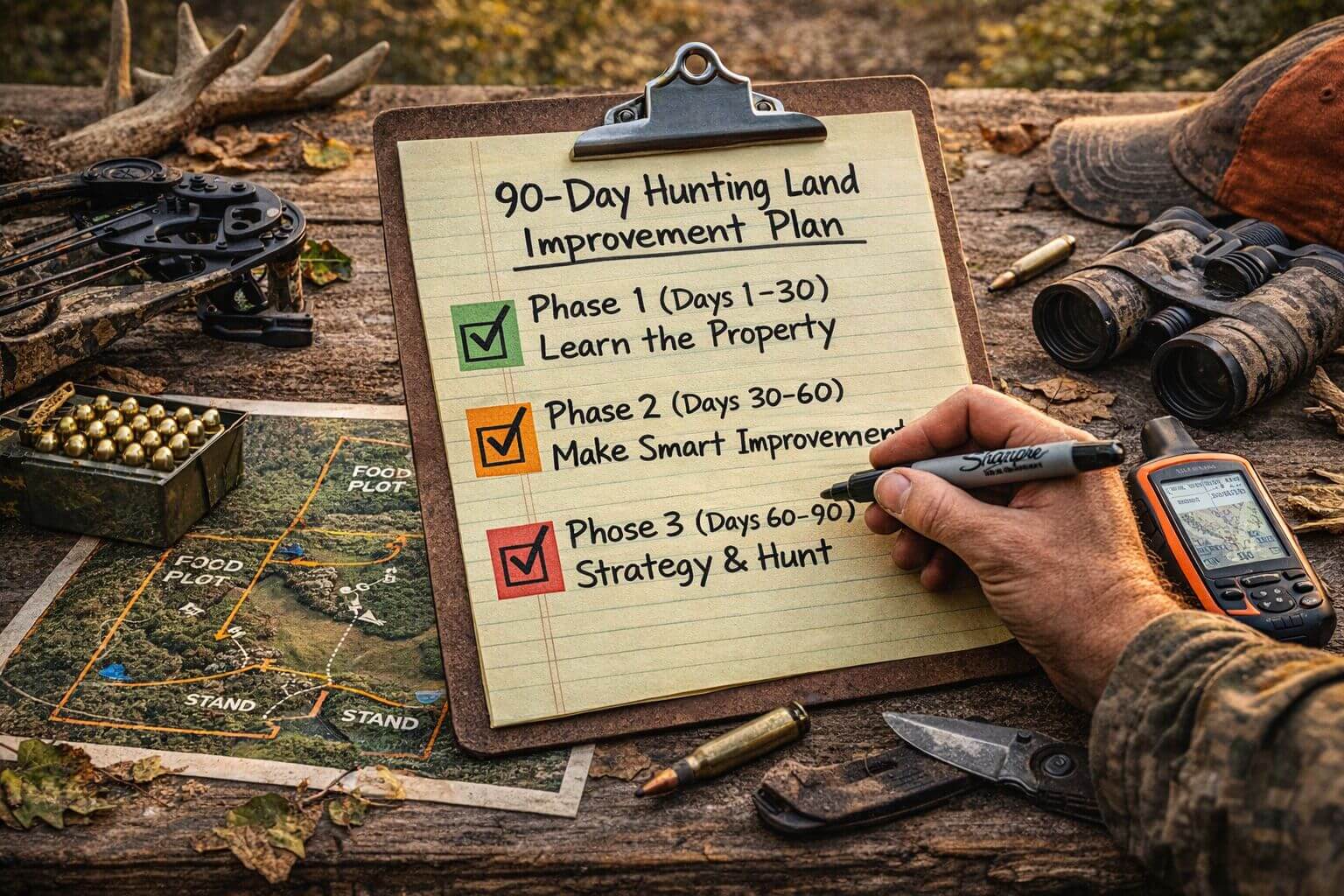 If you want to strip it down to the essentials, here’s how we’d approach it:
Days 1–30
- Walk the entire property (multiple times)
- Hang trail cameras strategically
- Learn deer movement
- Evaluate access
Days 30–60
- Improve entry and exit routes
- Start small food plots
- Set 2–3 stand locations
- Build your property map
Days 60–90
- Adjust based on trail cam data
- Finalize setups
- Refine access
- Develop a hunting plan
Final Thoughts: Let the Property Teach You
Here’s the part that’s easy to forget.
You don’t need to have everything figured out in 90 days.
In fact, you won’t.
The best properties we’ve seen weren’t built in a season.
They were built over time—by owners who paid attention, made thoughtful decisions, and kept learning.
So don’t rush it.
But don’t sit back either.
Find that middle ground where you’re:
- Observing
- Improving
- Adjusting
And enjoying the process along the way.
Thinking About Buying Michigan Hunting Land?
If you’ve recently bought land—or you’re getting close—and want help thinking through your first steps, we’re always happy to help.
👉 Browse current listings or reach out to Michigan Whitetail Properties.
We’ve been through those first 90 days more times than we can count—and we’re here to help you make the most of yours.