Selling inherited hunting land in Michigan typically takes 6 to 12 months from death to closing, with probate accounting for most of that time — longer if the estate is contested or more than one county court is involved. Michigan charges no state inheritance tax and no state estate tax, and heirs receive a stepped-up cost basis, meaning capital gains are calculated from the property’s value on the date of death, not what the original owner paid decades ago. The most expensive surprise is Proposal A uncapping: unless a qualified-relative exemption is properly filed, the property’s taxable value resets to its state equalized value on transfer, which can double or triple the annual tax bill. None of this has to be figured out today.
First, the Part Nobody Tells You
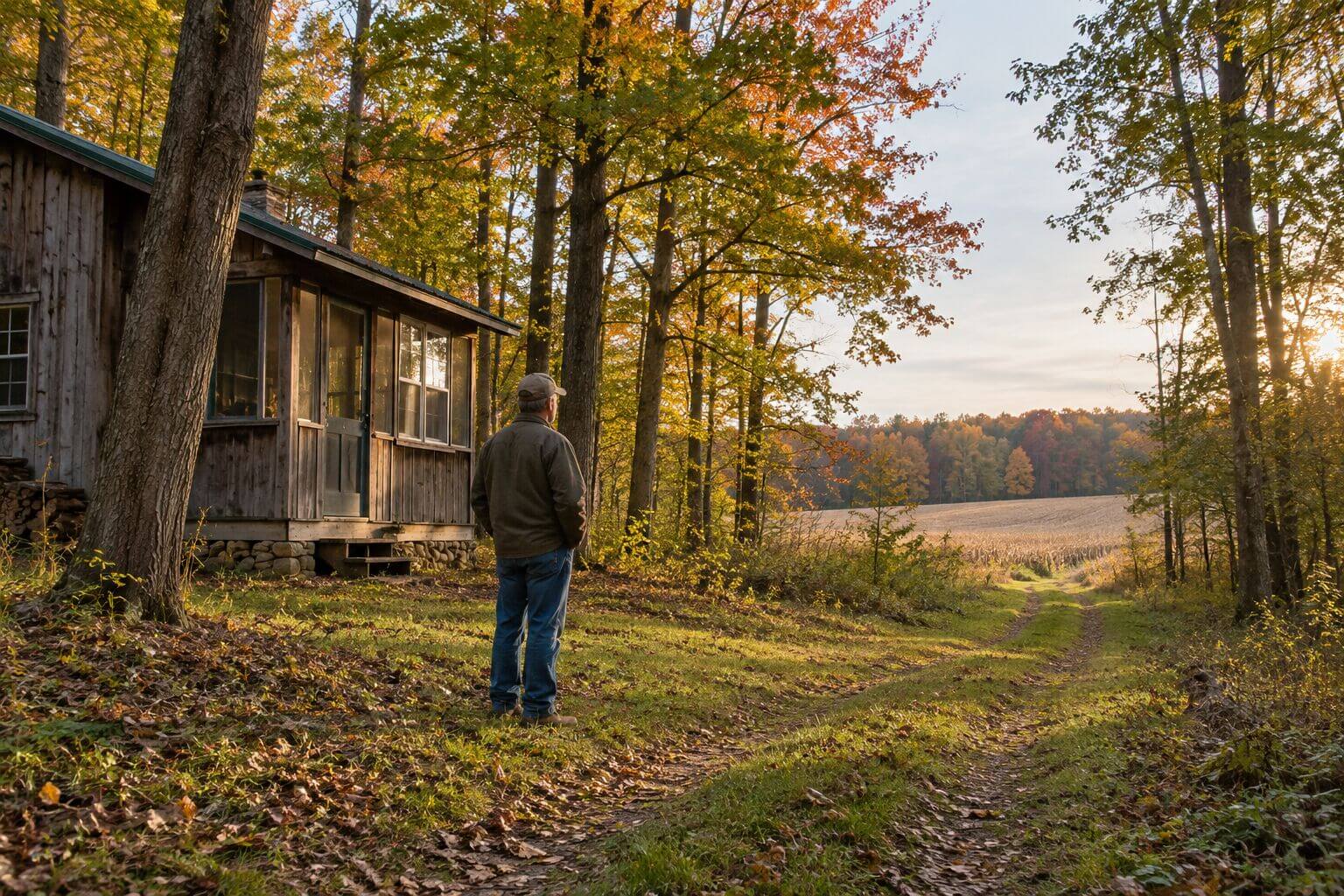 If you’re reading this, someone you love owns land in Michigan, and now you’re the one who has to decide what happens to it. Maybe it’s the ground your dad hunted for forty years. Maybe it’s a family camp nobody’s visited since the funeral. Maybe you’re an only child staring down a checklist alone, or one of four siblings who haven’t fully agreed on anything since 2004.
Here’s the first thing worth knowing: nothing about this has to be decided this month. Land doesn’t spoil. A closed hunting camp isn’t losing anything by sitting closed through one more winter while you sort out the legal and financial pieces. The pressure you’re feeling — to act fast, to have an answer when people ask “so what are you going to do with the property” — is real, but it isn’t coming from the land itself. It’s coming from everywhere else.
This article walks through what actually happens, in order: whether probate is required, what Proposal A’s tax uncapping means for you specifically, what you owe (and don’t owe) in taxes, how Michigan law now handles disagreements among siblings, a realistic timeline from death to closing, and an honest answer to the question everyone eventually asks — whether a cash offer is the right move. We’ll answer the fearful questions along with the practical ones, because both kinds are keeping you up at night right now.
Does Inherited Michigan Land Have to Go Through Probate?
 In most cases, yes — but where that probate case gets filed is one of the more commonly misunderstood pieces of this process, so it’s worth getting right from the start.
If the person who died was a Michigan resident, their estate is probated in the county where they were legally domiciled at death — meaning their permanent home, not necessarily where they happened to pass away, and not the county where the hunting land is located. A family in Wayne County whose father owned 80 acres of hunting ground in Hillsdale County files probate in Wayne County, not Hillsdale. This surprises a lot of families who assume the land’s county is automatically involved.
If the person who died was not a Michigan resident — an out-of-state owner who held Michigan hunting land — the estate can be opened in any Michigan county where they owned real property, since there’s no Michigan domicile to anchor the filing.
From there, Michigan offers two tracks under the Estates and Protected Individuals Code (EPIC):
Informal probate is faster and is available when the estate is straightforward and uncontested. Letters of Authority — the document that actually empowers someone to act for the estate — can typically be issued within a few days to two weeks of filing. Simple, uncontested estates using this track often reach closing in roughly 5 to 9 months.
Formal probate requires a court hearing before Letters of Authority are issued, typically adding four to eight weeks up front, and is used when there’s a will contest, an unclear heir situation, or any dispute that needs a judge’s decision. These cases commonly run 9 to 12 months, and contested cases can stretch to 12 to 24 months or longer.
Probate can sometimes be avoided entirely. If the land was held in a trust, owned jointly with rights of survivorship, or transferred using a Michigan “lady bird deed” (formally, an enhanced life estate deed) that names a beneficiary who automatically takes ownership at death, the property passes outside probate court altogether. If you’re not sure which of these applies to your situation, that’s one of the first things a probate attorney can confirm — often in a single conversation.
Proposal A Uncapping: The Expensive Surprise
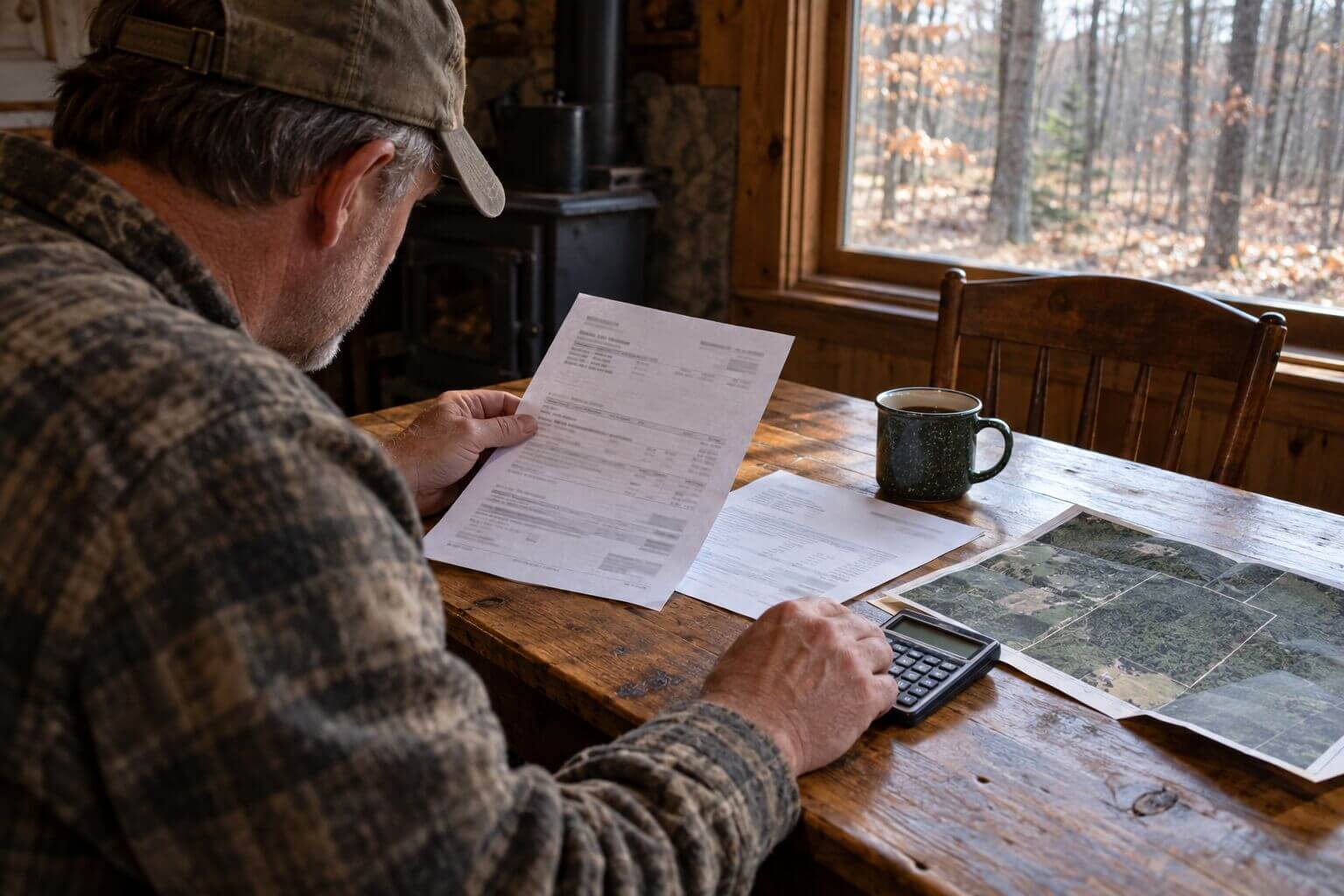 This is the section worth reading twice, because it’s the one that catches families off guard financially — sometimes years after the funeral, when the new tax bill finally arrives.
Under Michigan’s Proposal A (1994), a property’s taxable value — what your tax bill is actually based on — is capped and can only rise a limited amount each year, regardless of how much the property’s true market value climbs. That cap is what keeps long-held Michigan land affordable to hold onto. But when a property changes ownership, the cap resets: the taxable value “uncaps” and jumps to match the property’s state equalized value (SEV), which is roughly half of true market value. On land that’s appreciated for decades, that reset can mean a tax bill that’s two or three times what the original owner was paying.
Here’s the part that matters most for families inheriting land: a properly filed transfer to a qualifying relative can avoid uncapping — at least for now. Under Michigan law (MCL 211.27a(7)), a transfer of residentially classified real property to a first-degree relative by blood or affinity — a spouse, parent, child, sibling, or grandchild (including step- and adopted relationships) — is exempt from uncapping, and this exemption applies to recreational and vacant land classified as residential under Michigan’s property classification rules, not only to property with a house on it. To claim it, the Property Transfer Affidavit (Form 2766) must be filed with the local assessor, generally within 45 days of the transfer, checking the box confirming the qualifying relationship.
There are two catches, and both matter for anyone planning to eventually sell.
First, the use of the property can’t change. If the land is reclassified — say, it starts being used commercially — the exemption can be lost and the uncapping triggers retroactively.
Second, and this is the one families miss most often: this exemption only delays uncapping. It doesn’t eliminate it. If you inherit the land from a parent and later sell it to a buyer who isn’t a qualifying relative — which, for most families selling hunting land, is exactly the plan — that sale is its own transfer of ownership, and the property uncaps for the new buyer at that point regardless of what happened when you inherited it. The exemption protects your carrying costs while you own and decide what to do with the land. It doesn’t change what the eventual buyer’s tax bill will look like, and buyers researching a listing increasingly know this.
A worked example: A parent bought 60 acres in Lapeer County decades ago with a taxable value of $45,000, while the property’s current SEV is $140,000. If the qualified-relative exemption is properly filed when the child inherits, the child’s annual tax bill continues to be based on the $45,000 taxable value while they own it. When that child later sells the land to an unrelated buyer, the property uncaps to the $140,000 SEV for the new owner — roughly tripling the buyer’s annual tax bill compared to what the family had been paying. That’s not a defect in the exemption. It’s simply how the system is designed to work, and it’s worth explaining clearly to buyers during a sale rather than letting them discover it after closing.
Michigan Taxes on Inherited Land: What You Actually Owe
 The tax news here is better than most families expect.
Michigan has no state inheritance tax and no state estate tax. Michigan’s inheritance tax was repealed decades ago for anyone who died after 1993, and the state has no separate estate tax on top of that. Whatever land you inherit, Michigan itself isn’t going to tax you simply for inheriting it.
Heirs also receive what’s called a stepped-up cost basis. Under IRS rules, when you inherit real property, your cost basis for tax purposes becomes the property’s fair market value on the date the original owner died — not what that person originally paid for it, no matter how long ago that was or how much the land has appreciated since.
A worked example: Say a parent bought 80 acres in 1985 for $40,000. At their death in 2026, the land is worth $320,000. Under the stepped-up basis rule, the heir’s cost basis becomes $320,000 — not the original $40,000. If the heir sells the land shortly after for $325,000, taxable capital gain is calculated against the $320,000 stepped-up basis, not the original purchase price — roughly $5,000 of gain, not $285,000. This is the single biggest reason most families who sell inherited land relatively soon after death owe little or no federal capital gains tax on the sale, even when the land has appreciated enormously since it was originally purchased.
The federal estate tax exists separately from any of this, but it only applies to estates well above what most Michigan hunting-land families will ever be dealing with, and it’s handled at the estate level, not by individual heirs. If your family’s total estate is unusually large, that’s a conversation for an estate attorney — but for the overwhelming majority of families selling an inherited hunting property, the practical tax picture is simple: no state inheritance tax, no state estate tax, and a stepped-up basis that usually keeps federal capital gains modest.
When Siblings Disagree: Multi-Heir Property
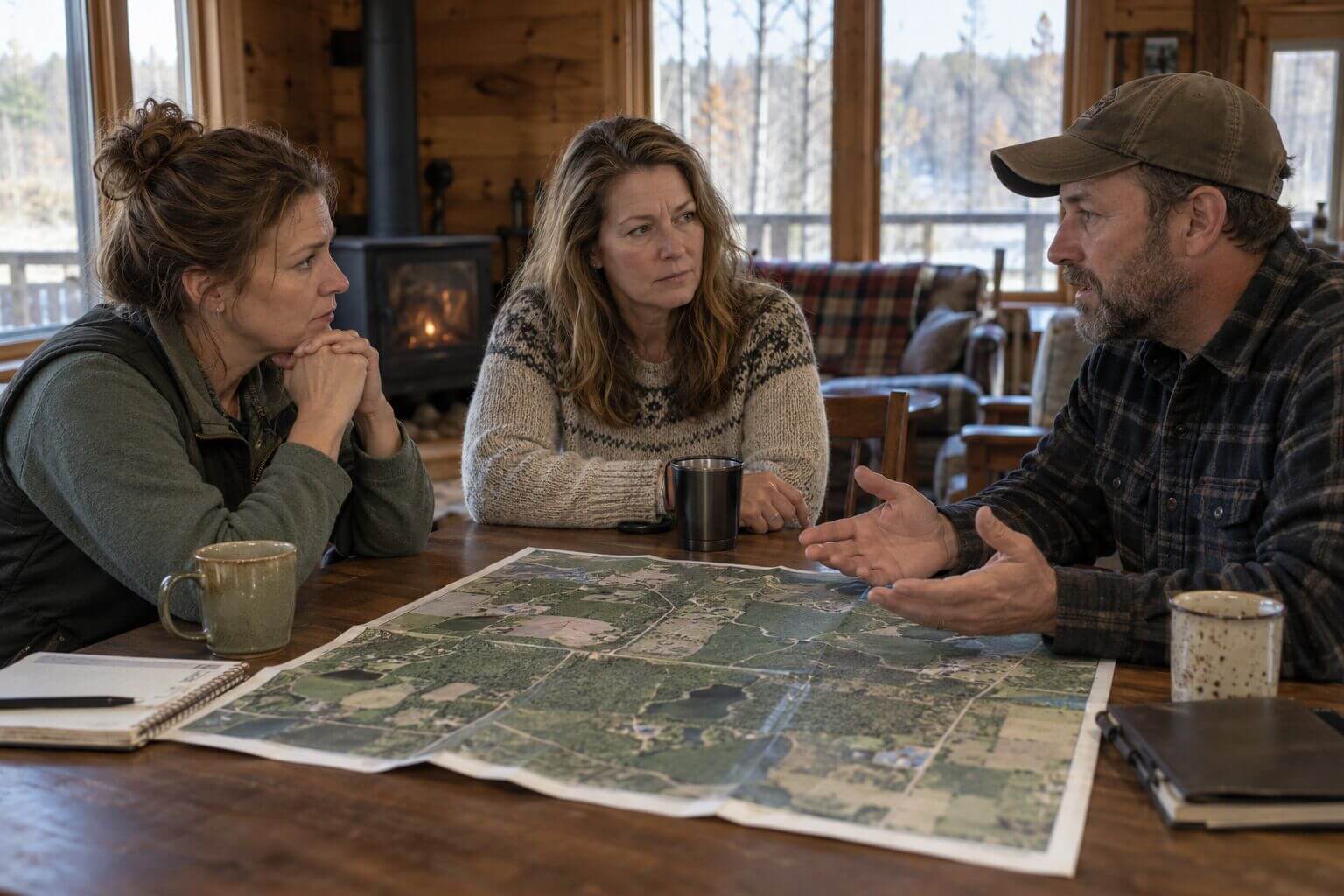 This is, honestly, the reason more inherited land sells badly than any tax rule or probate delay. Land held by multiple siblings or cousins as “heirs property” — co-owned, often without a clear plan for what happens when one owner wants out and another doesn’t — has historically been one of the most difficult ownership situations in American real estate, and Michigan hunting families are not immune to it.
The sibling who wants to keep hunting the land and the sibling who needs their share of the cash are both making a reasonable request. That’s what makes it hard. Neither one is wrong, and pretending one side is being unreasonable usually just prolongs the disagreement.
Michigan recently changed how these disputes get resolved. Public Act 215 of 2024, Michigan’s version of the Uniform Partition of Heirs Property Act, took effect April 2, 2025, and it specifically protects families in this situation. Previously, any co-owner could force a full sale of the property through a partition action, often at auction, regardless of what other co-owners wanted. Under the new law, when property qualifies as “heirs property” — generally, land held in common ownership where a meaningful share of the interests came from a relative — Michigan courts must now consider partition in kind (physically dividing the land into separate parcels) before ordering a forced sale, and must weigh factors like a family’s sentimental and ancestral attachment to the property. The law also creates a formal buyout process, giving co-owners who want to keep the land a real opportunity to purchase the interests of co-owners who want out, with courts overseeing a fair valuation, before the property can be forced onto the open market.
Practically, this changes the playbook for a disagreeing family. Before reaching for attorneys or a partition filing, get an independent professional appraisal first — a number everyone can trust, from someone with no stake in the outcome — and let that number anchor the conversation about buyout, sale, or division. Decisions made before everyone is working from the same real number tend to go worse than decisions made after.
The Seven-Step Process and a Realistic Timeline
- Open probate (varies, often 1–8 weeks to Letters of Authority) — filed in the decedent’s home county for Michigan residents, or any county where they owned property for out-of-state decedents
- File the inventory (within 91 days of appointment) — Michigan’s probate code requires the personal representative to prepare and file an inventory of estate property within 91 days of being appointed, unless the court sets a different deadline
- Publish notice to creditors and wait out the claims period (4 months) — this window runs concurrently with other steps and is often the real floor under how fast an estate can close
- Resolve the Proposal A filing (within 45 days of transfer) — file Form 2766 to claim the qualified-relative exemption if it applies, before the window closes
- Get the land appraised and prepared for market — documentation, boundary confirmation, and habitat history, same groundwork covered in our seller’s guide
- List, market, and negotiate — typically 60–120 days from listing to accepted offer for hunting-specific land
- Court approval and closing (30–60 days once an offer is accepted) — many probate sales require the court’s sign-off before closing, which adds time a typical residential sale doesn’t have
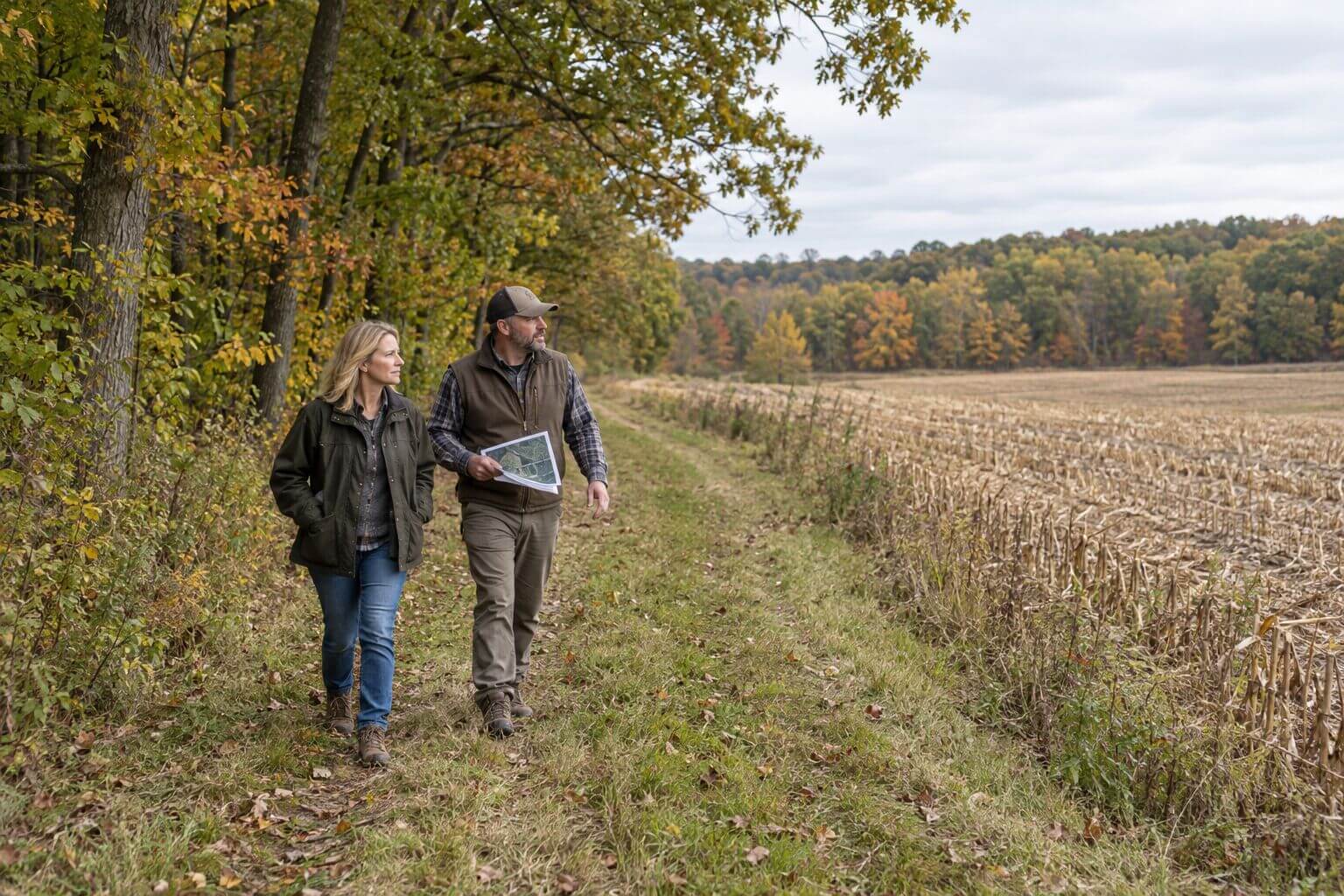 Several of these steps run in parallel rather than in sequence — the creditor claims period, the inventory deadline, and the property’s preparation for market can all happen at the same time, which is exactly how families compress an otherwise slow-moving timeline. The 6-to-12-month range at the top of this article reflects that overlap. A contested estate, an unclear title, or heirs spread across multiple states can push well past 12 months, and it’s worth knowing that up front rather than being surprised by it in month eight.
Should You Take a Cash Offer on Inherited Land?
 This section gets an honest answer, not a sales pitch.
Take the cash offer if: the title is clouded or fractured among heirs who can’t agree, the estate has unpaid back taxes closing in on a deadline, heirs are scattered across multiple states and coordinating a traditional listing is genuinely impractical, or the family needs liquidity now rather than in six to twelve months. In any of those situations, the speed and certainty of a cash sale is worth what it costs, and that’s the honest answer whether or not it’s ours to give.
Don’t take the cash offer if: the title is clean, the heirs are in general agreement, and the land itself is marketable hunting ground. In that far more common situation, a brokered sale to a hunting-specific buyer pool typically nets substantially more.
A worked example: a 40-acre parcel in Hillsdale County, inherited free and clear by three siblings in agreement, with a fair market value around $200,000. A cash buyer’s offer at 60–70% of value nets the family roughly $130,000. A brokered sale at or near full market value, after a typical 7% commission, nets roughly $186,000 — a difference of about $56,000 split three ways, for four to six additional months of patience. For a family that agrees and isn’t under financial pressure, that’s rarely a close call. For a family that’s fractured, scattered, or racing a deadline, the math changes, and the faster path is the right one.