Michigan tillable land vs hunting land investment comes down to a straightforward tradeoff: tillable farmland delivers steady, predictable cash rent income while pure hunting land offers lower carrying costs and stronger appreciation potential in a market that’s being reshaped by the state’s new deer regulations. Michigan farmland averaged roughly $6,800 per acre in 2025, a 7.8% jump from the year before and the largest percentage increase of any state in the country. Hunting land runs a wider range — often $4,000 to $8,000 per acre depending on timber, terrain, and documented deer management — with the top end of that range climbing fastest on Lower Peninsula properties that stand to benefit from tighter buck harvest rules. Michigan Whitetail Properties has sold both asset types across all 83 Michigan counties since 1995, and the honest answer to which one wins is: it depends on what you want the land to do for you.
Look, every investor who calls us asking this question already has a gut answer before they ask the question. Farmers want tillable. Hunters want timber and cover. But the ones who actually build wealth in Michigan land over a decade tend to be the ones who ran the numbers instead of following their gut — and in 2026, those numbers are shifting in ways that make this comparison genuinely worth revisiting.
Michigan tillable farmland produces income every year whether or not you ever set foot on it
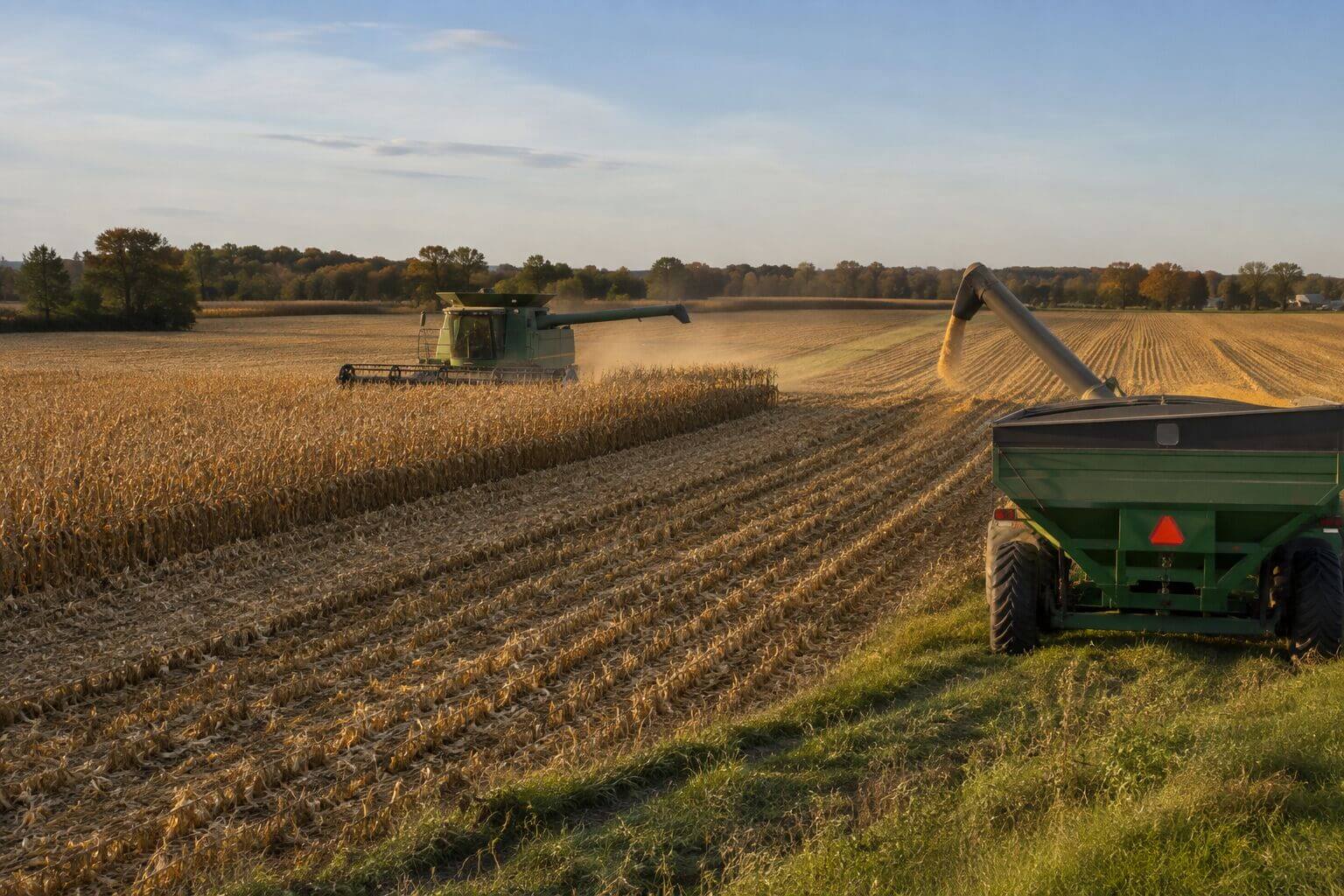 A cash-renting landowner in southern Michigan collected somewhere between $200 and $280 per acre annually on productive tillable ground in 2024, according to Michigan State University Extension’s farmland cash rent survey. That figure varies sharply by county — Huron County non-irrigated cropland cash rent ran $237 per acre in 2025 while Gratiot County came in at $199 per acre, per USDA data compiled through MSU Extension. Statewide, the non-irrigated average sits closer to $143 per acre once you factor in lower-productivity counties and regions further from major grain markets. That income shows up whether commodity prices are up or down for you personally, because the tenant farmer absorbs the crop risk while you collect a fixed rent check. It’s about as close to passive real estate income as Michigan land gets.
Pure hunting land trades annual income for appreciation and lower overhead
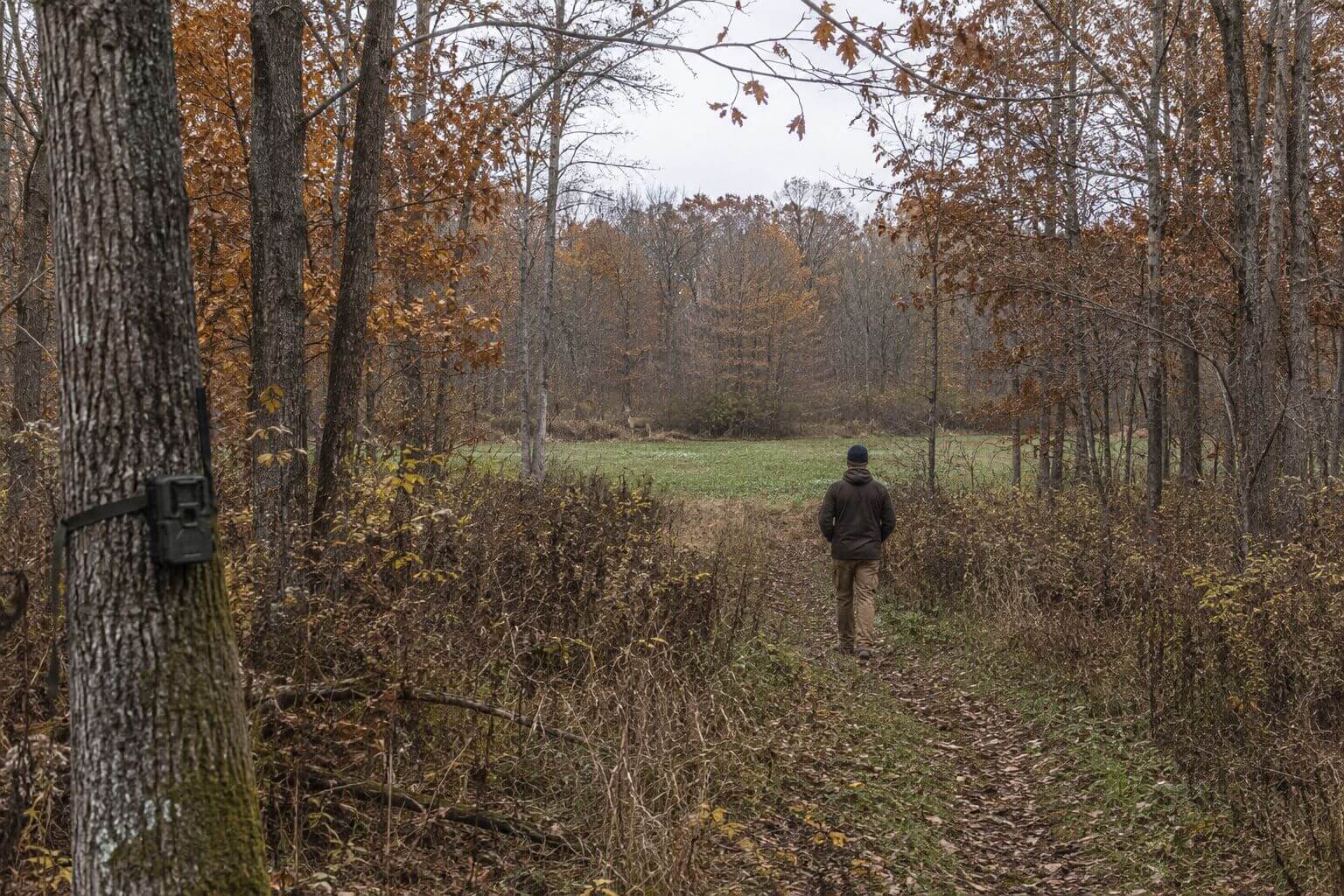 Hunting land doesn’t generate the same dependable cash flow, but it costs less to hold and it’s showing up on more buyers’ radar as a long-term appreciation play. Private hunting leases in Michigan run anywhere from $5 to $50-plus per acre per year depending on habitat quality and location, with $20 to $25 per acre being a realistic number for a well-managed southern Michigan property — a fraction of tillable cash rent, but also a fraction of the input costs, property tax exposure, and management burden. What hunting land offers instead is upside tied to demand, not yield. With Michigan’s one-buck rule taking effect in the Lower Peninsula on March 1, 2027, properties with documented buck history and QFP-managed habitat are positioned to see outsized demand from hunters who now have to be far more selective about which buck they shoot.
Here’s how the two asset types stack up side by side
The table below compares tillable farmland and pure hunting land across the metrics that matter most to a Michigan land investor weighing both options.
| Metric | Tillable Farmland | Pure Hunting Land
|
|---|---|---|
| Average price/acre (2026) | $6,800–$7,200 statewide | $4,000–$8,000, varies by county |
| Annual income potential | $143–$280/acre cash rent | $5–$50/acre hunting lease |
| Appreciation (2025 YoY) | 7.8% statewide average | Stronger in managed LP counties |
| Management burden | Low — tenant handles operations | Moderate — food plots, TSI, trails |
| Tax programs available | PA 116 farmland preservation | QFP, CFP forest tax programs |
| Liquidity | Strong — broad buyer pool | Moderate — niche buyer pool |
| Upfront/one-time costs | Soil testing, drainage tile repair | Food plot install, stand infrastructure |
| Five-year outlook | Steady, income-driven growth | Higher variance, regulation-driven upside |
Regional pricing swings harder than most out-of-state buyers expect
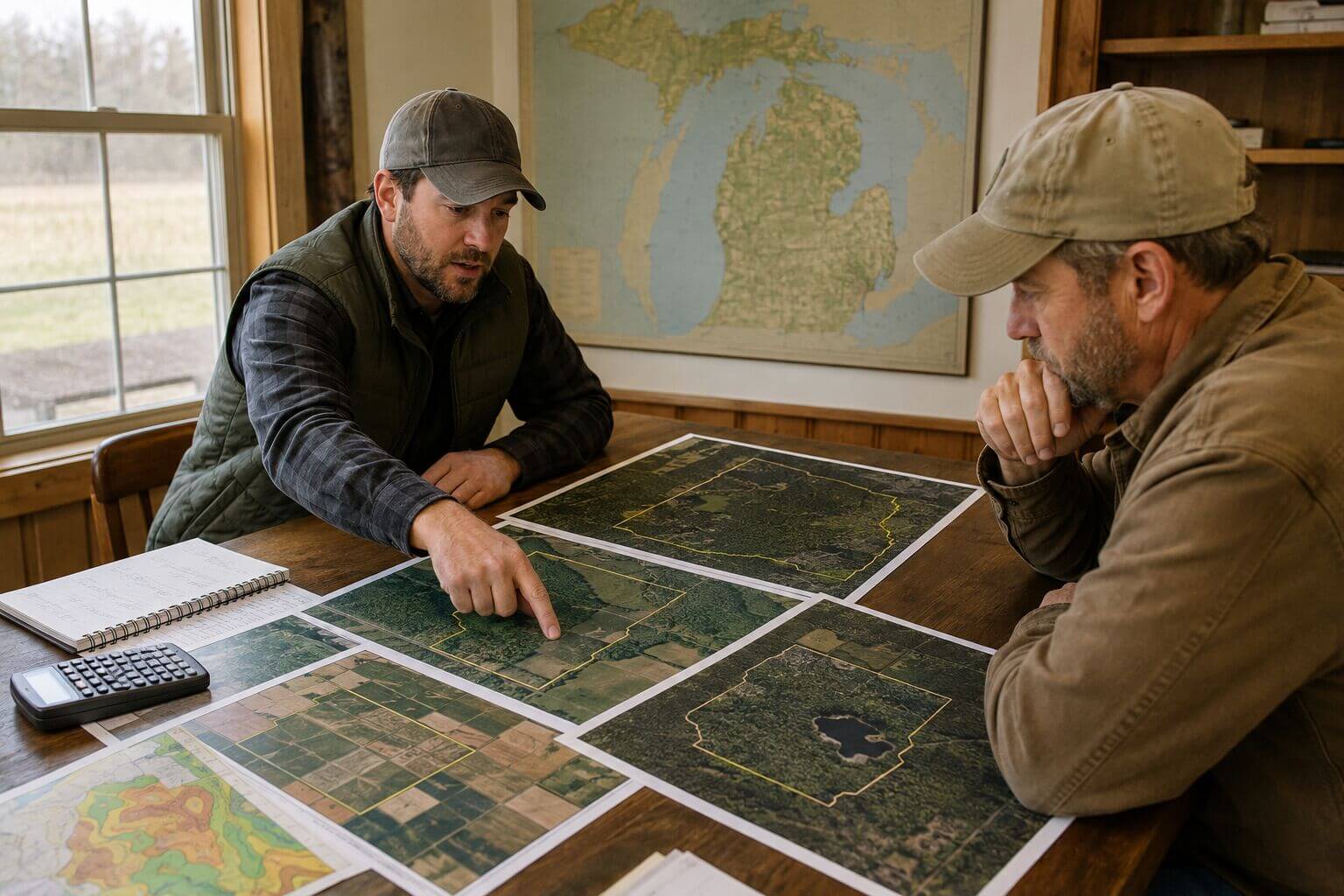 Michigan land prices per acre in 2026 range from around $1,200 in the remote Upper Peninsula to more than $15,000 in high-demand southern counties, and that spread applies to both tillable and hunting ground. Southwest Michigan agricultural property has traded in the $8,000–$12,000 per acre range, while west Michigan ag ground runs closer to $5,000–$10,000. That’s a wide enough gap that a buyer comparing “Michigan farmland” to “Michigan hunting land” needs to compare within the same region, not statewide averages — a $4,500-per-acre hunting parcel in the northern Lower Peninsula and a $4,500-per-acre tillable parcel in a marginal soil county can have wildly different five-year outlooks even at the same entry price.
The regulatory environment is quietly favoring managed hunting land
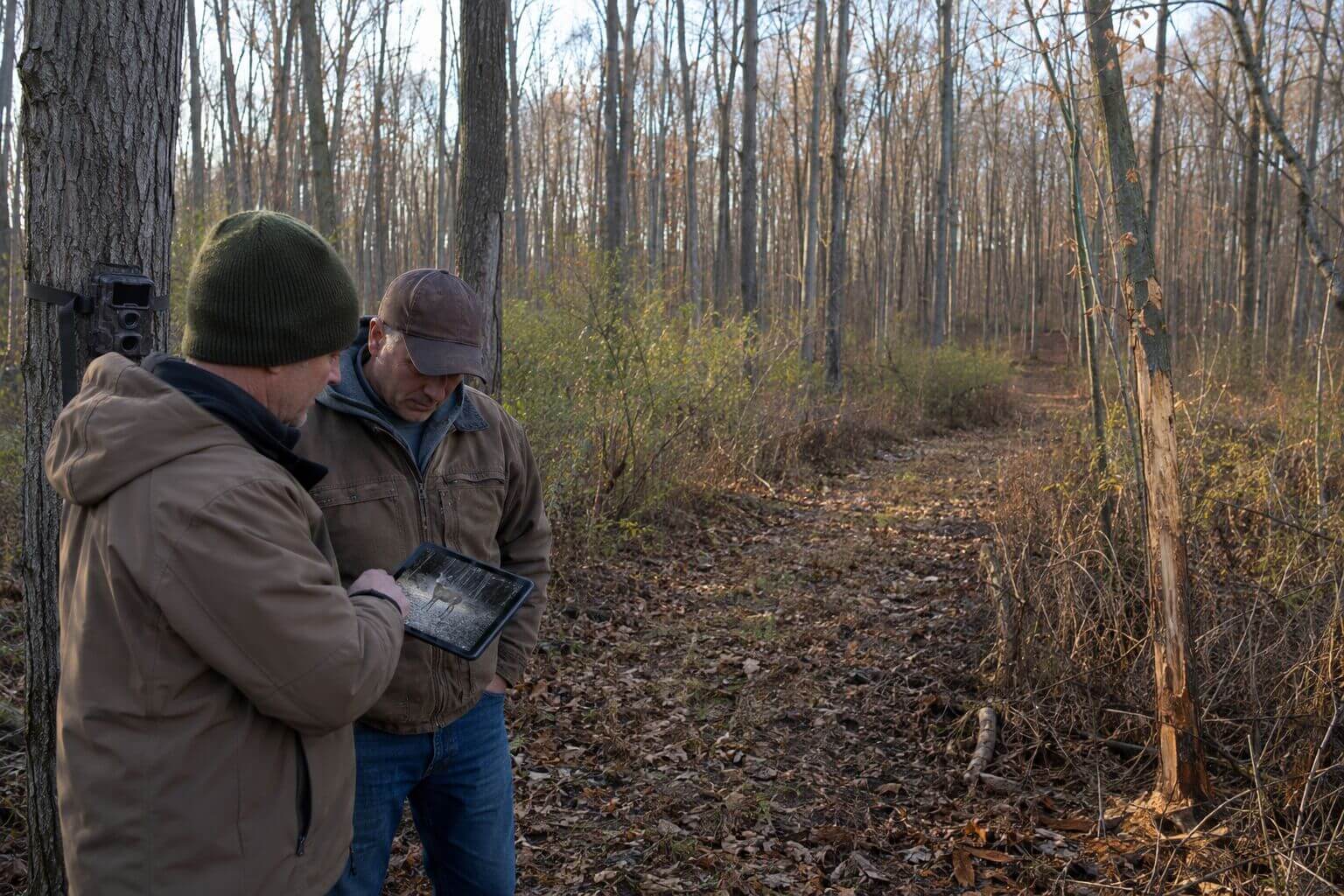 Michigan’s deer regulations rarely move markets, but the 2026 NRC session changed that. The one-buck rule doesn’t touch the Upper Peninsula, but it fundamentally changes the calculus for Lower Peninsula hunting properties: a hunter who can only tag one buck per season is going to pay a premium to hunt ground with a track record of producing mature deer. That’s a demand curve tillable farmland simply doesn’t have — corn is corn no matter who’s renting the field, but a buck property with three years of trail camera history on a specific deer is a different asset entirely. A few factors are compounding this shift right now:
- Lower Peninsula hunters are increasingly willing to pay for exclusivity now that shot opportunities are more limited
- QFP-enrolled hunting properties combine tax relief with habitat management history, a combination buyers actively search for
- Documented buck history has become a marketing asset in a way it wasn’t five years ago
Cash rent and QFP enrollment aren’t mutually exclusive on a hybrid property
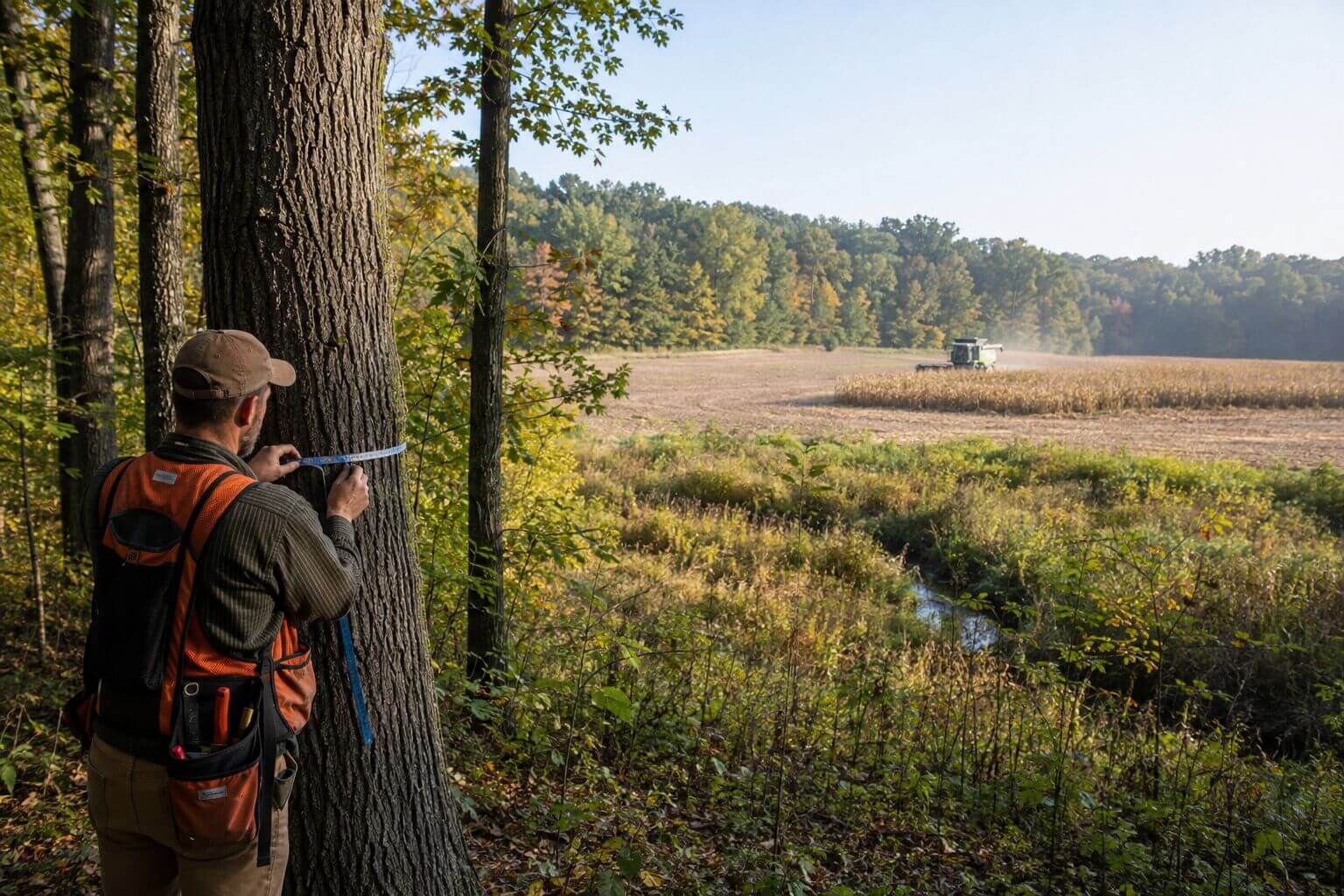 The best-performing Michigan land investments we see often aren’t purely one or the other — they’re tillable ground with a wooded fence line, a creek corridor, or a back forty that stays in timber. A property like that can carry cash rent income on the crop acres while the timbered portion sits in the Qualified Forest Program, cutting the tax bill on the non-tillable ground while preserving hunting value. If you’re structuring a Michigan land purchase as a 1031 exchange, that hybrid model also gives you flexibility: the IRS gives you 45 days from your sale date to identify replacement property and 180 days to close, and a farm-hunting combo property widens the pool of “like-kind” replacements that can satisfy both an income requirement and a personal-use hunting goal without disqualifying the exchange. Our 1031 exchange strategies guide walks through those deadlines and disqualification traps in more detail.
Which one actually fits your portfolio
If you need income now — to service debt, supplement retirement, or diversify away from equities — tillable farmland’s cash rent makes it the more conservative choice, and our Michigan farmland investing guide breaks down how to evaluate soil quality and lease terms before you buy. If you’re investing on a longer horizon and want exposure to a regulation-driven demand shift that most buyers haven’t priced in yet, pure hunting land in a Lower Peninsula county with strong deer genetics deserves a serious look — our hunting land investing guide covers what separates an investment-grade hunting property from an average one. And if enrollment tax savings factor into your decision either way, our QFP tax savings breakdown covers deadlines and common mistakes landowners make when applying.