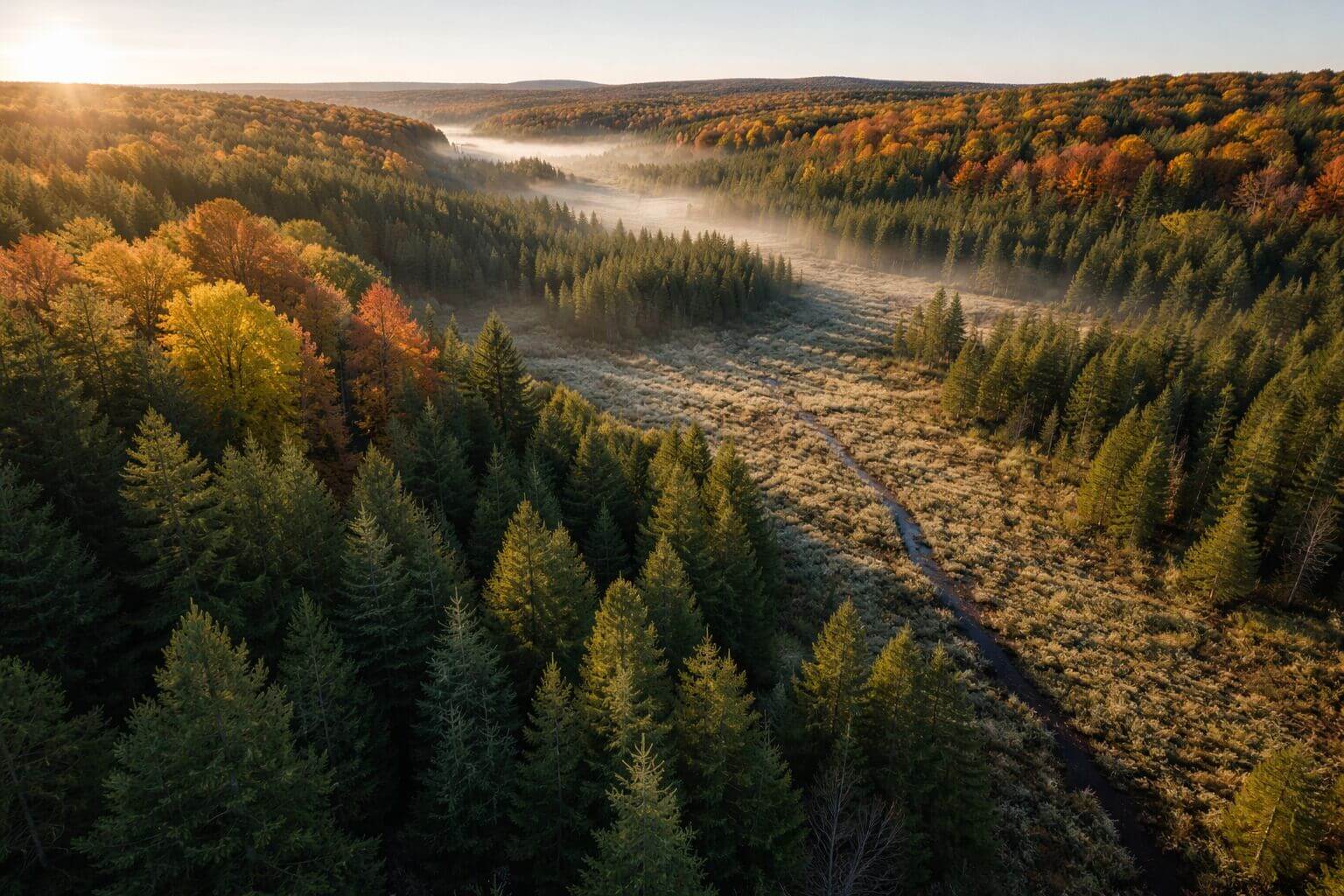
 Identifying bedding areas on Michigan hunting land is to understand where whitetails feel most secure during daylight hours — thick cover areas that provide overhead screening, multiple escape routes, and thermal protection.
The optimal bedding habitat combines approximately 50% conifer cover for thermal protection with dense escape cover like regenerating forests, brush, and warm-season grasses. Smart property buyers learn to recognize these critical habitat features because
Michigan hunting land averages $6,800 per acre with a 7.8% year-over-year increase, making bedding evaluation essential for maximizing your investment. Michigan Whitetail Properties has been helping hunters identify prime bedding habitat since 1995, and understanding bedding areas separates productive hunting properties from expensive timber.
Last October, I walked 80 acres in Ionia County with a buyer who kept asking, “Where are all the deer beds?” Problem was, we were hunting peak rut in full leaf cover — you couldn’t see bedding sign if it smacked you in the face. But I showed him what to look for: the subtle ridge fingers, the thick regeneration pockets, the way morning thermals pulled up from that creek bottom. Three months later, after the leaves dropped, he called me back. “You were right,” he said. “They’re bedding exactly where you said they would.” That property had seven distinct bedding areas we missed in October but became obvious once you knew the clues.
Michigan’s Bedding Terrain: Reading the Land Like Deer Do
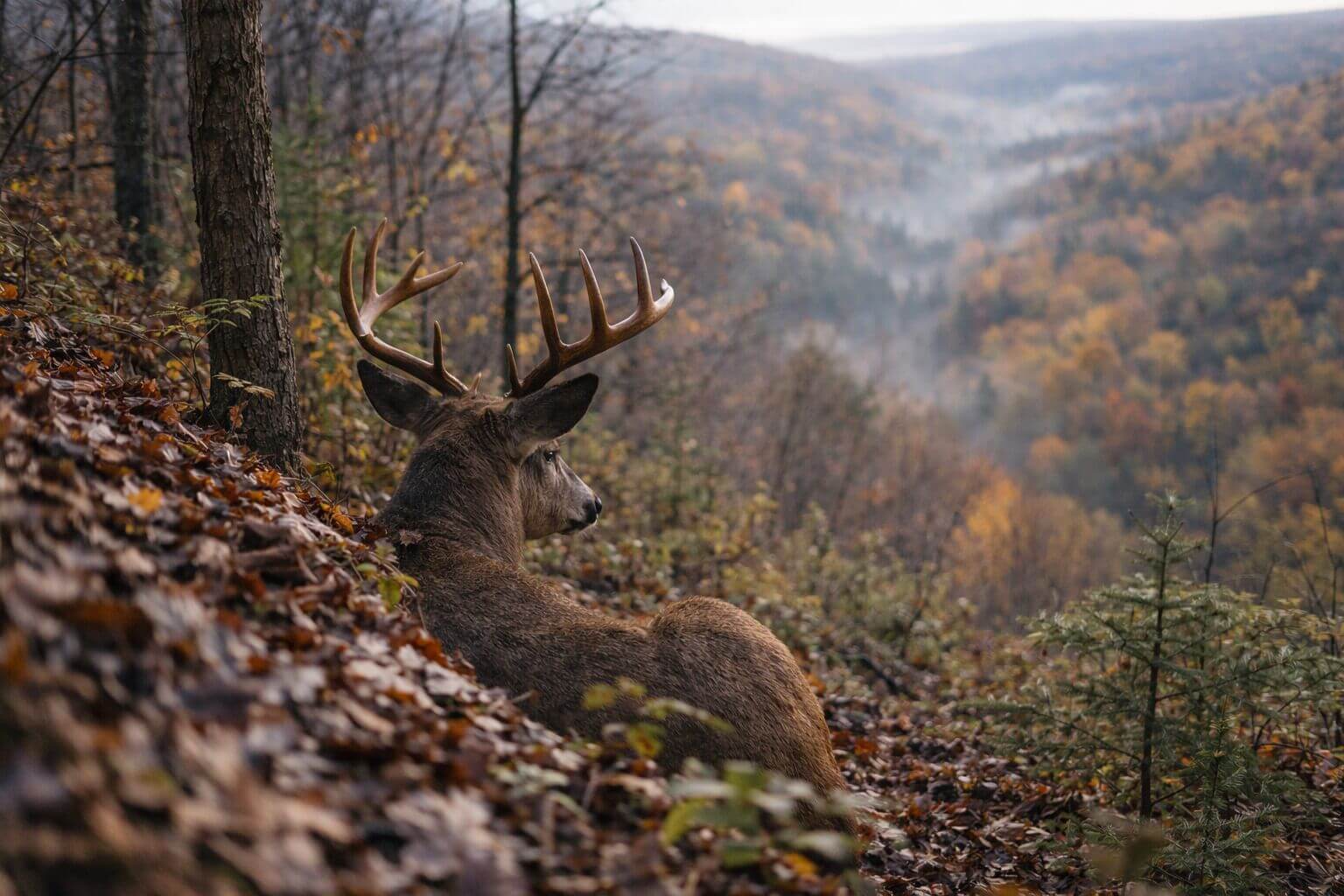 Bedding areas on Michigan hunting land follow predictable topographical patterns because whitetails choose security over convenience.
Mature bucks tend to bed in swamps or areas where other predators need to cross water to reach them, using water as a natural barrier. In southern Michigan’s rolling farmland, look for bedding on the back sides of ridges where deer can slip over the crest and disappear. These “over-the-hill” spots give deer multiple escape routes while keeping them hidden from road traffic and human activity.
Northern Michigan properties offer different bedding opportunities.
Conifer cover provides deer with shelter from snow, wind, and cold temperatures, with upland stands of eastern hemlock and northern white cedar swamps being preferred winter cover. But don’t assume summer bedding follows winter patterns —deer don’t necessarily use the same habitat or bedding areas in early fall as they do winter.
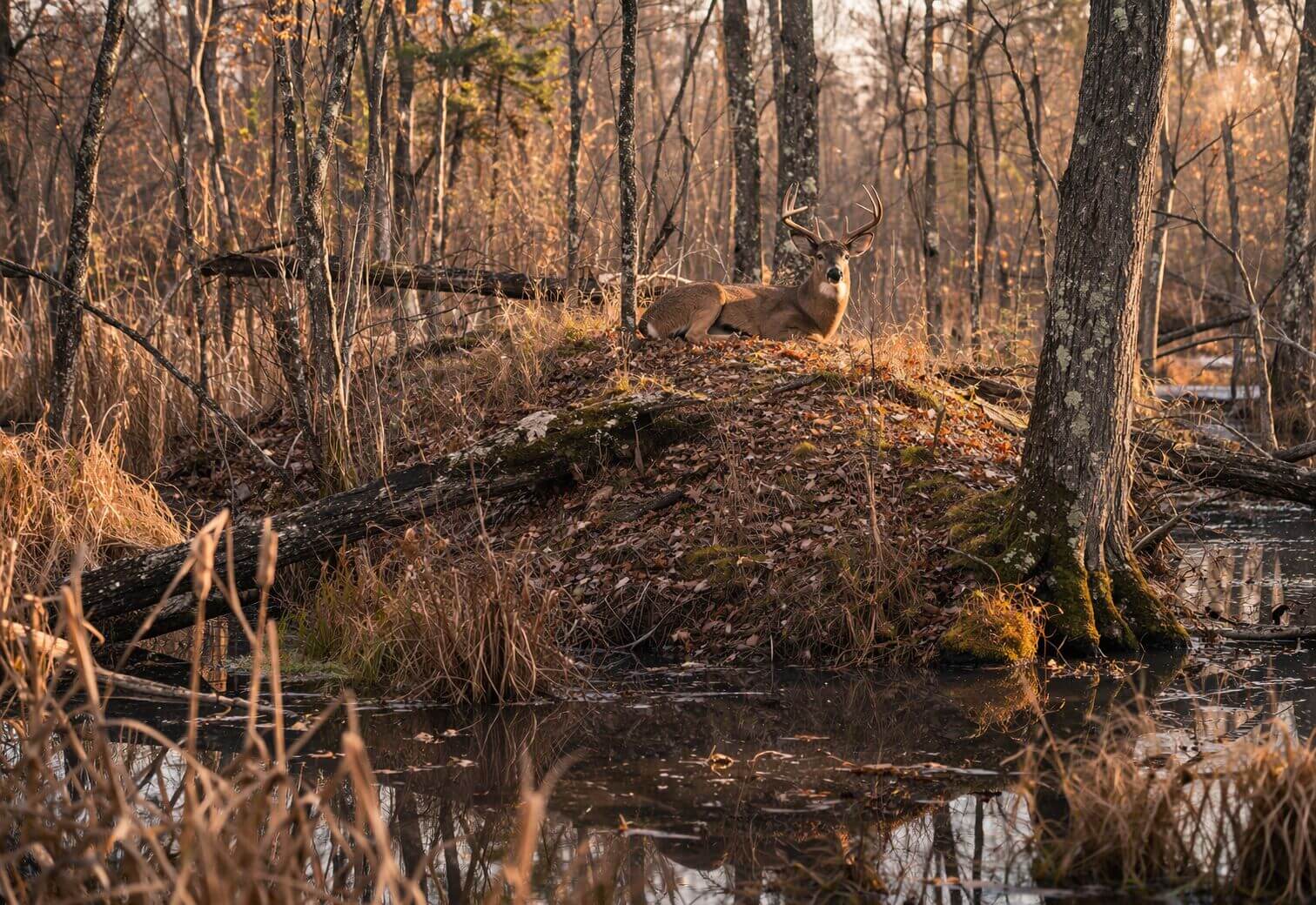
The key is identifying slight elevation changes that most people overlook. A two-foot rise in a marsh, a finger ridge extending into a swamp, even a small hummock in otherwise flat timber — these become bedding magnets when they offer the right combination of cover and visibility.
Buck bedding areas particularly stick out in snow, often showing as large oval shapes where the warmth from the deer’s body melted away snow, leaving leaves visible.
Aspect matters tremendously in bedding site selection. South-facing slopes warm faster on cool mornings, while north-facing slopes stay cooler during hot summer days. Deer adjust their bedding sites seasonally, and properties with diverse aspects hold deer year-round rather than just during specific seasons.
Identifying Thick Cover: The Bedding Foundation
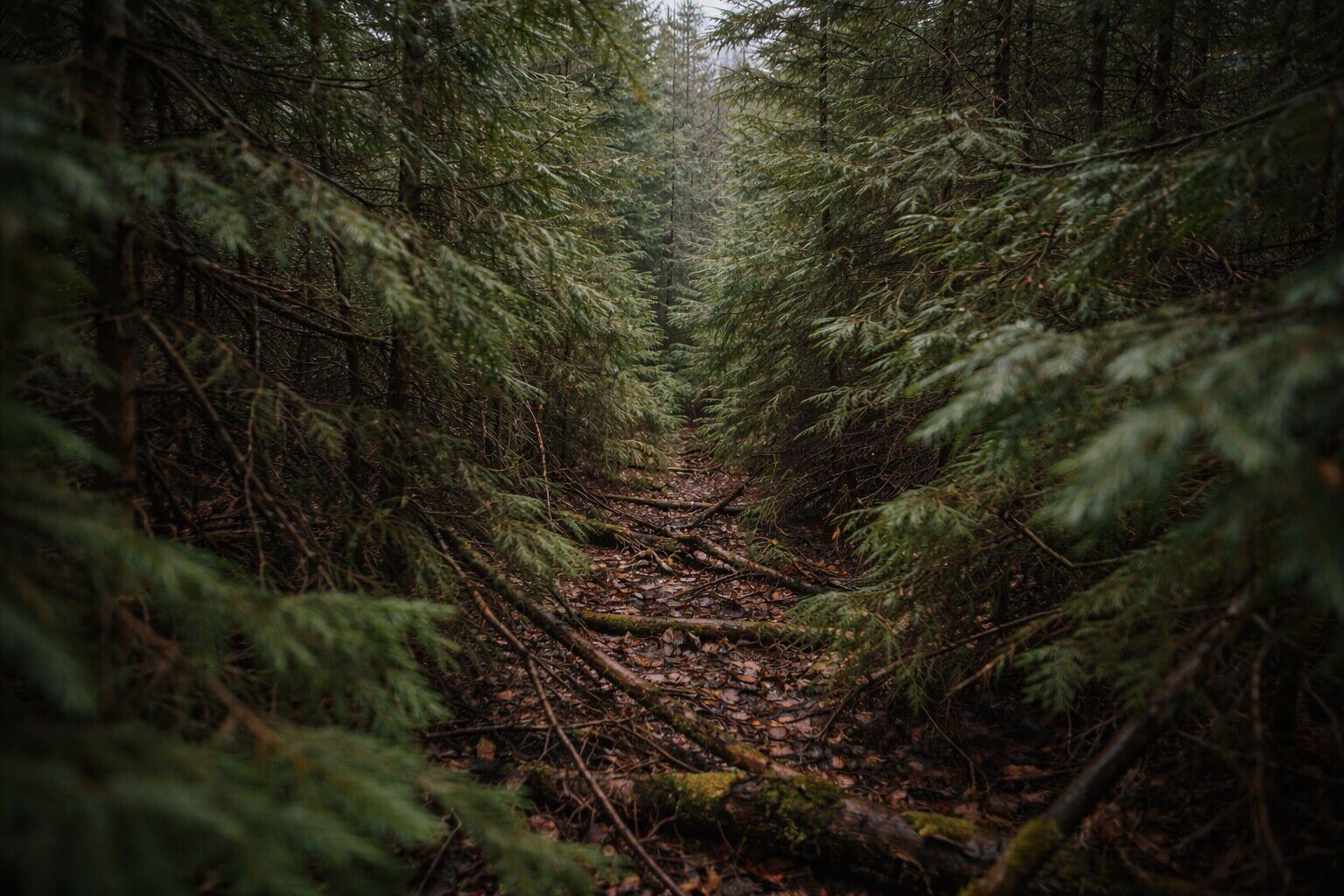
 One of the keys to prime whitetail habitat is thick, secure cover — if you don’t have desirable bedding cover on your property, the land will not hold many deer. But “thick cover” means different things in different parts of Michigan. In agricultural areas, bedding cover might be a 5-acre CRP field or a cattail marsh. In big timber country, it could be a blow-down area or young aspen regeneration.
The best cover value from evergreens comes in the form of young, dense stands of cedar or pine that grow so thick it’s hard for a man to walk through, creating superb bedding, escape, and thermal cover. But mature stands work differently — hemlock and cedar grow wider and shed less snow to a farther distance from the stem, creating lower snow depths beneath them, which is an advantage for deer.
Native warm-season grasses create excellent bedding structure when managed correctly.
Switchgrass as a base bedding structure is one of the most effective forms of cover for whitetails you can create, with properly spring-planted switchgrass usable as bedding cover in 15 months or less. However, switchgrass stands up better in winter than other warm-season grasses, though no warm season grass is ideal winter thermal cover from late December through spring.
When evaluating thick cover, walk through it — literally. If you can walk comfortably through standing timber or grass, it’s probably not thick enough for consistent bedding. Deer want cover so dense that predators (including humans) struggle to navigate quietly. Look for areas where you have to push through branches, duck under limbs, or step over fallen logs every few feet.
The magic happens when you find cover that’s thick at ground level but allows deer to see underneath while lying down.
Whitetails prefer overhead cover that they can see under while bedding but that will screen them when they rise or need to escape. This explains why deer often bed at the edges of extremely thick cover rather than in the center — they want security with visibility.
Thermal Advantage: Finding the Comfort Zones
 Thermal bedding areas provide temperature regulation that keeps deer comfortable year-round.
There are several types of cover including escape, bedding, screening, and thermal cover, with hemlock and white cedar making the best thermal cover because of their form. Understanding these thermal zones helps you identify bedding areas even in full summer vegetation.
Cool-season thermal areas include north-facing slopes, cedar swamps, and dense conifer stands. These areas stay 10-15 degrees cooler during summer heat, making them prime bedding locations from June through September. Look for deer trails leading into these cool pockets during morning hours, especially after hot nights.
Warm-season thermal areas become critical during cold weather. South-facing slopes, protected hollows, and dense brush pockets capture solar heat and block wind.
During winter, there could be a warmer thermal bedding area that concentrates deer activity in specific locations. These areas may show no summer sign but become deer magnets once temperatures drop.
Edge habitats create the most diverse thermal options. A property with both open agricultural areas and dense timber offers thermal variety that holds deer through all weather conditions. The thermal edge between a sunny food plot and thick timber creates multiple microclimates within a few hundred yards.
Wind protection plays a huge role in thermal bedding selection.
Deer use evergreens during winter as thermal cover and for shelter, sometimes yarding up in sizeable herds to await spring’s return. Properties with natural windbreaks — ridges, dense timber, or even farm buildings — concentrate bedding activity on the protected side.
Escape Routes: The Security Network
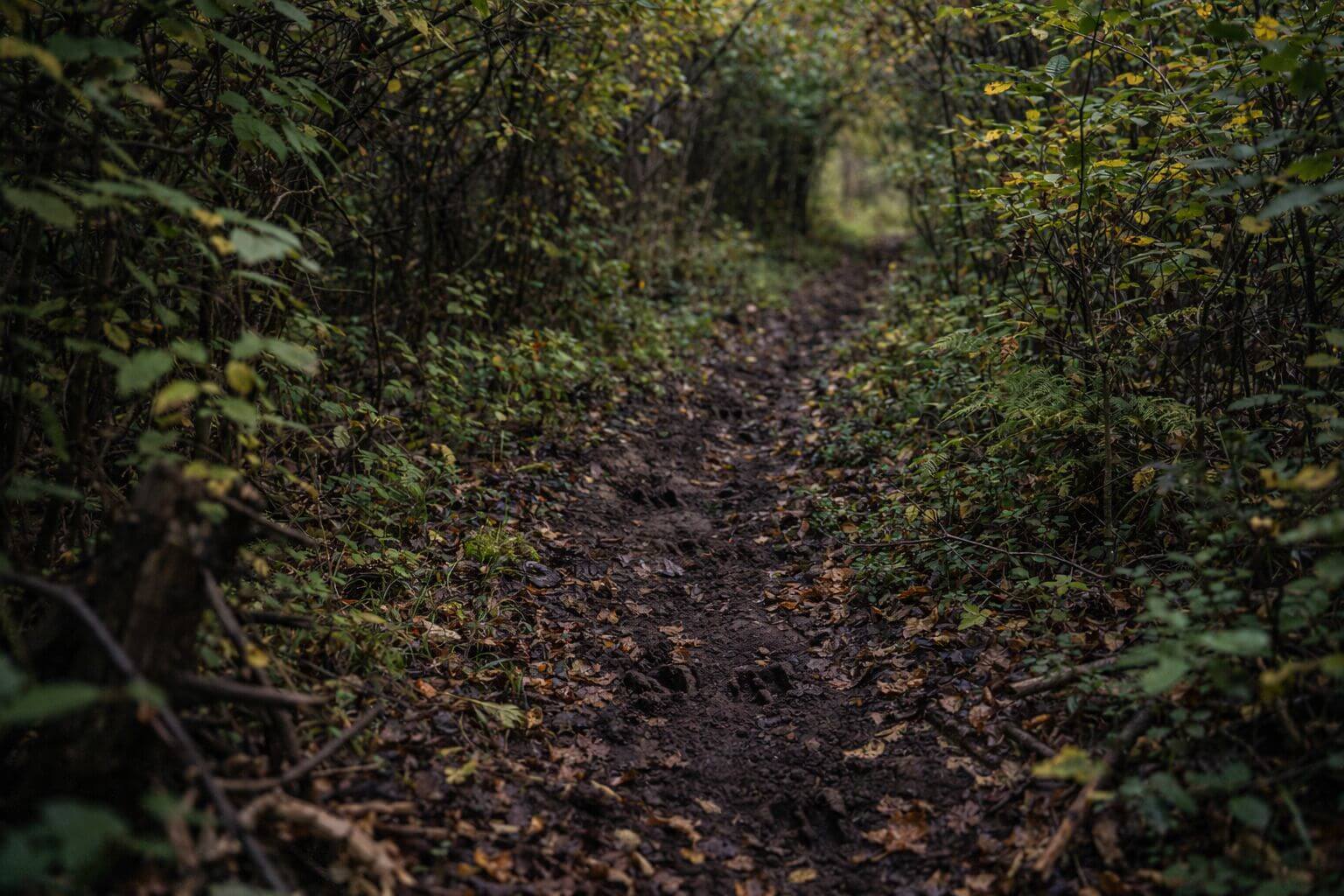 Mature whitetails, especially bucks, won’t bed anywhere without multiple escape routes. The best bedding areas offer at least three different exit strategies, allowing deer to disappear in multiple directions depending on threat location.
Bucks tend to bed out in swamps or areas where other predators need to cross water to get to them, with water keeping the majority of coyotes or humans out of an area.
Primary escape routes follow the path of least resistance — deer trails through thick cover that connect bedding areas to other security locations. These trails often follow terrain features like creek bottoms, fence lines, or the edges of thick cover. You’ll find them by looking for worn paths that seem to go from thick cover to thick cover rather than from thick cover to feeding areas.
Secondary escape routes provide backup options and often use terrain features for concealment. A ditch running through an open field, a hedgerow between two properties, or even a strip of standing corn can serve as an escape corridor. The key is identifying routes that allow deer to move unseen between bedding and feeding areas.
Water features create natural escape route systems. Creek bottoms, drainage ditches, and even small seasonal streams provide both cover and direction for escaping deer. Properties with multiple water features typically hold deer better because they offer more escape options.
Property boundaries often influence escape route patterns. Deer learn where they’re safe and adjust their movement accordingly. A property that borders public land, posted neighbors, or other low-pressure areas creates natural escape routes toward sanctuary. Understanding these boundary influences helps predict where deer will bed relative to potential hunting pressure.
Stem Density and Visual Screening
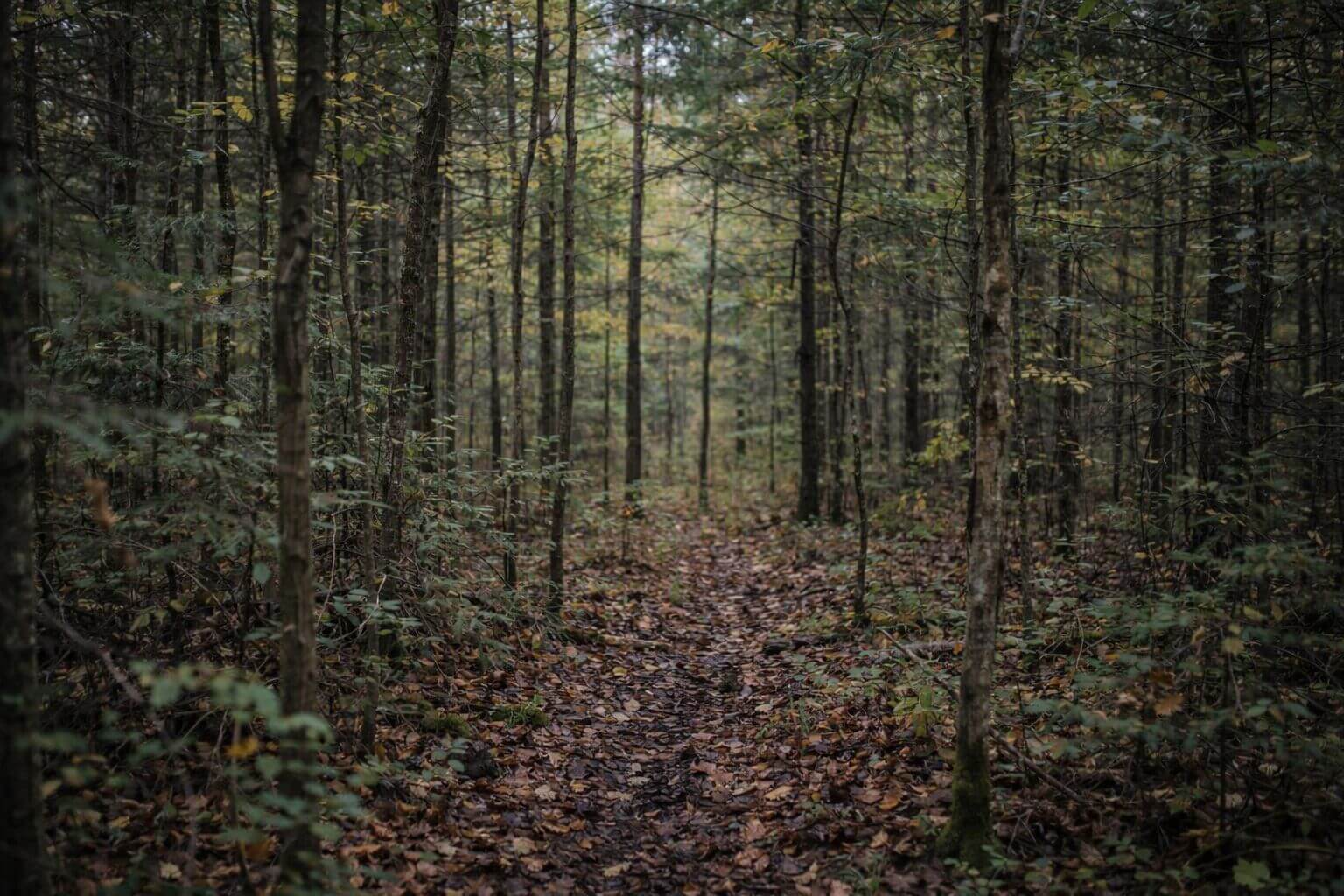 Spruce keep their branches better than pine or fir, but this depends on stem density— the number of trees, shrubs, or grass stems per acre. Proper stem density creates visual screening while still allowing deer to move comfortably through bedding areas.
In timber areas, stem density between 200-400 trees per acre provides optimal bedding conditions. Too few trees leave deer exposed; too many trees prevent comfortable movement and create claustrophobic conditions that deer avoid. The sweet spot allows deer to see approaching danger while remaining hidden from predators.
Deer have problems with excessively thick switchgrass, so when creating switchgrass bedding areas, avoid heavy planting rates that create jungle-like conditions. Native grass bedding works best when stem density allows deer to walk through naturally without forcing their way through solid walls of grass.
Natural regeneration often creates ideal stem density without human intervention. Logged areas, old burns, or areas of natural tree mortality typically regenerate at stem densities that deer prefer for bedding. These areas require 3-7 years to develop optimal density, but they often become the most-used bedding areas on the property.
Managing stem density requires understanding deer behavior patterns. Areas with too much density can be improved through selective cutting or burning, while areas with too little density benefit from protection that allows natural regeneration to thicken the cover.
Hunting Pressure and Bedding Location Shifts
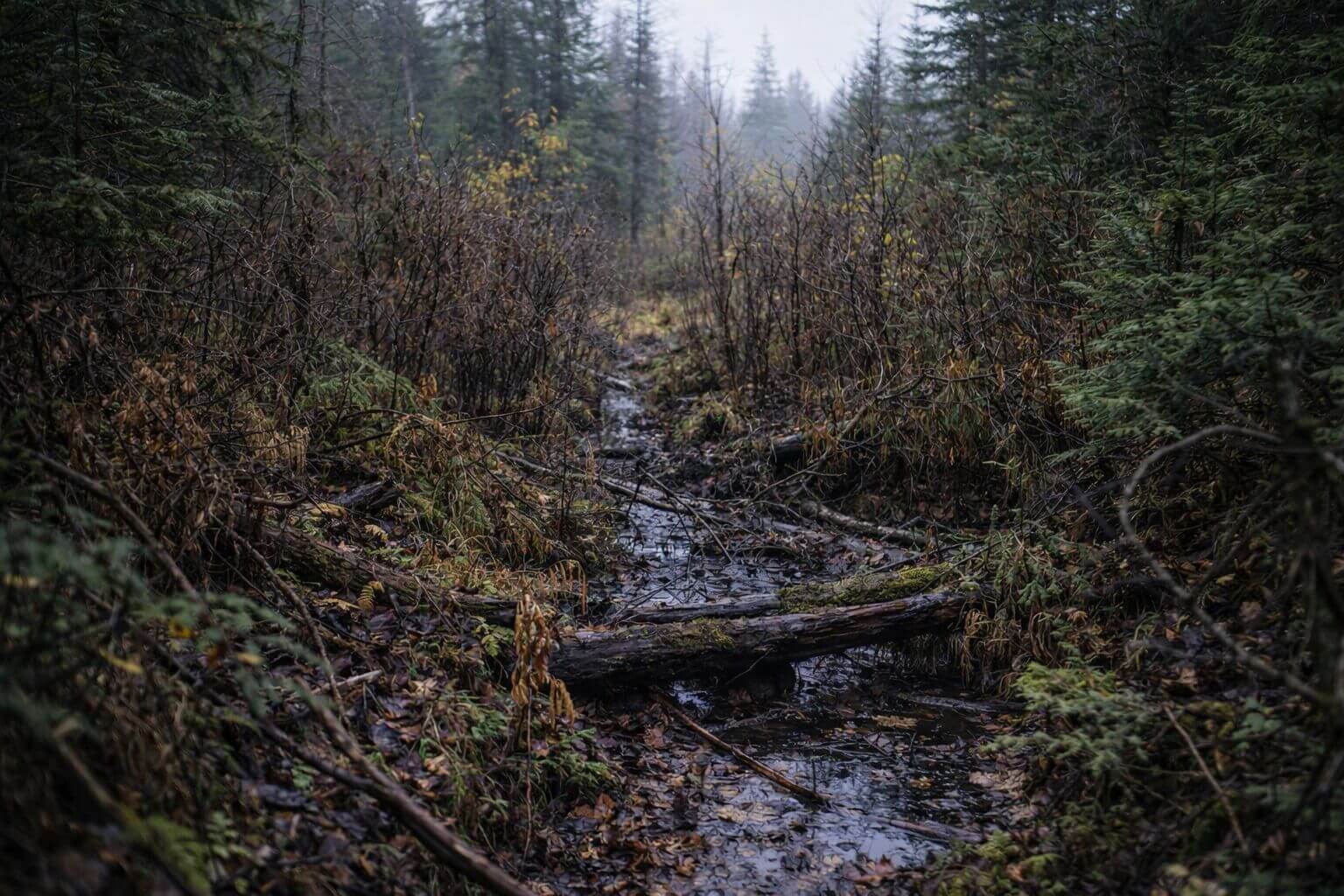 Hunting is the primary tool used to manage deer populations in Michigan, and hunting pressure dramatically influences bedding area selection. Deer adjust bedding locations based on pressure patterns, often abandoning preferred areas after just one or two hunting encounters.
Primary bedding areas get used during low-pressure periods — early season, midweek, or during weather events that keep hunters home. These areas offer the best combination of security, comfort, and proximity to food sources. They’re usually the easiest bedding areas to identify because they show the most sign and activity.
Secondary bedding areas serve as backup locations when primary areas receive pressure. These areas might be less comfortable or farther from food, but they offer maximum security. Mature bucks, in particular, have multiple backup bedding locations that they rotate through based on pressure levels.
Sanctuary bedding areas remain unused except during high-pressure periods like opening weekend of firearm season or heavy rut hunting pressure. These ultra-secure locations often seem unsuitable for bedding — too thick, too wet, or too remote — but they keep deer alive during maximum pressure periods.
Understanding pressure patterns helps predict bedding area usage.
As of 2025, hunters reported 31,757 deer harvests including more than 9,000 during archery season, showing that Michigan maintains active hunting pressure that influences deer behavior statewide.
Seasonal Bedding Pattern Changes
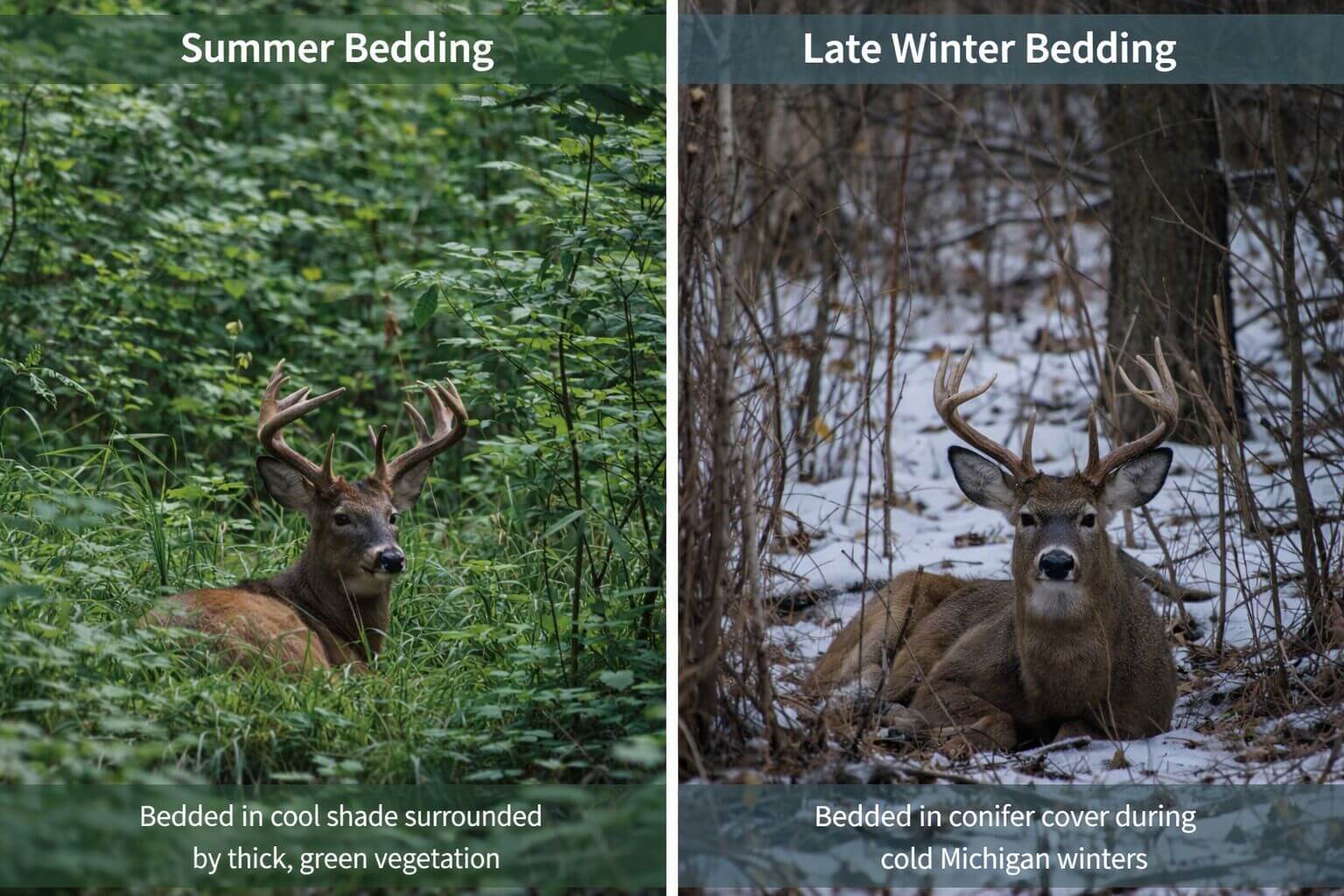 Wintering habitat is not the same as fall or summer habitat — deer don’t necessarily use the same bedding areas in early fall as they do winter. Smart property evaluation identifies bedding areas for all seasons, not just during hunting season.
Summer bedding prioritizes cooling and insect relief. North-facing slopes, breezy ridges, and areas near water provide relief from heat and bugs. These areas might show little activity during fall hunting season but hold deer consistently during hot weather.
Fall bedding focuses on proximity to food sources and rut activity. As food sources change from summer browse to fall mast crops, bedding areas shift accordingly. Oak ridges become primary bedding locations during acorn drops, while bedding near standing crops increases as harvest approaches.
Winter bedding emphasizes thermal protection and energy conservation.
In northern climates with abundant snowfall and long sub-freezing temperatures, deer concentrate in ecologically distinct wintering complexes, with the amount of food and shelter present determining the capability to support deer during winter.
Spring bedding combines security with access to new browse growth. As vegetation leafs out, bedding areas shift toward areas with emerging browse while maintaining security from predators. Doe bedding becomes particularly important during fawning season from late May through June.
Property Layout and Bedding Area Relationships
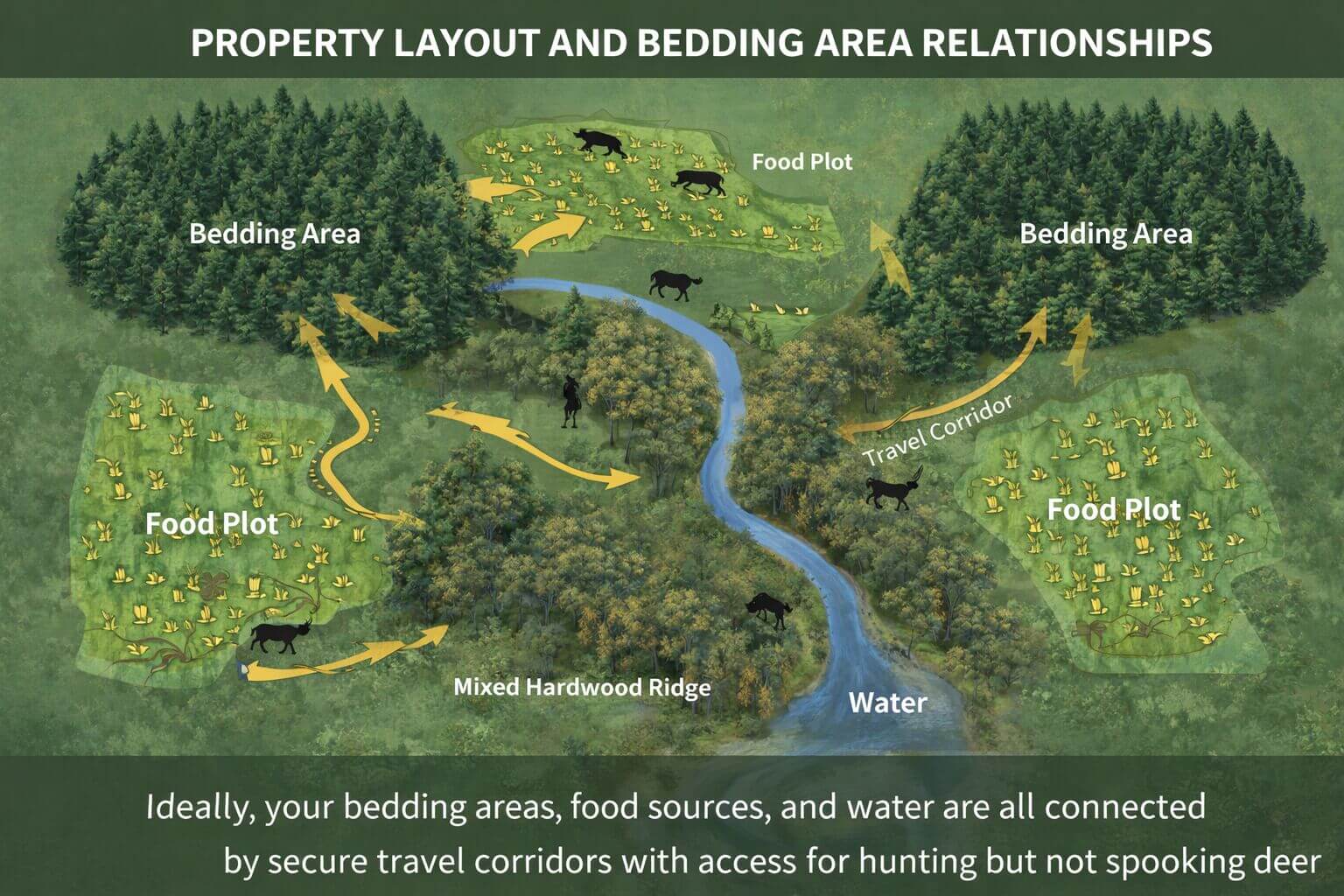 The best hunting properties create bedding area systems rather than isolated bedding spots.
Outstanding deer bedding cover includes grass, shrub, conifer and hardwood regeneration — if you can get at least 3 of those 4 cover habitats to grow in one location, you’re well on your way to promoting outstanding wildlife bedding cover.
Bedding area proximity to food sources influences usage patterns significantly. Bedding areas within 200-300 yards of food sources get heavy use, while bedding areas more than half a mile from food often remain unused except during high-pressure periods. The relationship between bedding and feeding creates the property’s hunting potential.
Travel corridor connections between bedding areas create huntable funnels and pinch points. Properties with multiple bedding areas connected by natural travel routes offer more hunting opportunities than properties with isolated bedding pockets. Understanding these connections helps identify stand locations and property development priorities.
Water access influences bedding area selection, especially during drought periods. Bedding areas within 200 yards of reliable water sources typically hold deer better than areas requiring longer travel to water. This relationship becomes critical during late summer and early fall when natural water sources dry up.
Property boundaries affect bedding area security levels. Bedding areas adjacent to low-pressure neighbors or public land feel more secure to deer than bedding areas surrounded by high-pressure hunting properties. This boundary influence helps predict which bedding areas will hold deer under pressure.