published: April 1, 2026
Neighbor pressure on hunting land in Michigan is the level of hunting and human activity happening on the properties around a parcel, and it can change how that land hunts just as much as habitat, access, or acreage. In a state where 604,088 deer hunters purchased licenses in 2024, with 74,070 of them youth hunters, pressure on neighboring ground is not some minor detail—it is part of the property itself. Michigan Whitetail Properties has been walking land across all 83 counties since 1995, and one of the most common mistakes we see buyers make is evaluating only what sits inside the boundary lines. The right 40 acres in Hillsdale County or Newaygo County can hunt bigger than it looks if it’s buffered by smart neighbors. The wrong 80 can feel small in a hurry if it’s getting leaned on from three sides. Before you buy Michigan hunting land, you need to understand not just the parcel, but the neighborhood around it.
There’s a situation we’ve seen play out more times than we’d like.
A buyer finds a property that checks the obvious boxes. Good cover. Decent access. Maybe a secluded food plot. Maybe a creek. The aerial looks right, the showing feels right, and the place has that little spark you want it to have.
Then the first season rolls around.
Trail cameras show deer, but mature bucks are mostly nocturnal. Early movement dries up. The edge cover looks good, but the property never quite settles in. That’s usually when the real question shows up: what are the neighbors doing?
That question matters in Michigan more than a lot of buyers realize. We are not shopping in a vacuum here. We are buying into real hunting neighborhoods—southern Michigan ag country, west-central timber blocks, UP transition ground, mixed parcel layouts, weekend hunters, locals, out-of-state buyers, family land, small-acreage pressure pockets. Every one of those changes how deer use your place.
And that’s the point of this article. Not to make buyers paranoid. Just sharper.
Neighbor Pressure on Michigan Hunting Land Is a Property Feature, Not a Footnote
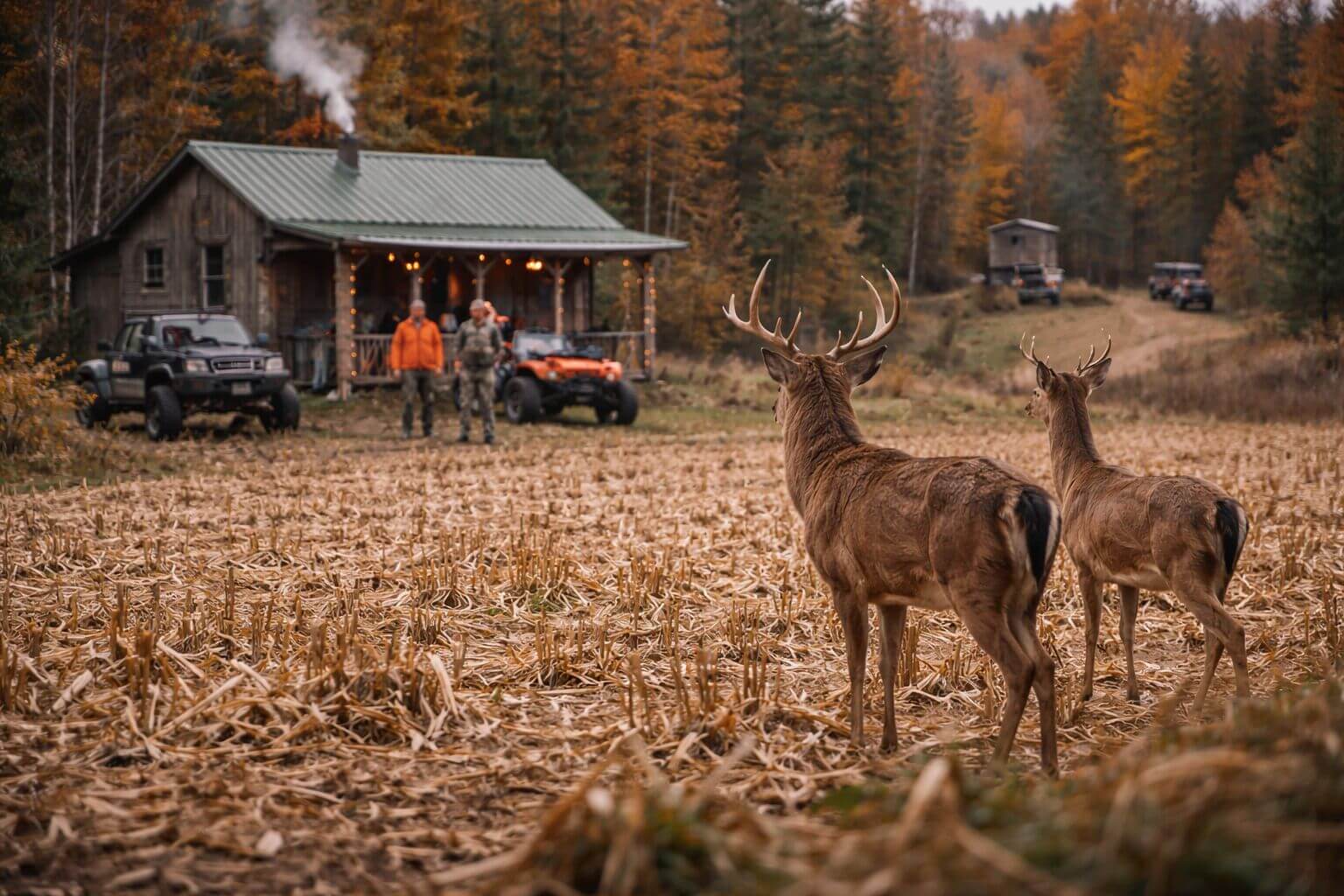 Neighbor pressure is the level of hunting activity, access, movement, and general disturbance happening on the parcels surrounding yours. That includes who is hunting, how often they’re hunting, how they access the woods, whether they’re baiting where legal, whether they’re driving deer, riding ATVs, slipping in quietly, or tromping through the same trail every Saturday morning.
Whitetails don’t care about ownership maps. They care about security.
That is why two Michigan properties with similar habitat can perform completely differently. One may sit next to lightly hunted timber and disciplined neighbors who pass younger bucks. Another may be bordered by multiple small parcels with frequent entry, line-sitters, and pressure from every wind. On paper, they can look close. In the woods, they are not close at all.
This is especially true in parts of southern Lower Michigan where smaller parcel sizes, road density, and mixed ag-to-woodlot layouts can compress deer movement. It also shows up in west-central and northern Lower Peninsula markets where large timber tracts look quiet until you realize every two-track is an access route during season.
If the land around your parcel gets hit hard, deer usually respond in one of three ways. They shift movement later into the night. They relocate bedding into safer pockets. Or they use your property differently than the map suggests they should. That can help you or hurt you. But either way, you need to know it before you buy.
How to Evaluate Neighbor Pressure Before Buying Hunting Land in Michigan
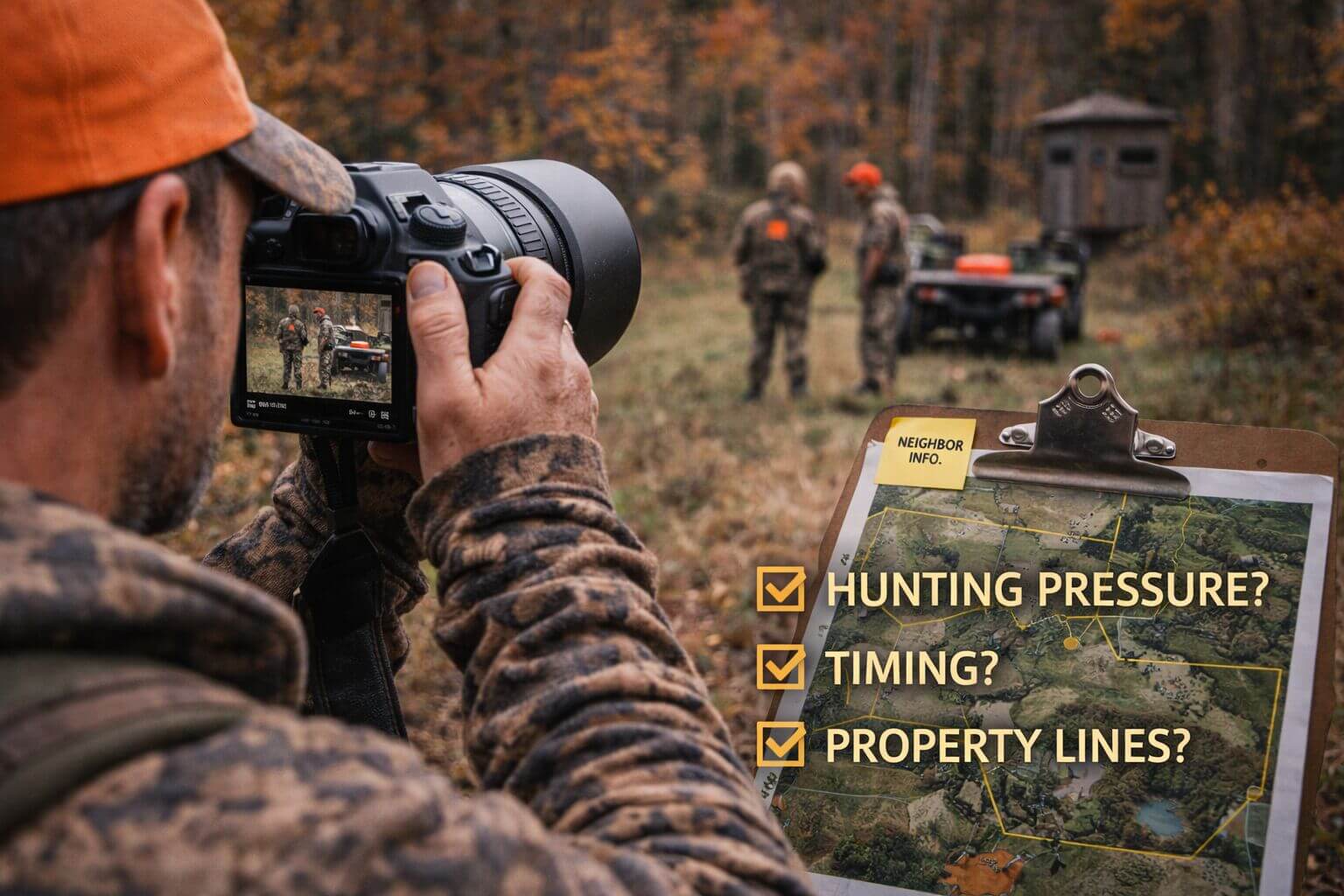 The best buyers do not just inspect the parcel. They inspect the pressure pattern around it.
That starts with one simple mindset shift: stop asking only, “What does this property have?” Start asking, “How will deer move through this property once surrounding landowners start hunting it?”
That question changes everything.
Start at the Borders, Not the Center
When we walk a parcel, we pay special attention to the edges first. Not because the middle does not matter. Because pressure almost always reveals itself at the borders.
Look for ladder stands, hang-ons, box blinds, trimmed shooting lanes, fresh boot tracks, ATV tracks, and repeated access points near the lines. One setup on a neighbor does not mean trouble. Three setups on one boundary tell a story.
A lot of buyers get distracted by the best-looking interior habitat. Meanwhile, the line is what explains why that bedding area has never really produced daylight buck movement.
We have seen this in counties like Jackson, Calhoun, and Allegan, where good-looking cover can get hunted from multiple directions because parcel splits and road access make it easy. We have seen it in Newaygo and Osceola counties too, where large timber can feel remote until you realize adjoining owners have established access trails that put boots or wheels in the woods every weekend.
Read Human Sign Separately From Deer Sign
Buyers are usually pretty good at spotting deer sign. They are less consistent at reading human sign.
That is a mistake.
A wide packed trail with repeated side-by-side or ATV use means something different than a faint deer trail. Fresh cut shooting lanes mean something. Flagging tape means something. Permanent blind bases mean something. A parking pull-off on a seasonal road means something.
Heavy human use does not automatically ruin a property. But it changes how deer use cover, especially when access is noisy or unpredictable.
In Michigan, that matters because hunter participation is still large. The DNR reported 604,088 total deer hunters in 2024, and although that is down 31% from 1995, it is still a lot of people in the woods every fall. In other words, there may be fewer hunters than there used to be, but pressure is far from gone—especially in areas near population centers or on heavily parcelized recreational ground.
Notice the “Dead Edge” Effect
This is one of those things that is hard to describe until you’ve walked enough land.
Sometimes a property edge just feels empty. No fresh browse. No meaningful tracks. No recent droppings. No confidence in the cover. It feels like deer are skirting it, not using it.
A dead edge often means one of two things. Either the habitat is weak, or pressure is coming from that side. If the habitat looks usable and deer still are not comfortable there, pressure becomes the more likely explanation.
That does not always kill the deal. Sometimes it just tells you where the safe side of the farm is. But it is a clue, and good buyers treat clues like clues.
The Best Ways to Check Neighbor Pressure Without Crossing the Line
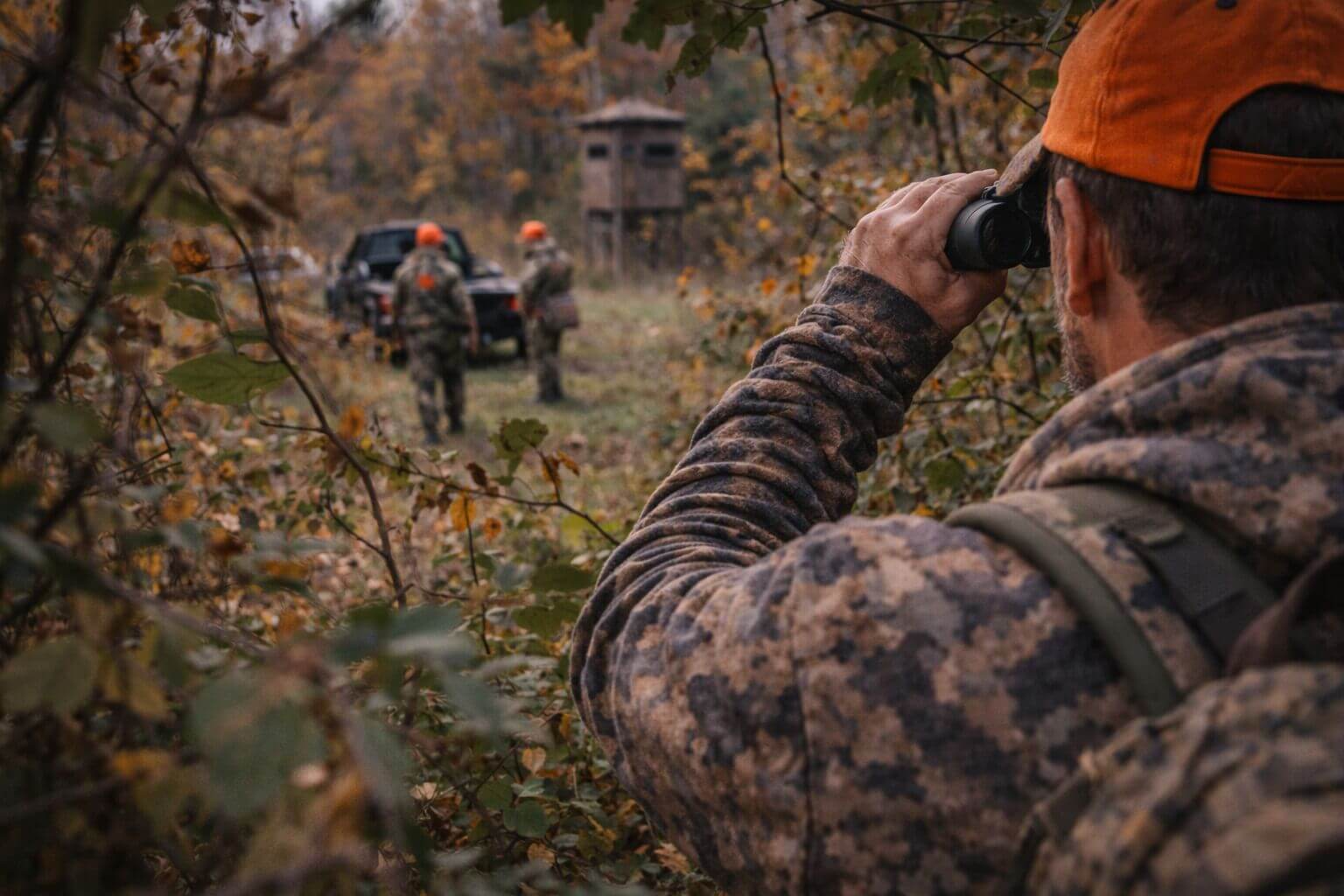 You do not need to trespass to get a strong read on surrounding hunting pressure. You just need to be deliberate.
Use Aerials Like a Hunter, Not Just a Buyer
Most buyers pull up an aerial and look for food, cover, water, and access on the parcel they are considering. That is fine as far as it goes. The better move is to expand out and study the neighboring tracts the same way.
Look for ag fields, hidden food plots, interior access routes, logging cuts, creek crossings, open gates, parked equipment areas, and likely stand trees on adjoining parcels. Ask yourself a simple question: if this were my ground, how would I hunt it?
That exercise is worth more than people think. It helps you find likely entry routes, morning pressure zones, evening sits, and places where neighboring hunters may be targeting deer leaving your cover.
County parcel and GIS mapping tools are useful here too, especially for boundary context, parcel shape, frontage, and access relationships. In Michigan, shape matters. A square 40 with limited road exposure often behaves very differently from a long narrow 40 with multiple vulnerable edges.
Drive the Roads More Than Once
This is one of the most underused steps in the buying process.
Drive the surrounding roads. Then drive them again.
Do it on a weekday. Do it on a weekend. Do it in the evening. Do it during deer season if timing allows. You are not looking for one dramatic red flag. You are looking for pattern.
You might see trucks parked at pull-offs. Access trails beat into the ditch line. Blinds visible from the road. Fresh tracks in snow or mud. Open gates that suggest recurring use. Small things add up.
This matters even more in Michigan because season timing concentrates activity. The DNR’s deer season structure creates predictable windows when hunter movement increases, and harvest reporting rules now require successful deer harvests to be reported within 72 hours. That does not tell you where neighbors hunt, but it is a reminder that fall pressure in Michigan is structured, real, and measurable.
Visit at More Than One Time of Year
A summer showing can hide a lot.
In July, the woods are green, pressure is low, and nearly every parcel feels peaceful. By late October or November, the same place may reveal access tracks, noise, edge pressure, and patterns that never show up in listing photos.
That is why we like multiple visits whenever the timeline allows. A leaf-on visit helps you understand screening cover and summer feel. A fall or winter visit helps you understand real-world access, visibility, and how close neighboring activity actually is.
Snow is especially honest. Snow shows you entry. It shows you crossing points. It shows you where deer are avoiding and where people are pushing.
Questions Smart Michigan Land Buyers Ask Before They Make an Offer
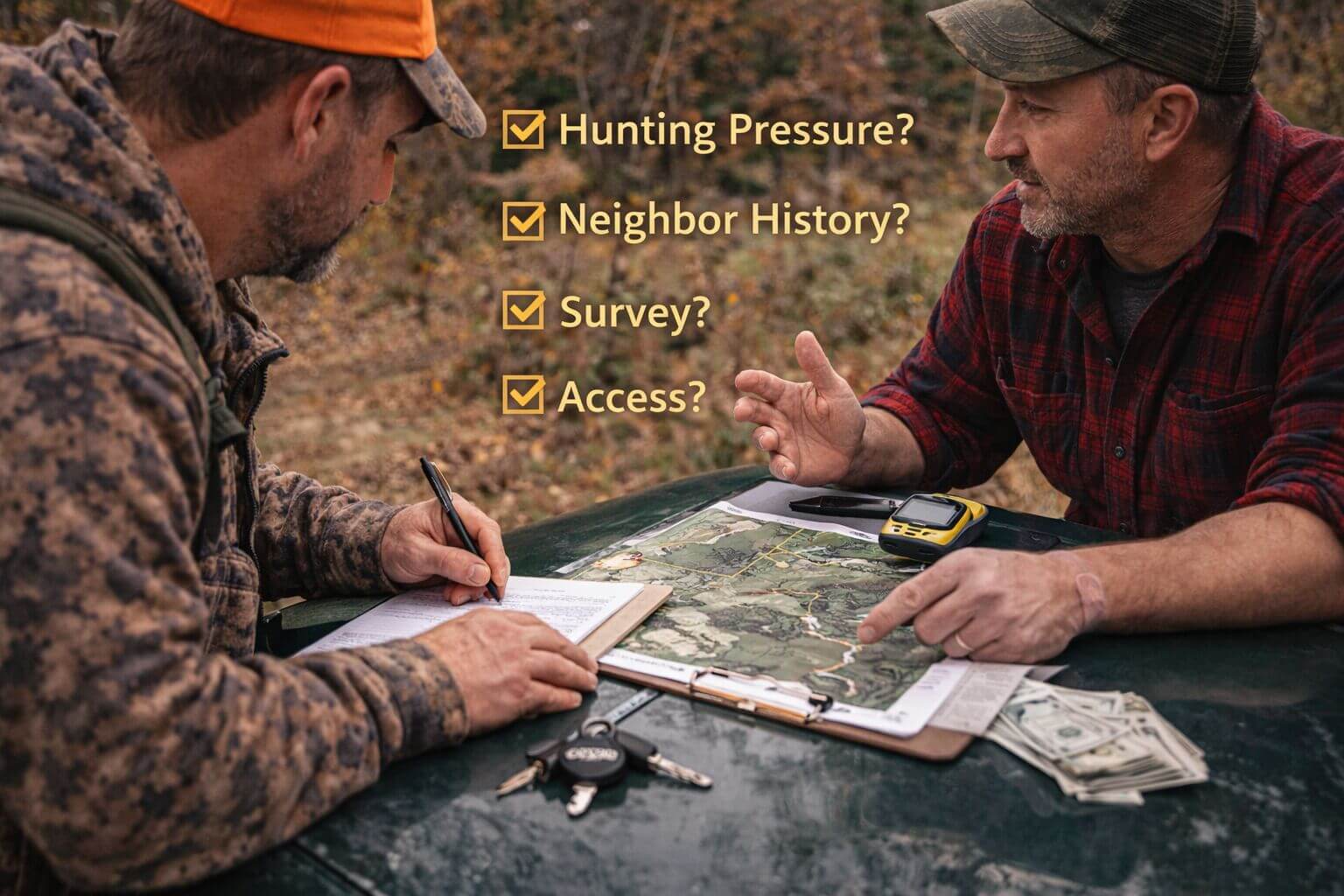 Most buyers ask about taxes, survey work, easements, and acreage. They should. But on a hunting property, pressure questions are just as important.
Ask the Seller Specific Questions
Do not ask, “Is there much pressure around here?” That is too broad, and it invites a soft answer.
Ask questions like these instead:
- How are the neighboring parcels typically hunted during archery and firearm season?
- Where do you usually see the most border activity?
- Do mature bucks daylight here consistently, or mostly after dark?
- Have surrounding ownership patterns changed in the last few years?
- Have nearby parcels been split, logged, or newly developed?
Those questions tend to produce better answers because they are grounded in observation, not opinion.
Talk to Neighbors if the Opportunity Is Natural
A quick driveway conversation can tell you a lot. Not because people always say everything directly, but because they often tell you more than they realize.
You may learn whether they hunt every weekend, whether they manage for age structure, whether family and guests pile in during firearm season, or whether they mostly leave the back forty alone.
That is useful. So is tone.
Neighbors who care about stewardship and hunting discipline usually sound like it. Neighbors who treat every season like a four-wheeler parade usually sound like that too.
Work With Someone Who Knows the Local Pattern
This is where local experience matters more than any app.
There are areas in Michigan where neighboring pressure is usually manageable and areas where it tends to stack up. There are counties where small-acreage line pressure is common. Others where large timber creates plenty of room if access is controlled. There are neighborhoods where adjacent owners cooperate, share habitat goals, and collectively raise the quality of every parcel around them.
Michigan Whitetail Properties has been in those conversations since 1995. That matters when a buyer is trying to decide whether a parcel in Hillsdale County, Montmorency County, or Menominee County is truly set up to hunt the way it looks like it should.
Not All Neighbor Pressure Is Bad for Michigan Deer Hunters
 This is where the conversation gets more honest.
Pressure is not always negative. Sometimes it is exactly why a property hunts well.
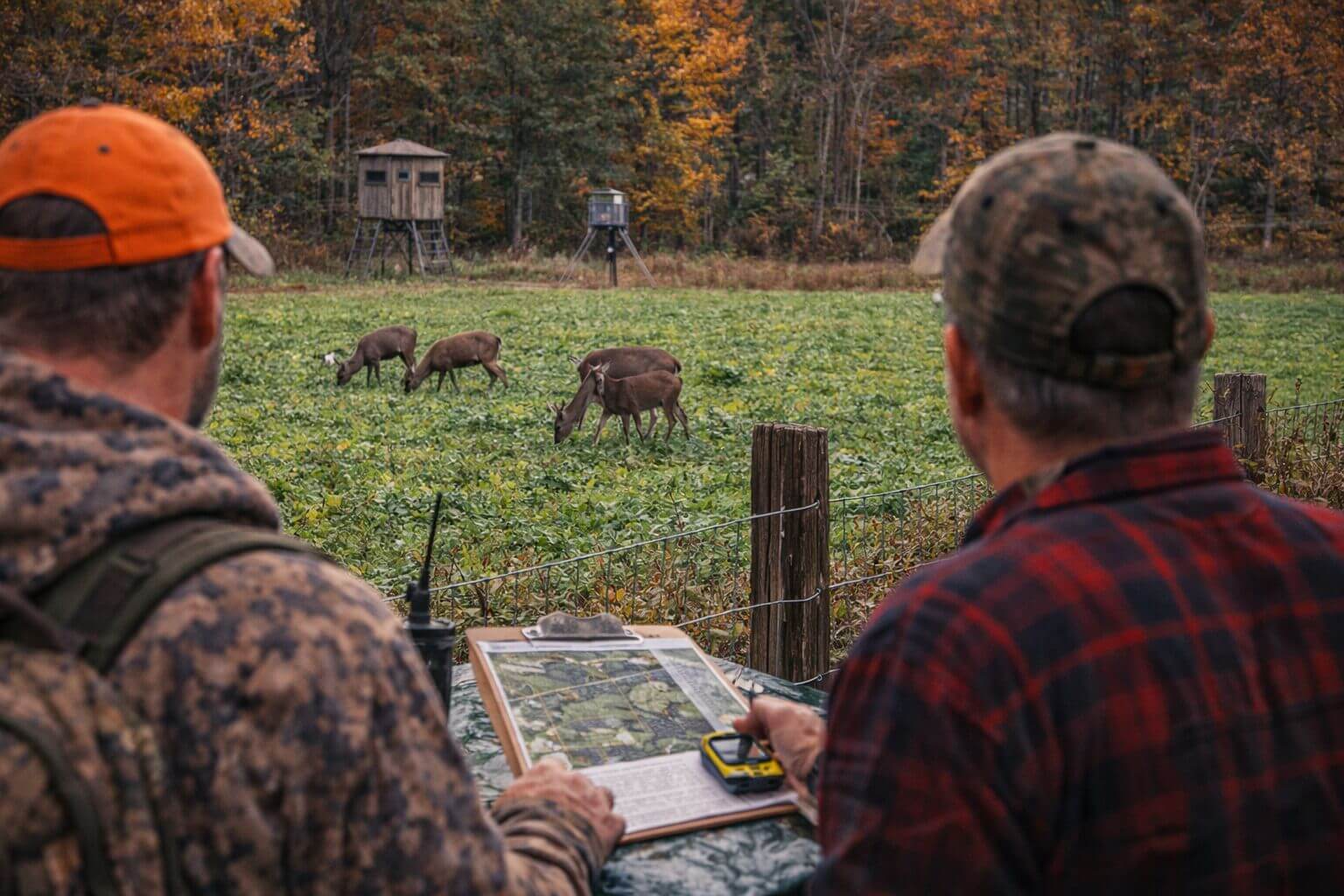
If surrounding parcels are hunted aggressively and your property offers quieter access, better bedding, thicker security cover, or a more controlled approach, deer may use your place as a refuge. In that case, neighboring pressure can create predictable movement into your farm.
We have seen average-looking Michigan properties outperform prettier ones because they were positioned between pressure and security. The habitat on paper was not elite. The setup was.
That is why context matters so much. Pressure is only a problem if your property cannot absorb it, redirect it, or benefit from it.
Managed neighbors are the gold standard. If adjoining owners pass young bucks, limit intrusion, and improve habitat, the entire neighborhood gets stronger. It is hard to overstate how valuable that is when you are buying for long-term enjoyment and long-term resale.
Red Flags That Should Slow You Down Before Buying
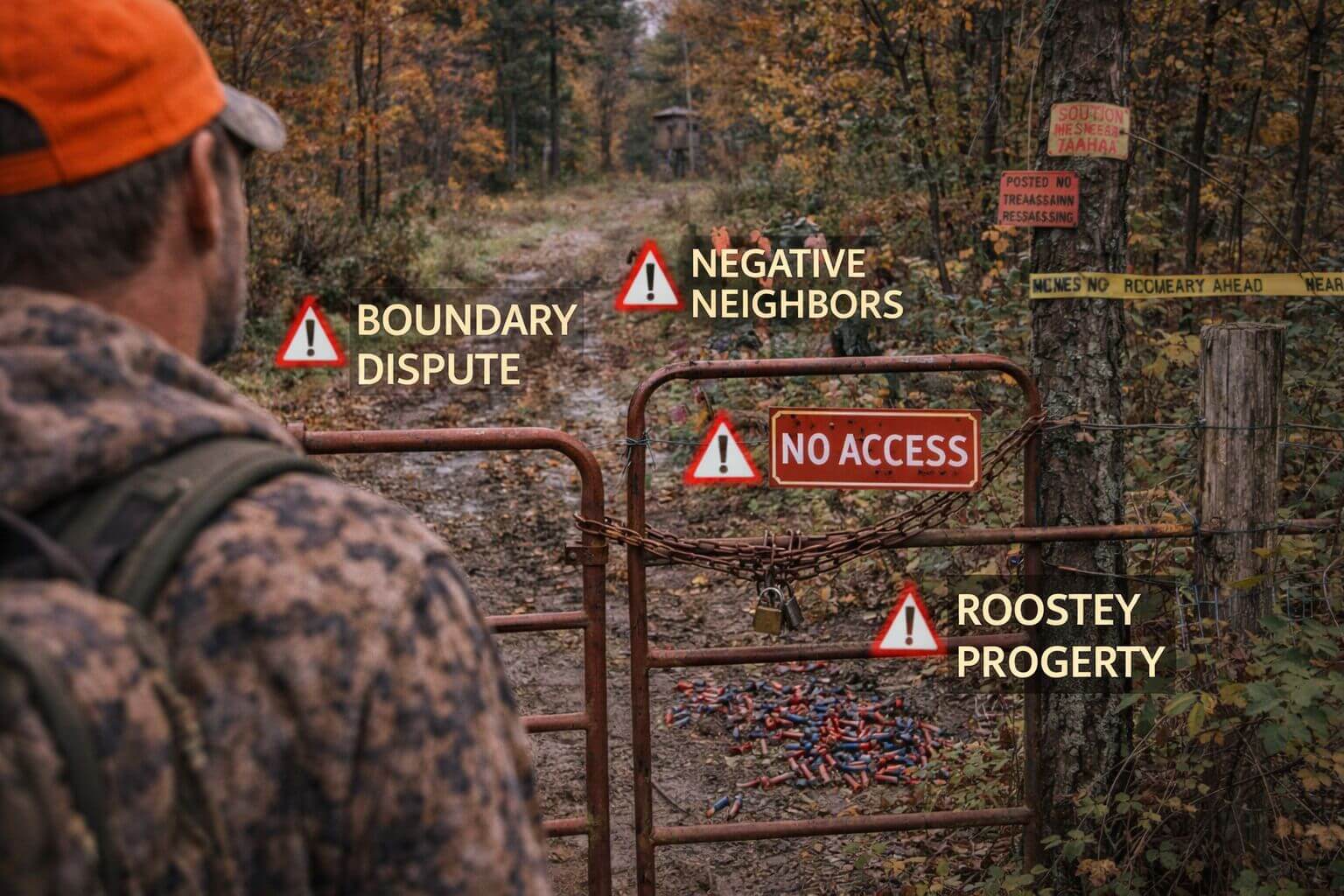 A few warning signs do not automatically kill a deal. But they should change your diligence.
Multiple stands or blinds lining the same border is one.
No secure bedding on your side of the line is another.
Consistent ATV activity near key cover is another.
So is a parcel shape that gives you very little control over access and wind. A narrow tract with several vulnerable edges may hunt smaller than its acreage, especially in a busy neighborhood.
And for out-of-state buyers, there is another practical layer: money. Michigan’s current deer license pricing is still relatively accessible for residents at $40 for a resident deer combo, but nonresidents pay $190 for a deer combo. That means many nonresident buyers are investing serious money before they ever hang a stand. Paying that much to discover your “dream parcel” gets hammered from three sides is a bad lesson to learn after closing.
How Neighbor Pressure Affects Long-Term Value
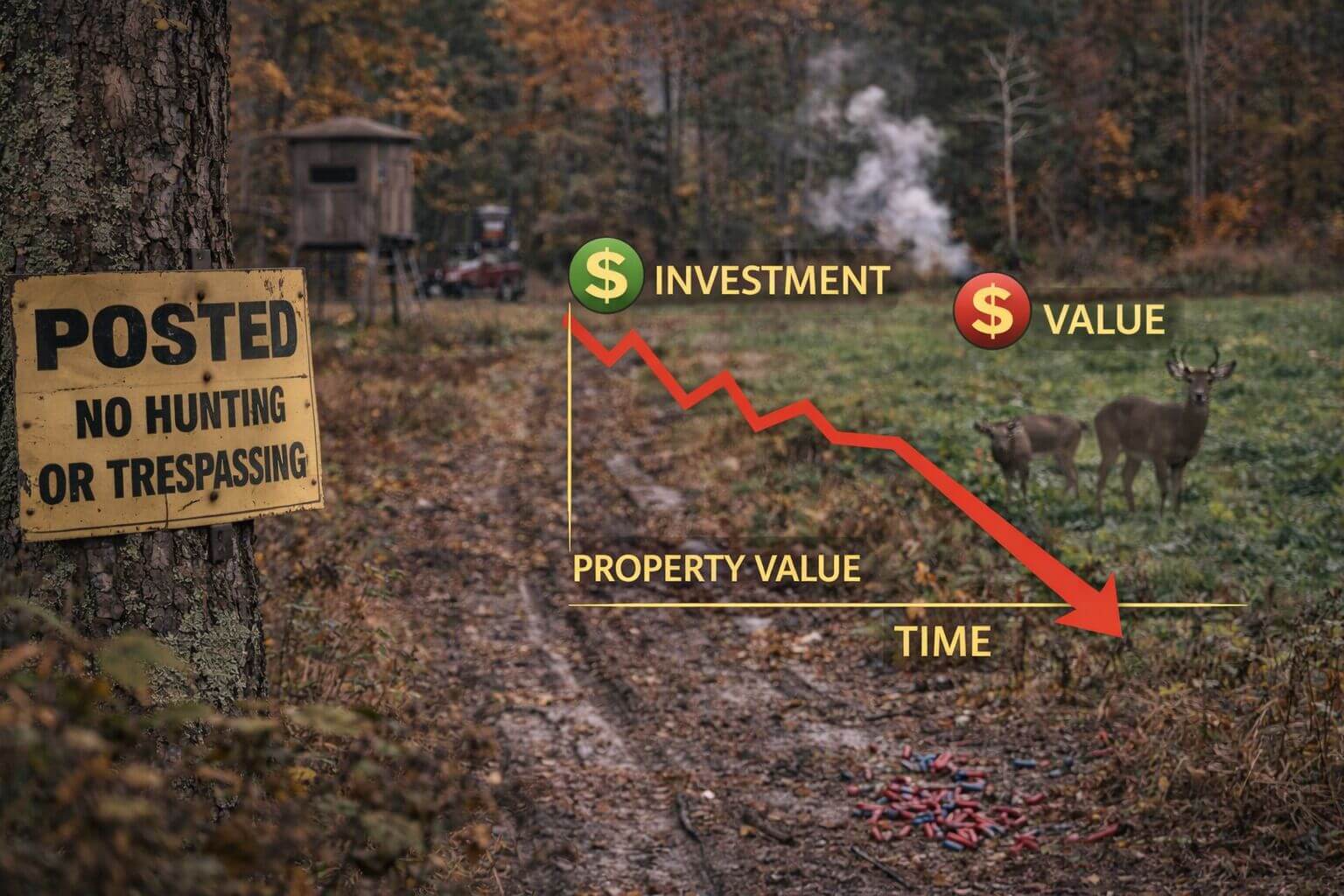 This is not just a hunting-performance issue. It is a resale issue.
Properties that hunt consistently, feel secure, and produce predictable movement tend to hold buyer interest better over time. Properties that look good online but feel pressured in person usually do not create the same confidence.
Buyers remember how a farm feels.
They remember whether the back side held deer sign. They remember whether three neighboring blinds were staring into the bedding cover. They remember whether the place felt calm or compromised.
That becomes part of value.
Not always in a clean price-per-acre formula. But in demand, marketability, and how quickly serious buyers engage when the property hits the market.
That is one reason we connect this conversation back to the idea of a “bulletproof property.” The more resilient a parcel is to surrounding pressure—because of access, layout, cover, neighborhood, and huntability—the more durable its appeal tends to be.