Published: April 2nd, 2026
Walking hunting land before buying is the single most important step in evaluating whether a Michigan property matches your budget, hunting strategy, and long-term investment goals—yet Michigan’s average farm real estate value was cited at $6,800 per acre in late 2025, with a 7.8% year-over-year increase, and first-time buyers routinely make avoidable mistakes during property tours that cost them thousands when they try to sell, lease, or hunt the ground five years later.
Michigan Whitetail Properties, operating since 1995, has walked hundreds of Michigan parcels with buyers and sellers across the Upper Peninsula, northern Lower Peninsula, and southern ag country—and we’ve seen the same critical errors repeat on nearly every first showing.
Alright, so picture this: You’ve been scrolling listings for months. You finally schedule a showing on 40 acres in Montcalm County—oak ridges, creek bottom, pole barn, the works. You pull in, walk two trails with the agent, check out the barn, take some phone pics, and make an offer that afternoon.
Six months after closing, you’re wondering why mature bucks never show during daylight, why your soybean plot drowned in June, and why the county won’t issue a driveway permit for the back building site you had in mind. None of that came up during the walk because you moved too fast, asked the wrong questions, and never looked past the property lines.
We’ve brokered deals on parcels from Marquette County to Lenawee County, and the buyers who succeed long-term are the ones who slow down and ask hard questions before the ink dries.
Mistake #1: Moving Too Fast and Ignoring Property Edges
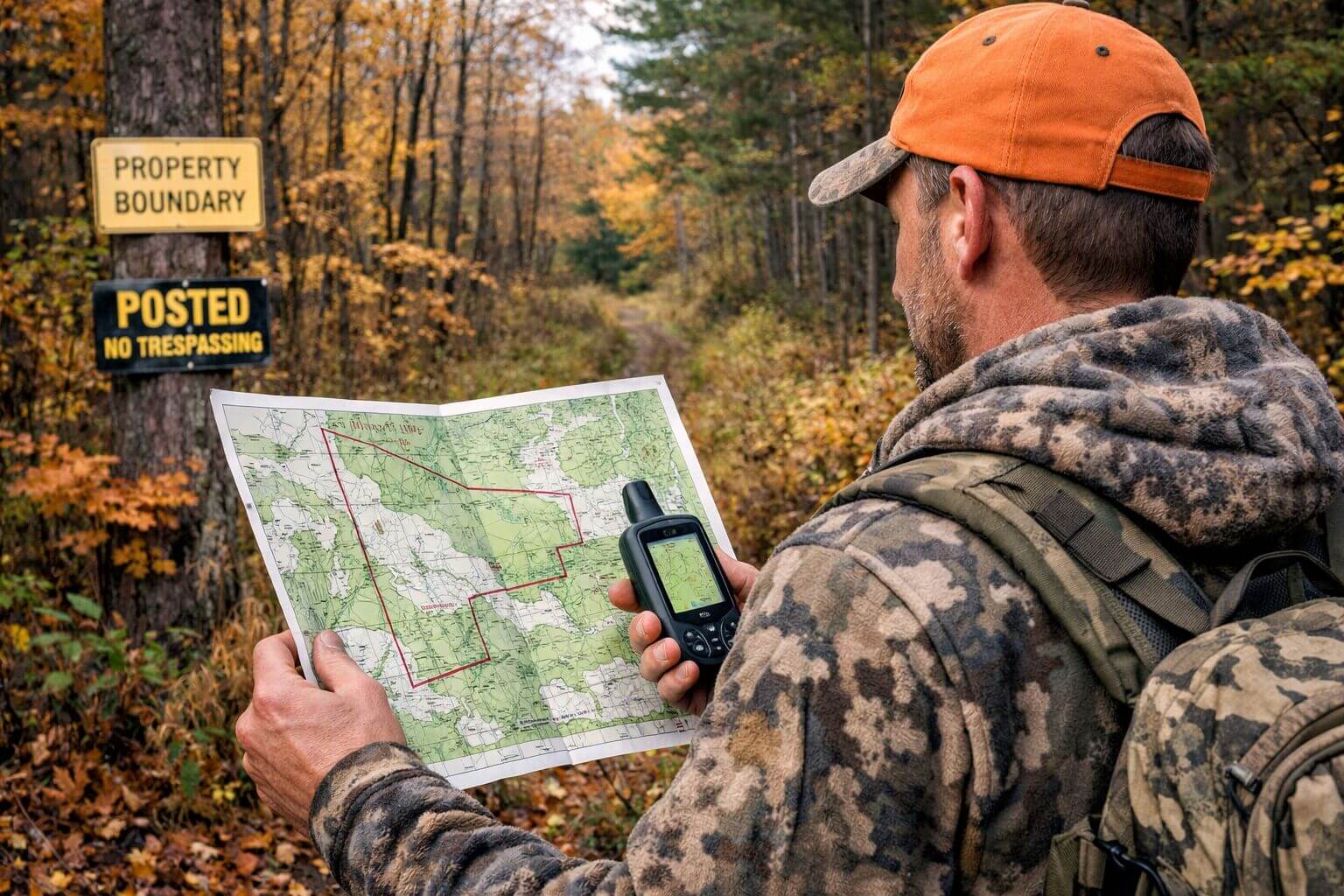 First-time buyers fall in love with the *middle* of the property—the food plot, the oak flat, the open hardwoods—but they skip the property edges entirely. That’s a problem, because edges tell the real story.
Walk every boundary line
even if it takes two hours. Look for: Posted neighboring properties. If every side of your parcel is posted, you’re buying an island. Deer pressure from adjoining land dictates movement patterns, bedding security, and shooter-buck age class.
Michigan had over 800,000 deer hunters 20 years ago, and that number has now dropped to around 550,000, but pressure on private ground hasn’t dropped proportionally—it’s *concentrated* on parcels where access is still allowed.
Fence lines and old field edges.
These transition zones between cover types are natural travel corridors. If the fence is rusty barbed wire from the 1960s, it may not show on the survey but it still funnels deer movement. Miss it on your first walk, and you’ll spend opening weekend sitting in the wrong stand.
Wetlands and drainage.
Michigan properties with cedar swamp, tag alder, or creek bottom are whitetail magnets—but they’re also potential nightmares if you don’t understand seasonal flooding. We worked a 60-acre parcel in Gladwin County where the seller disclosed “some low spots.”
Turns out the entire southern third sat under two feet of water from March through May, making spring food plot work impossible and access during turkey season a slog.
Neighboring land use
Standing at the property line during your walk, can you see a gravel pit? Hear a busy county road? Spot power lines or a cell tower? Those aren’t always deal-breakers, but they *do* affect hunting value, resale appeal, and lease rates.
A client once bought 80 acres in Osceola County without walking the north line—turned out an active gravel operation was 200 yards away, and blasting ran through November. Mature bucks don’t bed next to dynamite.
According to MSU Extension, hunting on private property involves a relationship of trust, and communication is key so both parties know what is expected
—but that trust starts with knowing what you’re buying. Your neighbors define half your hunting experience.
Mistake #2: Overlooking Access Routes and How You’ll Actually Hunt the Property
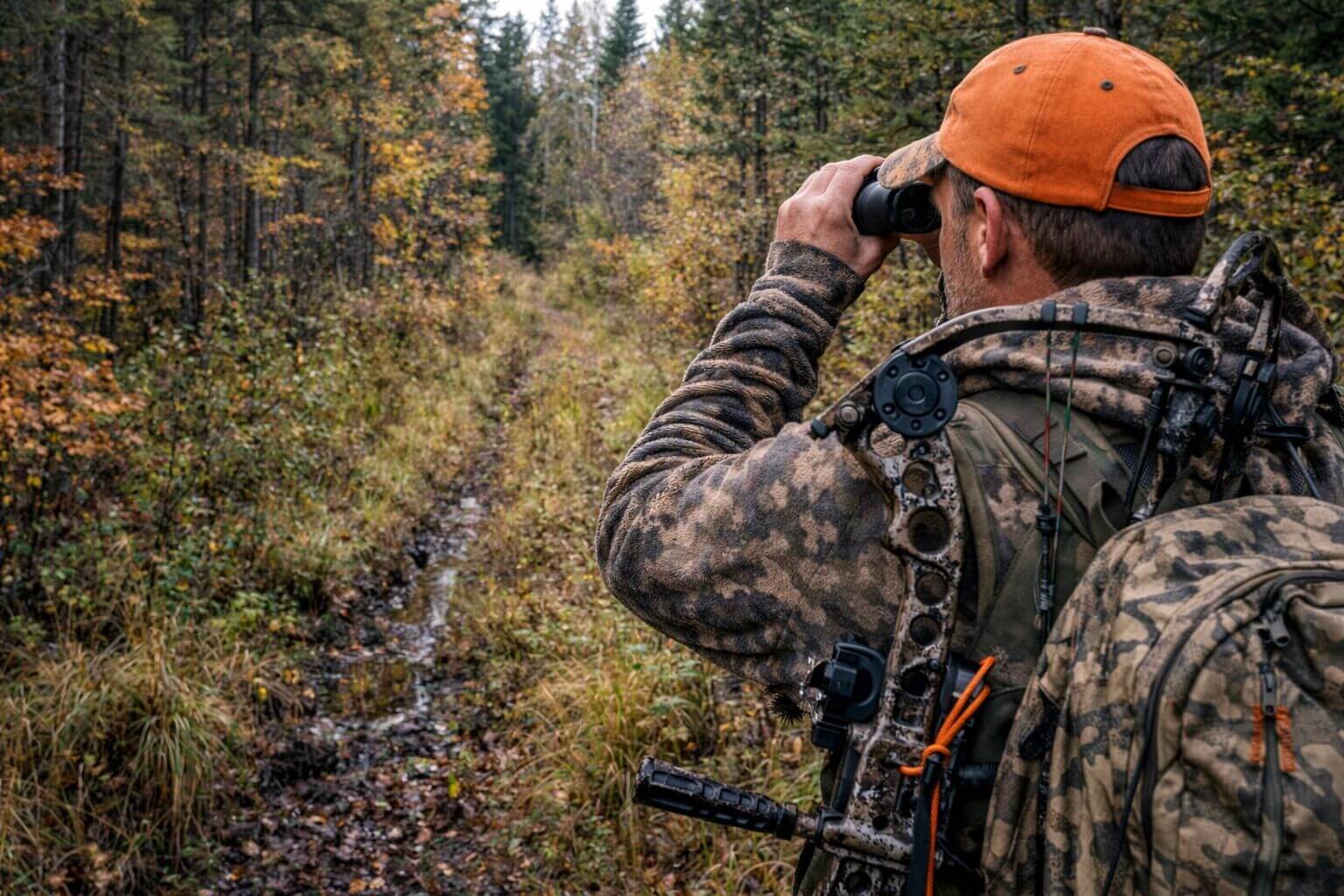 Buyers obsess over *where* they want to hang a stand, but they forget to think about *how* they’ll get there without spooking every deer on the place.
During a first walk, map out realistic access for multiple wind scenarios. Ask yourself:
- Can I reach my best stand locations from the north, south, and west property lines depending on wind direction?
- Are there ditches, creeks, or elevation changes I can use to mask my entry and exit?
- Where will I park during pre-dawn darkness in November without headlights shining across bedding cover?
- If I shoot a deer at last light, can I retrieve it without walking through prime morning spots?
We’ve seen buyers spend $15,000 improving a property—planting clover, hinging oaks, building shooting houses—only to realize their driveway dumps them directly upwind of every mature buck bed on the parcel. No amount of habitat work fixes bad access.
On one 120-acre parcel in Clare County, the buyer insisted on touring only the “good stuff”—the ridgeline and the bean field edge. He skipped the northwest corner entirely, which happened to be a 10-acre block of dense spruce with a two-track along the property line.
That two-track would’ve been his golden access route for southwest winds. He didn’t discover it until after closing, by which time the neighbor had gated the shared trail. Now he bumps deer every time he hunts his own best stand.
Pro move: Bring a phone with onX or similar mapping software during your first walk. Drop pins at potential stand sites *and* potential access routes. Cross-reference them with prevailing wind data for your county.
In Michigan, southwest and west winds dominate during October and November. If your only access blows your scent straight into bedding, you’ve got a problem before you hang your first stand.
Mistake #3: Not Checking Soil, Water, and Infrastructure Before You Commit
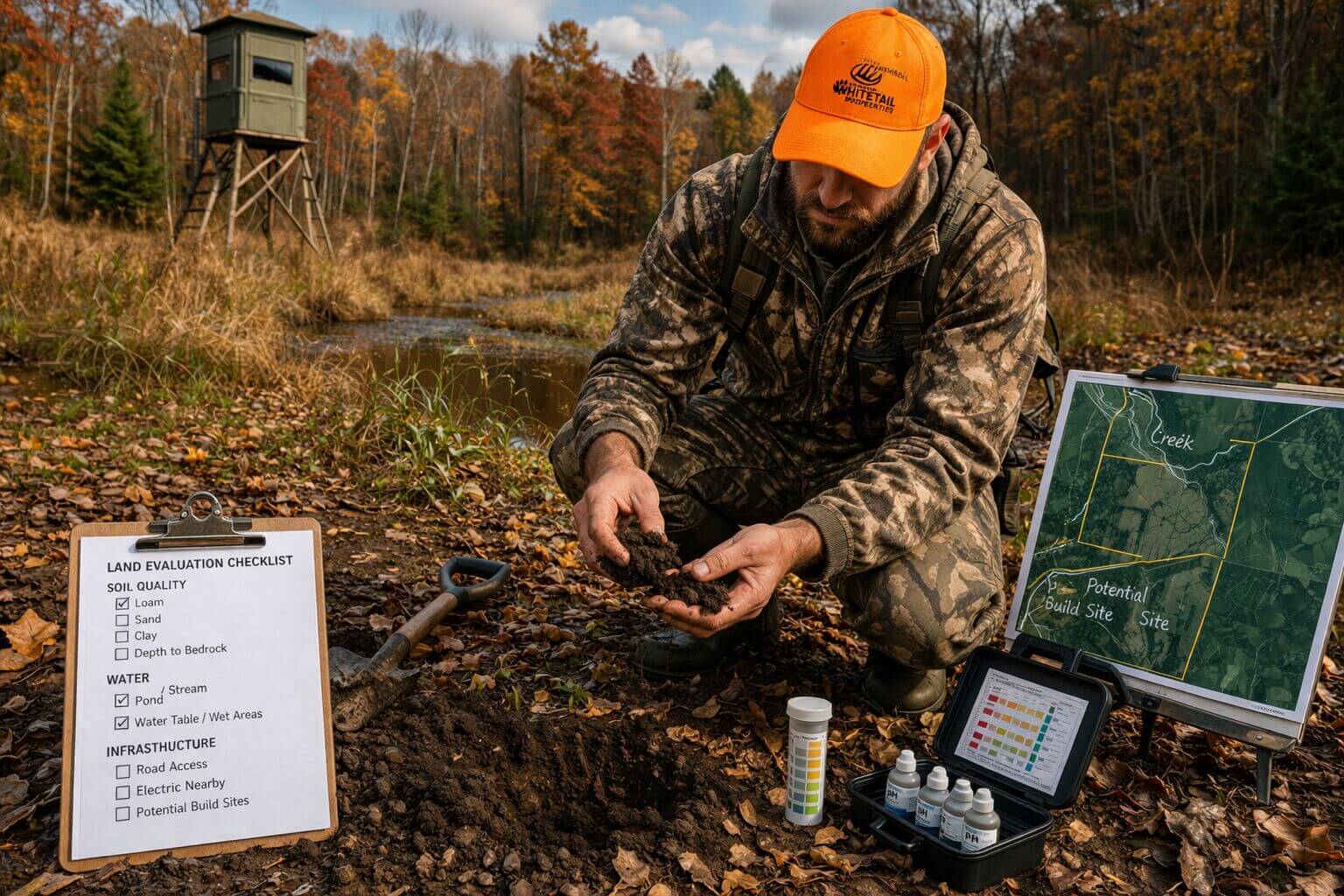 Experienced buyers walk the ground with an eye toward future improvements. First-timers walk it like they’re touring a state park.
Here’s what you should be checking:
Soil conditions and drainage.
Michigan spans everything from sandy jack pine plains in the north to heavy clay in the Saginaw Valley. Grab a shovel or a soil probe during your walk. Dig down 12-18 inches in the areas where you’d consider food plots or building sites. If you hit standing water, blue-gray clay, or solid hardpan, your plans just changed. According to
the Michigan DNR’s landowner guide, learning about soils helps you know what may and may not grow there—sandy, light soils allow water to drain readily, while heavy soils need tile or drainage work before they’ll support quality food plots.
Water sources.
Does the property have a year-round creek, pond, or spring? Or does it rely entirely on seasonal runoff? Walk the lowest points during your tour and look for silt lines on tree trunks, algae mats, or standing water even in dry months. A “seasonal creek” in the listing might be a ditch that runs three weeks a year. Deer need water, but inconsistent sources mean inconsistent use.
Utilities and access infrastructure.
Is electric at the road? Where’s the nearest pole? Extending power a quarter mile can cost $20,000-$40,000 depending on terrain. Is there an existing driveway, or will you need to permit and install a culvert? Does the two-track flood in spring?
One Newaygo County buyer loved a 40-acre parcel during an August tour—bone dry, beautiful hardwoods, perfect access. Come April, the two-track was under eight inches of water for six weeks straight. His truck got stuck twice before he spent $6,000 on gravel and culverts.
Well and septic potential.
If you’re planning to build a cabin or year-round home, ask about well depth in the area and soil suitability for septic. Some Michigan counties require engineered systems in poor soils, which can add $15,000-$25,000 to your building budget. Don’t assume—ask the seller, check with neighbors, or hire a soil evaluator before you close.
Walk it like you’re going to *use* it, not just own it.
Mistake #4: Falling in Love with What You See and Ignoring What Isn’t There
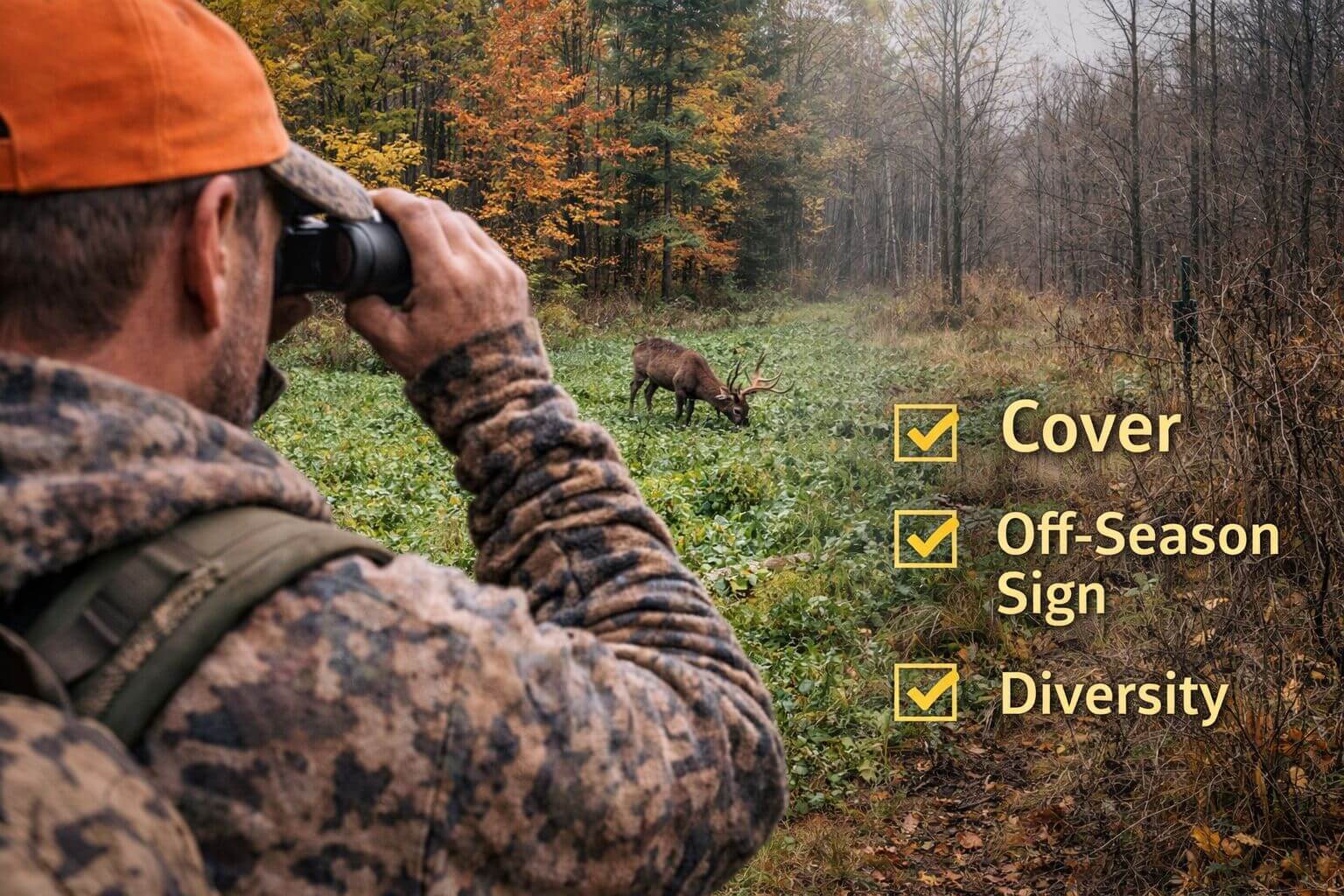 This is the biggest emotional trap buyers fall into: they see standing timber, a nice ridge, or a couple of scrapes and they mentally check out. They stop evaluating and start fantasizing.
Look, we get it. There’s something primal about walking your potential hunting ground for the first time. But what you *don’t* see matters as much as what you do.
Deer sign should match the season.
If you’re touring in October and you’re not seeing rubs, scrapes, tracks in soft soil, or browse on oak saplings, ask why. Deer might be using the property at night only, or they might be avoiding it entirely due to predator pressure, lack of quality bedding, or over-hunting by neighbors. We showed a 50-acre parcel in Osceola County to a buyer in late October—immaculate oak timber, beautiful terrain, zero fresh sign. Turns out the neighbor ran eight trailing hounds for bear season and pressured everything off the ridge from September through early November. The deer came back in December, but by then our buyer had lost half his season.
Mast and food sources are seasonal.
That beautiful white oak ridge produces once every 3-5 years in Michigan. A bumper acorn crop during your August tour might mean *nothing* the following fall. Look for diversity: red oak, beech, apples, wild grape, honeysuckle, dogwood. If the property has only one or two mast species, you’re gambling on mother nature every year.
Habitat age and stage matter.
Young aspen and regenerating clearcuts are whitetail dynamite for 8-12 years—then they close up, shade out, and deer move on. If you’re buying a parcel based entirely on 10-year-old aspen browse, understand that you’re buying a *window*, not a permanent condition. Mature, open hardwoods are beautiful to walk through but they don’t hold deer without understory cover and nearby bedding. According to
MSU Extension, if your property is surrounded by mature forest, a timber harvest can create an opening and source of browse not accessible nearby.
Lack of sanctuaries.
Every Michigan hunting property needs *somewhere* deer feel safe that you *never* enter. If the parcel is wide open, manicured, or has ATV trails crisscrossing every corner, you don’t have a sanctuary—you have a pass-through property. Bucks over 3.5 years old won’t tolerate that during daylight.
Don’t just look at what’s pretty. Look at what’s missing.
Mistake #5: Ignoring Surrounding Land Use and Long-Term Pressure Dynamics
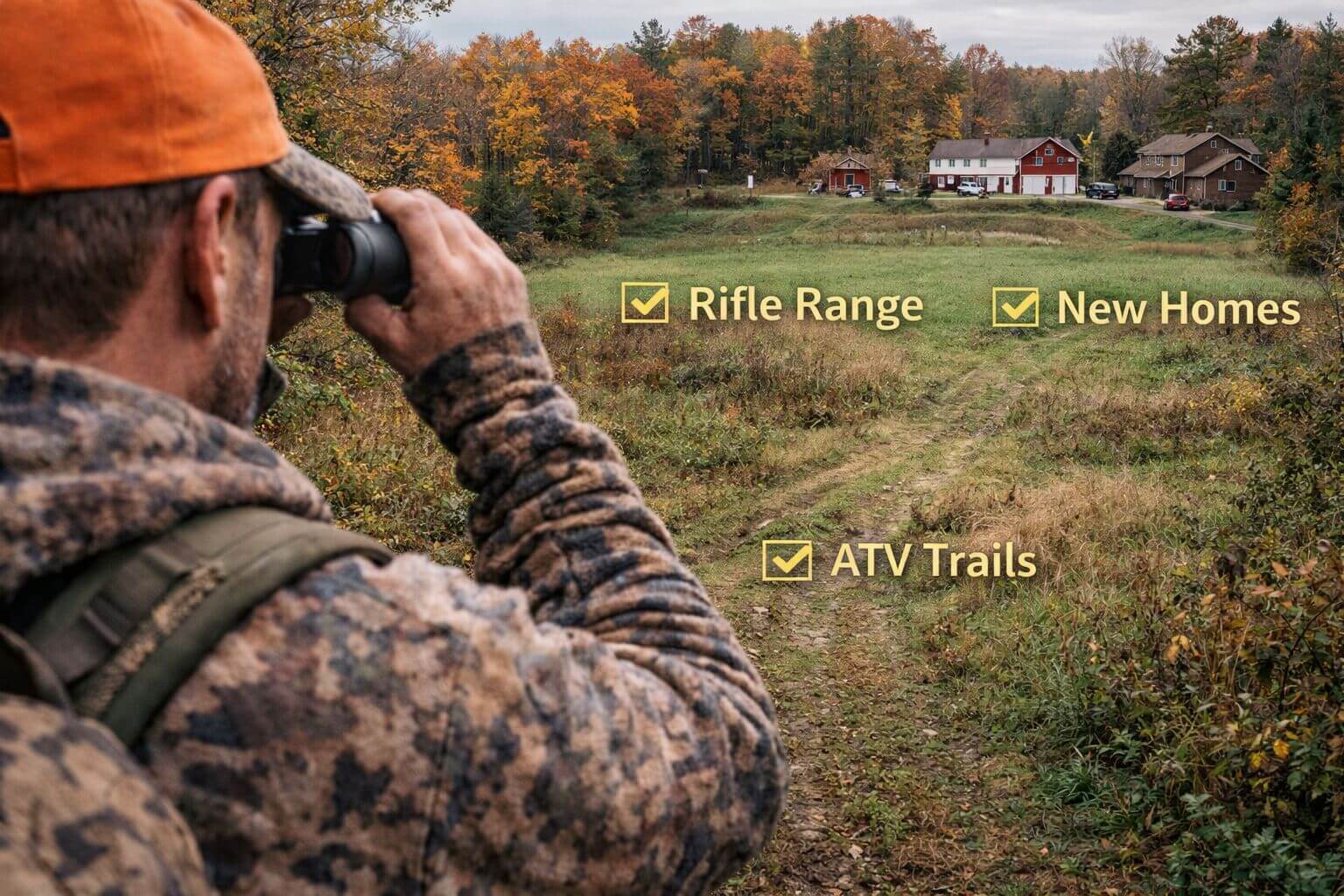 You’re not buying a hunting property in a vacuum. You’re buying into a *neighborhood* of land use, hunting pressure, and deer management philosophies that you can’t control but absolutely must understand.
During your first walk, dedicate time to “looking outward”:
What’s happening on neighboring parcels?
Are they QDM co-ops passing young bucks? Are they party-hunting and filling every tag opening weekend? Do they lease to outfitters who run cameras and mineral year-round? You can pour money into habitat, but if your neighbors shoot every 2.5-year-old buck that crosses the fence, your age structure will stay stuck.
What’s the surrounding hunting pressure like?
In areas near public land, opening day of firearm season sounds like a war zone.
Michigan has over 4.6 million acres of public land open to hunting, and properties bordering state or federal ground often see refugee deer pushed onto private during peak pressure days. That can be a goldmine—or a nightmare if you’re trying to pattern deer in October and hunters are bumping them daily.
Are there development or industrial plans nearby?
A quiet 80-acre parcel in Montcalm County can turn into a headache if a gravel pit, solar farm, or residential subdivision gets permitted two years after you close. Check county zoning maps, talk to the township, and ask the seller directly: “Do you know of any planned development or land use changes nearby?”
Proximity to ag ground and feeding patterns.
If your property backs up to a 200-acre bean field, congratulations—you’ve got a food source you didn’t have to plant. But you also have zero control over when it gets harvested, what gets planted next year, or whether the farmer allows hunting. We worked with a buyer in Shiawassee County who bought 40 acres next to a standing cornfield. He planned his entire fall strategy around hunting the corn edge. The farmer combined it September 20th. Our buyer’s October was a bust.
Long-term timber and habitat trends.
Michigan’s forest age is shifting. According to
Michigan isn’t short on forest—but high-quality, well-managed timberland in the right locations is absolutely a finite resource. If you’re surrounded by maturing timber with no planned cuts, you may be in a browse desert in five years. If your neighbors are clear-cutting aggressively, deer patterns will shift with the landscape.
The hunters who build wealth and legacy hunting ground in Michigan don’t just buy land—they buy into *place*. They know the neighbors. They understand the local deer herd. They ask hard questions before they sign.
What Experienced Buyers Do Differently on a First Walk
After three decades in Michigan land, here’s what separates serious buyers from tire-kickers:
They take their time. A 40-acre property deserves at least two hours, and that’s just the first visit. Walk every corner. Sit in the likely stand locations for 20 minutes and *listen*. What do you hear? Highway noise? A neighboring farm? Silence?
They bring tools: phone with mapping app, camera, notebook, soil probe, compass, binoculars. They document what they see and cross-reference it with county data, USDA soil maps, and DNR harvest stats.
They ask uncomfortable questions: Why are you selling? Who hunts next door? Has this ever flooded? Where are the property pins? When was it last timbered? What’s the mature buck sighting history?
They return for a second or third walk during different conditions—early morning, late evening, after a rain, during a different season. A property in July looks nothing like the same ground in November.
They walk it like they’ll hunt it: They don’t just tour the highlights. They check access, study wind, evaluate bedding, and think five years ahead.